
How to send money to Bosnia and Herzegovina in 2026: the mark at 1.95583 per euro, transfers from Europe and buying a flat
In 2026 the Bosnia and Herzegovina mark is still pegged to the euro at 1.95583, and the central bank has applied to join the single euro payments area. We show how to send money to a bank in Sarajevo or Banja Luka, how much of a deposit is protected and what tax is paid when buying a flat.
In short
- The rate is fixed: 1 euro = 1.95583 marks, the same in Sarajevo, Banja Luka and Mostar.
- Euros from Europe arrive in 1-2 business days through a correspondent bank.
- The central bank applied to join the single euro payments area on 6 August 2026.
- Deposits are insured up to $58,000 (100,000 marks) at each bank from 1 November 2026.
In detail
Money is sent to Bosnia and Herzegovina in euros or convertible marks to an account at a bank in Sarajevo, Banja Luka or Mostar. One euro is worth 1.95583 marks under the currency board run by the Central Bank of Bosnia and Herzegovina. Euros from Europe arrive by international transfer in 1-2 business days.
| Method | Works in 2026 | Currency and time |
|---|---|---|
| bank transfer in euros | yes, through a correspondent bank | credited in euros or marks, 1-2 business days |
| transfer in US dollars | yes | the recipient's bank exchanges at the rate of the day, 1-3 business days |
| paying for a flat | yes, to the seller's account | euros or marks, by the date of the contract at the notary |
| money to parents and family | yes | to the recipient's account, with family support as the purpose |
Dollars at the 7 October 2026 rate (€1 = 1.95583 marks = $1.1177), rounded up.

Your case is different? Ask an expert
First consultation is free. We keep your details private.
How many marks are paid for one euro in 2026?
One euro buys 1.95583 convertible marks in 2026, the rate in force since the euro replaced the Deutsche Mark as the anchor. The convertible mark, written KM at home and BAM in bank codes, went into circulation on 22 June 1998. It was first pegged to the Deutsche Mark at one to one, according to the central bank.
The Central Bank of Bosnia and Herzegovina works as a currency board. A currency board is a central bank that issues domestic money only against foreign reserves at a fixed rate set by law. The central bank issues and withdraws banknotes under this arrangement, as provided by the Law on the Central Bank. In its own words, "the value of convertible mark in euro has never been jeopardized".
Banks keep accounts in both euros and marks. A sum held in euros is changed into marks at the fixed rate with no rate risk. A bank exchanges US dollars into marks at the market rate, which follows the dollar against the euro. Which currency suits a given amount and purpose, a manager will advise.
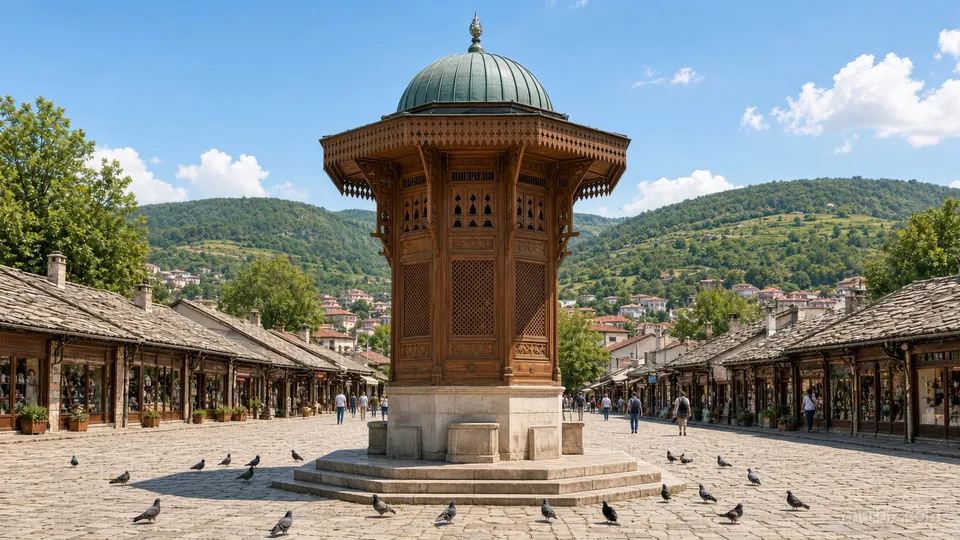
One central bank serves the whole country, although the Federation of Bosnia and Herzegovina and Republika Srpska have their own governments and taxes.
We will review your situation for free
A manager will look at your plans and suggest the first step.
How long does a transfer to Bosnia and Herzegovina take?
A euro transfer from Germany, Austria or Croatia reaches a bank in Bosnia and Herzegovina in 1-2 business days. The country is not yet part of the single euro payments area, so the payment travels as an international transfer through a correspondent bank. A correspondent bank holds accounts for foreign banks and passes their payments on. A transfer in US dollars takes 1-3 business days, and the recipient's bank converts it at the rate of the day.
The sender gives the recipient's full name, the IBAN and the BIC of the recipient's bank. IBAN stands for International Bank Account Number, a standard code that identifies an account and the country in which it is held. The BIC, also called the SWIFT code, is an 8- or 11-character code of the bank itself. A Bosnian IBAN has 20 characters, according to the IBAN registry kept under the ISO 13616 standard.
| Part of the IBAN | Length | What it shows |
|---|---|---|
| country code | 2 letters, BA | Bosnia and Herzegovina |
| check digits | 2 digits | verify the whole number |
| bank code | 3 digits | the recipient's bank |
| branch code | 3 digits | the branch of the bank |
| account number | 8 digits | the account at the branch |
| national check digits | 2 digits | verify the account number |
Your case is different? Ask an expert
First consultation is free. We keep your details private.
When will Bosnia and Herzegovina join the single euro payments area?
The Central Bank of Bosnia and Herzegovina filed its official application to join the Single Euro Payments Area on 6 August 2026. The area is known as SEPA. Euro transfers and direct debits between its countries follow common rules, as for a domestic payment. SEPA covers the 27 member states of the European Union and 14 other European countries, according to the central bank.
The application followed new payments laws in both parts of the country. The National Assembly of Republika Srpska adopted the Law on Payment Services in July 2026, the Ministry of Finance of Republika Srpska said. The House of Representatives of the Federation parliament adopted the harmonised texts of the same set of laws on 28 July 2026, the central bank reported.
The European Payments Council and other European bodies now review the documents and decide on admission. The central bank expects the first payments under the single rules no earlier than six months after admission. Until then the ordinary international transfer applies.
Countries of the area account for more than 80% of the foreign trade of Bosnia and Herzegovina, according to the central bank. The diaspora sends about four billion marks a year, most of it from those countries. The World Bank puts the possible saving on fees at about 100 million euros. In the Western Balkan countries that have already joined, some international payment fees fell by 50% to 94%, the central bank said.
The European Payments Council admitted Montenegro and Albania in November 2024, North Macedonia on 6 March 2025 and Serbia in May 2025. Transfers to Montenegro and Albania have followed the rules of the area since their banks joined the schemes in 2025.
Let us check whether you qualify
In the chat, tell us your citizenship and what you want to arrange, and we will tell you which route to take.
What changed in 2026 for transfers to Bosnia and Herzegovina?
The year 2026 brought new payments laws in both parts of the country, the application to the single euro payments area and a higher limit on insured deposits.
| Date | Change | Who it covers |
|---|---|---|
| July 2026 | the National Assembly of Republika Srpska adopts the Law on Payment Services | banks and payment institutions in Republika Srpska |
| 28 July 2026 | the House of Representatives of the Federation parliament adopts the harmonised financial laws | banks and payment institutions in the Federation |
| 6 August 2026 | the central bank files the official application to join SEPA | all banks of the country |
| 23 September 2026 | the board of the Deposit Insurance Agency raises the insured amount to 100,000 marks | depositors at all licensed banks |
| 1 November 2026 | the insured amount of 100,000 marks per depositor per bank applies | depositors at all licensed banks |
How much money does the diaspora send to Bosnia and Herzegovina?
Personal transfers from abroad totalled 4.46 billion marks in 2025, the Central Bank of Bosnia and Herzegovina reported on 24 March 2026. Total current transfers reached a record.
| Indicator, 2025 | Amount | Change against 2024 |
|---|---|---|
| current transfers from abroad, total | 5.92 billion marks | up about 230 million marks |
| personal transfers from residents abroad | 4.46 billion marks | up about 290 million marks |
| other current transfers | 1.46 billion marks | down about 63 million marks |
Deposits up to 100,000 marks are insured at each bank from 1 November 2026
The Deposit Insurance Agency of Bosnia and Herzegovina repays up to $58,000 (100,000 marks) per depositor at each bank from 1 November 2026. The agency's board adopted the decision in Sarajevo on 23 September 2026, and it was published in the Official Gazette of Bosnia and Herzegovina No. 75/26. It replaced the limit of 70,000 marks in force since 1 November 2022.
All of a person's accounts at one bank are added together, with interest up to the day the bank loses its licence. Deposits at different banks are insured separately, each up to 100,000 marks. The agency pays in marks and converts foreign-currency deposits at the middle rate of the central bank on that day. The payout is made within 20 business days of the withdrawal of the bank's licence, and a depositor has five years to claim it.
Every bank licensed by the Banking Agency of the Federation of Bosnia and Herzegovina or the Banking Agency of Republika Srpska is a member of the scheme. The banks pay the insurance premium, and depositors pay nothing.
We help you send money to Bosnia and Herzegovina
Mistakes cost more than fees: dollars changed first into euros and then into marks, euros sent without the recipient's full name and 20-character account number, paying for a flat without the canton's tax, and a large sum with no papers on its origin. We help you avoid them: we choose the transfer route and currency, gather source-of-funds documents for the bank in Sarajevo or Banja Luka and carry out the transfer through licensed partners until the money is credited.
Details and the cost are available on request from a manager in the chat: the calculation takes into account the amount, the currency and the purpose of the transfer.
How much cash can be carried into Bosnia and Herzegovina?
Travellers declare cash of 10,000 euros or more, or the same value in another currency, to customs at the border. The rule is set in the Federation by the Decision on the physical transfer of cash, published in the Official Gazette of the Federation No. 100/2025. The declaration form is handed out by customs officers at international crossings and is available from the Indirect Taxation Authority.
Under the decision, a non-resident leaving the country takes out up to 10,000 euros plus any amount declared on entry or withdrawn from a foreign-currency account in the country. A resident of the Federation who takes out more than 10,000 euros obtains prior approval from the Federal Ministry of Finance. In Republika Srpska residents obtain the approval of the entity's Ministry of Finance for more than 10,000 euros.
The decision counts as cash banknotes and coins, traveller's cheques, bearer instruments and prepaid cards not linked to a bank account. Cash sent by post or courier is declared within 30 days at the request of customs.
What tax is paid on a flat in Sarajevo or Banja Luka?
The property transfer tax depends on the part of the country. In the Federation of Bosnia and Herzegovina it is set by the canton, and in Sarajevo Canton it is 5% of the assessed value. A foreigner buys a home on the basis of reciprocity. Prices, taxes and the deal procedure are covered in buying an apartment in Bosnia.
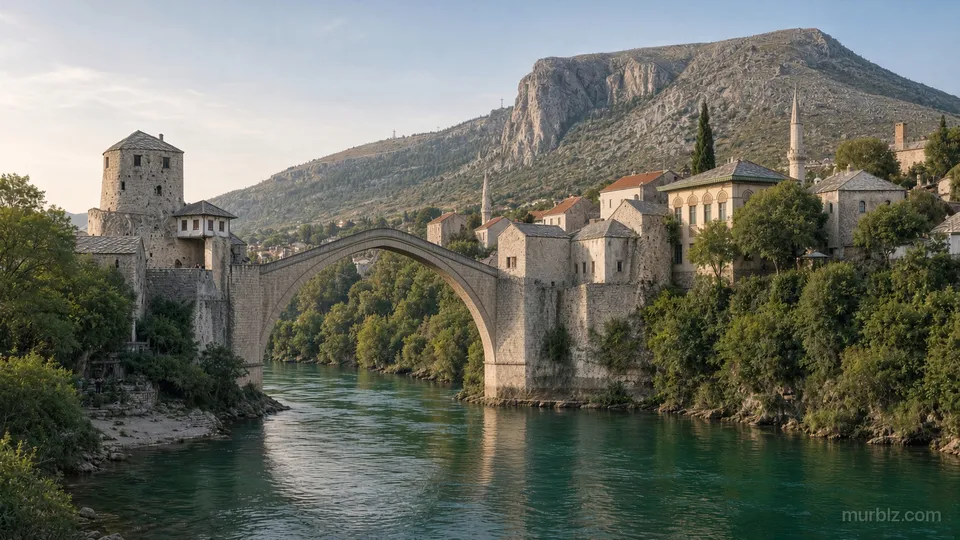
The price of a flat is paid in euros or marks to the seller's account by the date of the contract at the notary. The capital is described on the Sarajevo page, and the country's taxes on the taxes in Bosnia and Herzegovina page.
Which documents does a bank in Bosnia and Herzegovina ask for?
The amount sent sets the documents.
Up to $10,000. The payment purpose is enough for the bank: helping parents, study, rent.
$10,000-100,000. A bank in Sarajevo or Banja Luka will ask for 6 months of statements and a document on the money: a sale contract, an income certificate or a gift agreement.
From $100,000. The sender prepares a pack on the origin of the wealth and the purchase contract; how to put it together is covered in proof of source of funds and sending large sums abroad. Moving capital step by step is on the capital relocation page. For such a sum, get the transfer terms from a manager in advance.
Get the document checklist
Leave a contact in the chat and we will send a list for your situation.
From Sarajevo to Croatia, Serbia and Germany
To neighbouring Croatia money goes in euros and is credited there with no exchange. To Serbia people send euros, and the recipient's bank changes them into dinars if needed. Those working in Germany and Austria send money home in euros, and the return transfer follows the same route.
Sending money to nearby countries
Separate guides: how to send money to Croatia, Serbia, Montenegro, Slovenia, North Macedonia and Kosovo.
All countries and moving capital step by step are in the capital relocation section.
FAQ
How many marks do you get for a euro in Bosnia and Herzegovina?
How long does a transfer to Bosnia and Herzegovina take?
What details does a transfer to a bank in Bosnia and Herzegovina need?
When did Bosnia and Herzegovina apply to join the single euro payments area?
How much of a deposit is insured at a bank in Bosnia and Herzegovina?
How much cash can be brought into Bosnia and Herzegovina without a declaration?
How much money does the diaspora send to Bosnia and Herzegovina?
Is property transfer tax paid on a flat in Banja Luka?
We will suggest the best way to send your money
We will choose a transfer method for your amount and country, prepare the documents on the origin of the money for the bank, make the transfer through licensed partners and follow it until the money is credited. Ask your question in the chat - the manager will suggest the best terms and the cost. The legal side with banks and government bodies is handled by Murblz specialists and locally licensed partners.
Details and cost are with the manager in the chat. Describe your situation and we will reply right away.
Check transfer termsHow we handle a transfer: 4 stages → · Country rules checked
What happens next
- An expert reviews your situation and goal.
- We contact you the way you prefer and answer your questions.
- You get a work plan, realistic timelines and a written quote.
Programs
Programs in Bosnia and Herzegovina
Bosnia and Herzegovina: citizenship and all programs.