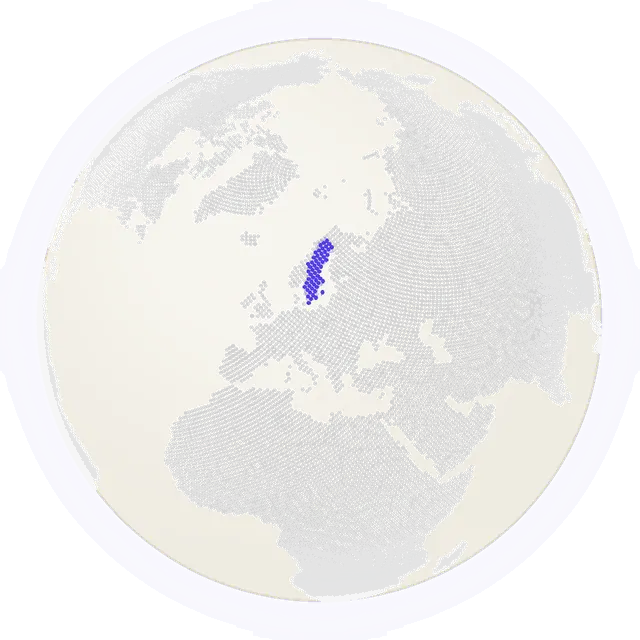
Sweden: all programs
Citizenship, residence, taxes and visas for Sweden - in one place. Not sure what fits? We help you choose the route and prepare the documents.
Country programs
What you can get in Sweden
Sweden at a glance
Sweden is the largest country in Northern Europe by area, with a population of about 10.6 million. The capital is Stockholm; the other major cities are Gothenburg on the west coast and Malmö in the south, linked by bridge to Copenhagen. Sweden joined the European Union in 1995 and is part of the Schengen Area, but it has not adopted the euro: the currency is the Swedish krona, about 10 kronor to the dollar. Since March 2024 Sweden has been a member of NATO.
The economy rests on manufacturing, information technology, pharmaceuticals and forestry. Salaries and taxes are high, the welfare system is strong, schools are free and payments are almost entirely cashless. The official language is Swedish, but most people, especially in cities, speak fluent English.
History and government
Sweden is a constitutional monarchy: the king has a ceremonial role, while the country is run by the parliament, the Riksdag, and a government led by the prime minister. Riksdag elections are held every four years. Local services such as schools, preschools and elderly care are run by municipalities, and the municipality sets most of the income tax.
Sweden has not fought a war for more than two hundred years and kept a policy of neutrality for a long time, abandoning it after 2022 to join NATO. The country built a classic welfare state: high taxes in exchange for free education, affordable healthcare and 480 days of paid parental leave shared between the two parents.
How to move in 2026
Residence permits are issued by the Swedish Migration Agency. You apply online before entry and then give fingerprints at an embassy or consulate. The main routes for foreigners:
- A work permit with a Swedish employer: the salary must meet a threshold tied to the national median wage, and the employer must first advertise the job in Sweden and the European Union.
- A permit for your own business: you own at least 51% of the company, run it yourself and show SEK 200,000, about $20,000, to live on for two years, plus amounts for family members. Details are on the Sweden startup visa page.
- Family reunification for spouses, partners and children of Swedish residents and citizens.
- University study, with the right to work while studying.
Entrepreneurs can apply for permanent residence after two years, employees after four years of work. Besides the time requirement, you must show that you support yourself. Since June 2026 citizenship requires eight years of residence instead of five, with stricter rules on self-sufficiency and good conduct. Sweden has allowed dual citizenship since 2001.
Taxes
You become a Swedish tax resident if you live in Sweden permanently or stay for more than six months in a row. Income tax combines a municipal tax, about 32% on average depending on the municipality, and a 20% state tax on income above SEK 643,000 a year, about $64,100. Corporate tax is 20.6% and the standard VAT rate is 25%.
Foreign experts recruited on high salaries can use a special relief: for the first seven years a quarter of the salary is exempt from tax and social charges. It must be claimed within three months of starting work. Interest, dividends and capital gains are taxed at 30%, while investment savings accounts pay a simplified tax based on the account balance.
Property
Sweden has no restrictions on foreigners buying homes. Most city apartments are sold as cooperative housing: you buy a share in a housing association with the right to use the apartment, pay it a monthly fee, and the association board approves the purchase. Houses and some new apartments are freehold: registering title costs a 1.5% stamp duty on the price, and registering a new mortgage deed costs 2% of its amount.
Banks lend to buyers with a Swedish personal identity number and proven income in Sweden, with a minimum down payment of 10%. Prices in central Stockholm are among the highest in Northern Europe, while Gothenburg and Malmö are noticeably cheaper. Our investment property team handles property search and due diligence.
Cost of living
Sweden is expensive, although Norway and Denmark cost even more. Housing is the biggest expense. A one-bedroom sublet in Stockholm starts at SEK 9,000 a month, about $900, and a two-bedroom apartment in the centre costs SEK 12,000-16,000, about $1,200-1,600. Long-term leases from municipal housing companies are allocated through a queue, and in the capital the average wait is about nine years.
Preschool fees are capped at a modest level and schools are free for residents' children. Healthcare is only partly paid by the patient: an annual cap applies to out-of-pocket spending on doctor visits and prescriptions, and the state covers the rest.
Where to live
Stockholm is the island capital, the centre of finance and tech companies, with the highest rents. Gothenburg is an industrial port city in the west, home to the car industry and shipping. Malmö in the south is half an hour by train from Copenhagen across the Öresund Bridge, with milder winters and lower prices. Uppsala and Lund are university towns with a calmer pace and good schools.
Practicalities
The first step after moving is a personal identity number from the Swedish Tax Agency, issued to people who plan to live in Sweden for at least a year. Without it, opening a bank account, getting an electronic ID, signing a phone contract or registering with a doctor is difficult. Banks and public services run on a smartphone electronic ID, and many places do not accept cash, so you need a card from day one.
Adult residents can take free Swedish courses for immigrants. Winter days are short: in Stockholm it gets dark around 3 pm in December, and in the far north the sun stays below the horizon for several weeks.
Who Sweden suits
Sweden suits professionals with a contract from a local employer, founders ready to live in the country, and families who value schools, safety and social support. It suits less well those looking for low taxes, a fast passport or residence without relocating. We will choose the right route, prepare the documents and guide you until you receive your residence card; our consultant in the chat will calculate the cost of support.
Services
Murblz services in Sweden
A passport or residence permit opens the door, but life behind it is awkward without a bank account and a roof over your head. Murblz specialists help with the account, property and company in the same country. The quote is fixed in writing before work starts.
Popular questions
FAQ about Sweden
Do you need a visa for Sweden?
What is the income tax in Sweden in 2026?
Can a foreigner buy property in Sweden?
How much does it cost to rent an apartment in Stockholm?
Does Sweden have a startup visa in 2026?
How much money do you need for a Swedish self-employment permit?
How long does Migrationsverket take to process a self-employed application?
Can I move to Sweden with my family on a business permit?
When can a self-employed person get permanent residence in Sweden?
How many years until Swedish citizenship after the 2026 reform?
What to do when you visit
What to see in Stockholm
Gamla Stan
The medieval Old Town, all cobbled lanes and colorful merchant facades.
Vasamuseet
An entire 17th-century warship raised almost intact from the harbor floor.
Skansen
The world's oldest open-air museum, with historic houses and Nordic wildlife.
Kungliga slottet
The Royal Palace, holding one of Europe's largest collections of regalia.
Stadshuset
Stockholm City Hall, home to the Golden Hall where the Nobel banquet is held.
Fotografiska
One of the world's leading photography museums, set on the Södermalm waterfront.
How to send money to Sweden in 2026 →
We can help with the transfer: ask in the chat.
How could you get Swedish residence?
Tell us about your profession and business - we compare residence through employment and through your own business in Sweden, go through tax and prepare the documents.