Nauru: all programs
Citizenship, residence, taxes and visas for Nauru - in one place. Not sure what fits? We will help you choose.
Country programs
What you can get in Nauru
Nauru at a glance
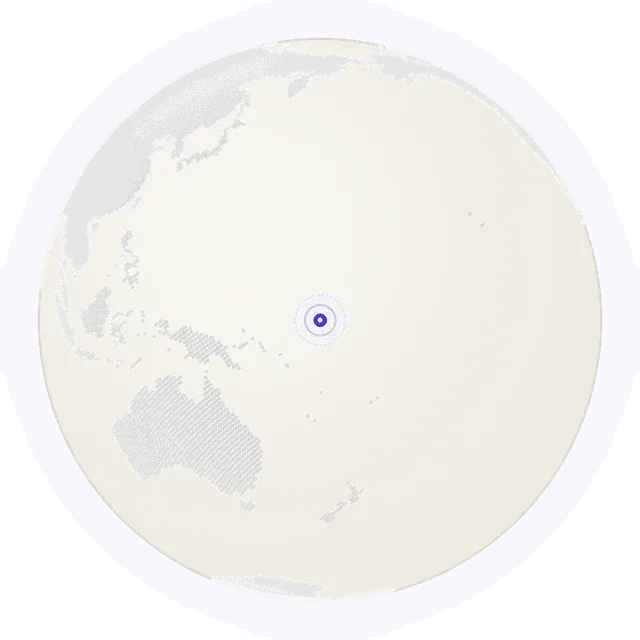
Nauru is the smallest republic in the world: a coral island of 21 square kilometres in the central Pacific with about 12,000 residents. It has no official capital, and parliament and government sit in the Yaren district. The languages are Nauruan and English, and the currency is the Australian dollar, about 1.44 per US dollar on 6 October 2026.
In the last century the country grew rich on phosphate mining, but reserves are almost exhausted. Income now comes from tuna fishing licences, the Australian migrant processing centre on the island, partner aid and the citizenship programme. The state is the main employer.
Who the country is for
Nauru suits almost no one as a place to move to: housing for foreigners is scarce, there are no jobs and everything is imported. People choose the country for a second passport:
- entrepreneurs and investors who need a backup passport for travel and banks;
- families who want a second citizenship without relocating or selling a business;
- citizens of restricted countries who have lived abroad for at least 5 years or hold residence in a Western country.
Citizenship for a contribution
The Economic and Climate Resilience Citizenship Programme has run since 2024: a passport is granted for a non-refundable contribution to a state fund, which partly finances protecting the island from climate change. You do not need to live in or visit Nauru, and dual citizenship is allowed.
| Payment | Amount |
|---|---|
| Main applicant's contribution if filed by 31 December 2026 | $90,000 |
| Main applicant's contribution from 1 January 2027 | $115,000 |
| Application processing fee | $5,000 |
| Each family member aged 16 and over | $2,000 |
| Children under 16 | no contribution |
Processing takes 3-4 months including checks and an interview. More on the Nauru citizenship page.
How much to budget for the passport
Besides the contribution, the government charges fees for processing the application, due diligence, the bank check of the transfer and the passport. For the main applicant they add up to about $12,700, so one person applying by 31 December 2026 pays about $103,000. Each family member aged 16 or over adds about $7,500 including the passport, and a child under 16 about $2,500.
Translation and certification of documents and our support are paid separately. The total for a family depends on its composition and the children's ages; a manager will calculate it in the chat. Every cost item is broken down on the page how much Nauru citizenship costs.
How the process works
- Eligibility check - we check whether you meet the programme rules, including the restrictions for certain nationalities.
- Documents - passports, police certificates, civil records, proof of income and source of funds, usually 2-4 weeks.
- Filing - an authorised agent of the programme files the application and the $5,000 fee is paid.
- Checks and interview - screening against international databases and a mandatory interview, usually 2-3 months.
- Contribution and passport - after approval the contribution is paid, then the citizenship certificate and passport are issued.
Restrictions for certain nationalities
Citizens of Russia, Belarus, Afghanistan, Sudan and Yemen can apply only if they have lived outside their country for at least 5 years or hold residence in the US, UK, Canada, Australia, New Zealand, Switzerland or an EU country, and have no economic ties to their country of citizenship. Applications from citizens of North Korea, Iran and Myanmar are not accepted. We check in advance whether you meet these conditions and only then start preparation.
What the passport gives
- visa-free entry or visa on arrival in more than 85 countries, including Singapore, Hong Kong and the UAE;
- a second citizenship for the whole family without relocating;
- a Pacific state passport as a backup document for travel and banks.
The passport does not by itself make you a Nauru tax resident: taxes are paid where you actually live. The EU and other countries are reviewing visa-free access for passports obtained for a contribution, so we check the visa-free list on the filing date.
Where you can travel on a Nauru passport
Without a visa arranged in advance, a Nauru passport holder can enter 84 destinations: 52 need no visa at all, 25 issue one on arrival and 7 require only an electronic travel authorisation. An e-visa is available online for 44 destinations, and a regular visa is needed for 98, including the Schengen countries, the US, Canada and Australia. So a Nauru passport is a backup document and a footing with banks rather than a replacement for a strong travel passport. The full list by region is on the page where a Nauru passport lets you travel visa-free.
Entry and life on the island
Almost everyone needs a Nauru visa in advance, and the passport must be valid for at least 6 months. Flights go via Brisbane in Australia or Nadi in Fiji, there are few of them, and schedules should be checked early. The island can be circled on a ring road of about 19 kilometres in half an hour. There are only a few hotels and a handful of ATMs, and cards are not accepted everywhere. The climate is equatorial at 26-32°C, with rain from November to February and occasional droughts. The only hospital handles simple cases, and complex patients are flown to Australia.
Property and business
Land on Nauru belongs to Nauruan families and communities, and a foreigner cannot buy it outright, only lease it by agreement with the owners. There is essentially no investment property market for foreigners, and citizenship by contribution gives no right to land. We help with a personal account and a business account in another country where banks work with Nauru passport holders.
Banks and money
Payments on the island are in Australian dollars. For many years an agency of one Australian bank operated on Nauru; it closed on 8 August 2025, and residents are now served by an agency of another major Australian bank. Accounts on the island are opened mainly for residents, ATMs are few and cards are not accepted everywhere, so cash is always needed.
The citizenship programme does not require an account on Nauru. Passport holders usually keep accounts where they live and do business, and a bank determines tax residence by where you live, not by your passport. We select a country and bank for your profile and prepare the source of funds documents.
Taxes
Nauru citizenship does not by itself make you a Nauru tax resident: taxes are paid where you actually live. Banks and tax authorities determine residence by where you live, your centre of interests and the days you spend in a country, so a second passport does not free you from tax in your country of residence and does not change the exchange of banking information. If the goal is lower tax, you first choose a country to live in and be tax resident, and the passport remains a document for travel and banks.
Alternatives
If you need a passport with wider, time-tested visa-free access, compare Nauru with the Caribbean programmes: Dominica, St Kitts and Nevis, Antigua and Barbuda and Grenada cost more, but their passports open more countries. In Oceania there is also Vanuatu citizenship. We compare the options for your travel, banks and family.
Popular questions
FAQ about Nauru
Is it better to apply for Nauru citizenship in 2026 or wait?
Do you need to travel to Nauru to get the passport?
Can you buy land on Nauru?
How do you get to Nauru?
What currency is used on Nauru?
How does a Nauru passport differ from Caribbean ones?
Who can be included in a Nauru citizenship application?
How much does Nauru citizenship cost in total for one person?
Does a Nauru passport holder pay tax in Nauru?
Can I open a bank account on Nauru?
How much does Nauru citizenship cost?
Can Russian citizens get a Nauru passport?
How long does it take?
Must I live in Nauru?
Can I keep my current citizenship?
Who can be included in the application?
What to do when you visit
What to see in Yaren
Parliament House
Nauru's traditionally styled parliament building, the political heart of the country, walkable in five minutes.
Command Ridge
The island's highest point, dotted with WWII-era Japanese fortifications and offering a panorama over all of Nauru.
Naoero Museum
A small museum tracing Nauru's history, phosphate mining and indigenous culture.
Buada Lagoon
A quiet freshwater lagoon ringed by lush greenery, the island's most peaceful spot.
Moqua Caves
Limestone caves with underground pools that once served as the island's main freshwater source.
Moqua Well
A historic well where locals drew water for generations during dry spells.
Is Nauru citizenship worth considering?
Tell us about your family and goals - we compare Nauru's new citizenship by investment programme with other countries, check your documents and handle the application.