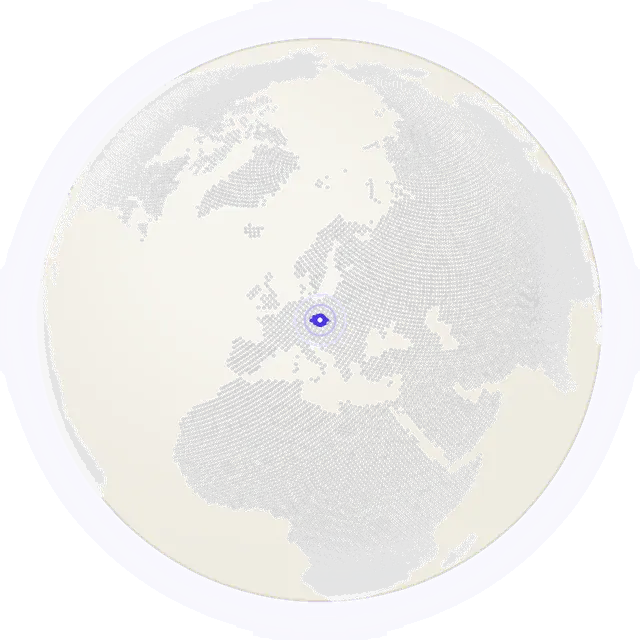
Moving to the Czech Republic in 2026
Routes to residence through work, the EU Blue Card, a nomad or business visa, separate rules for some nationalities, the first days in Prague, taxes and a budget for the first 3 months.
Country programs
What you can get in Czech Republic
Moving to the Czech Republic: entry, first 30 days, 3-month budget
Newcomers move to the Czech Republic on an employee card, the EU Blue Card, a digital nomad or business visa, or for study and family. Separate rules for some nationalities are in the section rules for specific nationalities.
- Before the trip. Choose the ground: an employee card, the EU Blue Card, a nomad or business visa, study or family.
- Days 1-3. Report your place of residence to the foreign police within 3 working days of entry if your landlord has not done it.
- Days 3-30. Comprehensive private health insurance, a lease, a bank account.
- Days 30-90. Biometrics at the Interior Ministry and the card.
| 3-month item | Per person |
|---|---|
| One-bedroom flat in Prague outside the centre, 3 months plus deposit | ~$3,720-3,840 |
| Living costs excluding rent | ~$2,160-2,670 |
| Comprehensive private health insurance | depends on age and term |
| Total | from $5,900 |
Rents in Brno, Ostrava and smaller towns are noticeably lower than in Prague. A family budget depends on its size and the residence ground; we calculate it in the chat. Amounts are converted at the European Central Bank rate on 5 October 2026.
The Czech Republic in brief
The Czech Republic is a country in central Europe between Germany, Poland, Austria and Slovakia with a population of about 10.9 million. The capital is Prague. The country joined the European Union in 2004, the Schengen area in 2007 and NATO in 1999, but has not adopted the euro: the currency is the Czech koruna, about 24.4 koruna to the euro. The economy is industrial: engineering, car and parts manufacturing, electronics, and unemployment is among the lowest in the European Union. The language is Czech.
The Czech Republic suits specialists and entrepreneurs from countries eligible for Czech visas, students and families who want life in the European Union with costs that are modest by Western standards.
How to move in 2026
| Basis | Main condition | Who can use it |
|---|---|---|
| Employee card | an employment contract with a Czech employer for a vacancy | citizens of most countries outside the European Union |
| EU Blue Card | a degree and a salary above the threshold | highly qualified specialists |
| Digital nomad visa | income from 73,823 Czech koruna a month, a tech or marketing specialist | citizens of 13 countries, none of them former Soviet republics |
| Business visa with a trade licence | a trade licence and 156,500 Czech koruna in the account | citizens of countries whose applications embassies accept |
| Study and family | university enrolment or marriage to a Czech resident | depends on the basis |
Permanent residence is granted after 5 years of continuous residence, and citizenship after several more years with permanent residence, Czech at B1 and a civics test. Dual citizenship has been allowed since 2014. More on the nomad and business visas on the page about the Czech digital nomad visa.
Rules for specific nationalities
The Czech Republic applies separate rules to citizens of Russia and Belarus.
- Russia. Since 2022 the Czech Republic has not issued visas or residence permits to Russian citizens located outside the country, and embassies do not accept their long-term visa applications even with a second passport. The exceptions are narrow: family reunification, employment and study under European Union directives, research, humanitarian reasons and cases where the stay serves Czech interests, confirmed by the foreign minister. Russian citizens already living in the Czech Republic renew visas and residence permits and keep the route to permanent residence.
- Belarus. Czech embassies do not accept long-term visa applications from Belarusian citizens, even with a second passport.
Taxes
Czech income tax is 15%, and 23% on income above 1,762,812 Czech koruna a year, about 72,400 euros. The main burden is contributions: an employee pays 7.1% for social and 4.5% for health insurance, and the employer adds 24.8% and 9% on top. Sole traders with modest turnover can make a single monthly payment instead of tax and contributions, from $420 a month. Corporate tax is 21%, and VAT is 21% with a reduced 12%. More on the page about Czech taxes.
Property
Foreigners, including citizens from outside the European Union, buy flats and houses without special permits. The real estate acquisition tax was abolished in 2020, so the buyer's costs are mainly a lawyer, a valuation and land registry entry. Banks are reluctant to lend to foreigners without permanent residence and require a large deposit. Prices are highest in Prague and Brno. More on the page about property in the Czech Republic.
Cost of living
The Czech Republic is cheaper than Germany and Austria, but rents in Prague have risen sharply in recent years and become the main expense. Housing in Brno, Ostrava and smaller towns is noticeably more affordable. Groceries, public transport and restaurants are moderately priced. Healthcare works through insurance funds: foreigners outside the public system must hold comprehensive private insurance. State schools and universities teaching in Czech are free, including for foreigners.
Where to live
- Prague. The capital with its historic centre, offices of international companies, international schools and the most expensive housing.
- Brno. The second city, with universities, tech companies and a young crowd.
- Ostrava. The industrial east, with the most affordable housing among the big cities.
- Plzeň. The west, engineering and brewing, close to Germany.
- Olomouc and Hradec Králové. Small university towns with a calm life.
Practicalities
- Language. Czech; in Prague English is often enough at work, but Czech is needed in daily life and with authorities.
- Transport. Excellent public transport in cities and convenient trains; Prague to Vienna or Berlin is about 4 hours.
- Climate. Moderately continental: about 22-28 degrees in summer and around zero or below in winter.
- Registration. Foreigners from outside the European Union report their place of residence to the immigration police, and changes of address to the interior ministry.
- Safety. One of the lowest crime rates in Europe.
Business and companies
The most popular form is the limited liability company with minimum capital of 1 Czech koruna; the articles are executed before a notary, and registration in the commercial register takes a few days. Most activities need a trade licence, obtained online. A foreigner from outside the European Union who wants to run their own company from the Czech Republic needs residence that allows such activity. More on the page about company registration in the Czech Republic.
Who the Czech Republic suits
The Czech Republic is a convenient country for life in the European Union with low income tax, good infrastructure and safety, if your passport allows you to apply for a long-term visa. Write in the chat and we will choose a basis for your move based on your citizenship.
Services
Murblz services in the Czech Republic
A passport or residence permit opens the door, but life behind it is awkward without a bank account and a roof over your head. Murblz specialists help with the account, property and company in the same country. The quote is fixed in writing before work starts.
Popular questions
FAQ about Czech Republic
Can you move to the Czech Republic in 2026?
How much does moving to the Czech Republic cost?
How do you get permanent residence in the Czech Republic?
What are the pros and cons of moving to the Czech Republic?
How many years until Czech citizenship?
Can a foreigner buy a flat in the Czech Republic?
What currency is used in the Czech Republic?
How does the Czech tax system work?
How much tax is deducted from a salary in the Czech Republic?
What is the Czech income tax rate in 2026?
What is the VAT rate in the Czech Republic in 2026?
What is the Czech corporate tax rate?
What taxes do freelancers and the self-employed pay in the Czech Republic?
What to do when you visit
What to see in Prague
Prague Castle
The world's largest ancient castle complex has served as the seat of Czech rulers and presidents for over a thousand years.
St. Vitus Cathedral
This Gothic cathedral inside the castle dazzles with Alfons Mucha's stained glass and the Bohemian crown jewels.
Charles Bridge
The 14th-century stone bridge lined with baroque saint statues is the city's most iconic sunrise postcard.
Old Town Square & Astronomical Clock
The medieval square's astronomical clock draws a crowd every hour for its parade of apostle figurines.
National Gallery (Veletržní Palace)
A vast collection of Czech and international art from Gothic to 20th-century works fills the Veletržní Palace.
Josefov (Jewish Quarter)
Europe's oldest surviving Jewish cemetery and six historic synagogues preserve the memory of a centuries-old community.
How to send money to Czechia in 2026 →
We can help with the transfer: ask in the chat.
How could you move to the Czech Republic legally?
Tell us about your work and citizenship - we check whether the nomad visa is open to you or choose residence via a trade licence, a job or a company and prepare the documents.