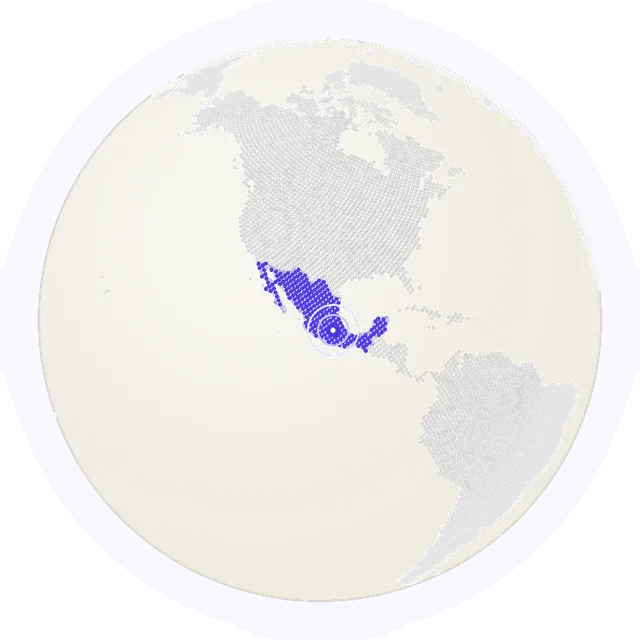
Moving to Mexico in 2026
Entry with an electronic authorisation, temporary residence on income from $4,630 a month, immediate permanent residence for retirees and a budget for the first 3 months in Mexico City.
Moving to Mexico: entry, first 30 days, 3-month budget
Citizens of many countries visit Mexico visa-free; for others a valid visa or residence permit from the US, Canada, the UK, Japan or the Schengen Area replaces a Mexican visa. To live there you obtain a resident visa at a Mexican consulate abroad: temporary residence with income from $4,630 a month over the last six months or savings from $78,025, permanent residence for retirees with a higher income. The consular fee is $56.
- Before the trip. Apply at a Mexican consulate: income or savings statements, an interview, the resident visa in your passport.
- Days 1-30. Exchange the visa for a resident card at the National Migration Institute within 30 days of entry and get the unique population registry code.
- Days 30-90. A bank account, a tax number if you will work, a one-year lease.
| 3-month item | Per person |
|---|---|
| One-bedroom flat in Mexico City outside the centre, 3 months plus deposit | ~$2,230-2,540 |
| Living costs excluding rent | ~$2,430-2,520 |
| Consular fee | $56 |
| Total | from $4,800 |
Rents are higher in central Mexico City and the Caribbean resorts: a one-bedroom in the capital's centre costs about $907-1,061 a month. A family budget depends on its size; we calculate it in the chat. Exchange rate: about 18.15 pesos per dollar on 5 October 2026.
Mexico in brief
Mexico is the second most populous country in Latin America, with about 130 million people, and shares its entire northern border with the US. The capital is Mexico City, whose metropolitan area has more than 20 million people, and the major centres are Guadalajara, Monterrey, Querétaro and Mérida. The economy rests on manufacturing, especially cars and electronics serving the US market under the trade agreement with the US and Canada, on oil, tourism and remittances. The language is Spanish, and the currency the Mexican peso.
Mexico suits remote workers and entrepreneurs with income from abroad, families planning a birth, and those who value living next to the US, a warm climate and a clear path to permanent residence. It suits less those for whom low crime in every region comes first.
How to move in 2026
| Basis | Main condition | What it gives |
|---|---|---|
| Temporary residence by income | income from $4,630 a month or $78,025 in the account, consular fee $56 | a resident card for up to 4 years, then permanent residence |
| Permanent residence by income | a pension or income higher than for temporary residence | permanent residence at once |
| Birth of a child | a child born in Mexico is a citizen from birth | permanent residence for the parents at once, citizenship from 2 years |
| Marriage | marriage to a Mexican citizen or permanent resident | residence, citizenship from 2 years |
| Employment | a job offer from a Mexican employer | temporary residence with the right to work |
The visa is issued at a Mexican consulate abroad, and within 30 days of entry it is exchanged for a resident card. Citizenship is granted after 5 years in the country, or after 2 years through marriage or the birth of a child, with a history and culture exam, and on receiving the certificate you sign a written renunciation of previous citizenship. More on the page about Mexican citizenship.
Rules for specific nationalities
Some rules in Mexico depend on the passport.
- Russia. For a trip by air Russian citizens need only a free electronic authorisation, and none at all with a valid visa or residence permit from the US, Canada, the UK, Japan or the Schengen Area.
Taxes
Mexican tax residents pay income tax on worldwide income on a scale from 1.92% to 35%. Residency usually follows a permanent home in Mexico. VAT is 16%, and 8% in the US border zone; corporate tax is 30%. Freelancers and small businesses with modest revenue can choose a simplified regime with tax of 1% to 2.5% of turnover. More on the page about Mexican taxes.
Property
Foreigners buy homes directly across almost the whole country. The exception is the restricted zone within 100 kilometres of the borders and 50 kilometres of the coast, where a foreigner owns property through a bank trust or a Mexican company; this is a normal, lawful form of ownership, for example in Cancún and Puerto Vallarta. The deal is executed by a notary, and a state acquisition tax and notary costs are paid. More on the page about property in Mexico.
Cost of living
Mexico is cheaper than the US and Canada: groceries, cafés, taxis and services cost noticeably less, while rents in popular parts of Mexico City and on the Caribbean coast have risen because of newcomers from the US. Public healthcare is aimed at citizens and workers, and newcomers use private hospitals, which are of a good standard in the big cities. Mexico City, Guadalajara and Monterrey have many international schools.
Where to live
- Mexico City. The capital at about 2,240 metres; Roma, Condesa, Polanco and Coyoacán are popular with newcomers.
- Guadalajara. The second city and a tech hub with a mild climate.
- Querétaro. A fast-growing industrial city and one of the calmest.
- Mérida. The capital of Yucatán: hot, calm and inexpensive.
- Playa del Carmen and Tulum. The Caribbean coast, resort life and holiday rentals.
Practicalities
- Documents. With a resident card you obtain a personal registration number and a tax number, without which you cannot open a bank account or sign a lease.
- Safety. It varies greatly by state and district: tourist areas of the big cities and Yucatán are calmer, while some northern and western states are dangerous.
- Language. Spanish; English is known in tourism and business.
- Earthquakes. Mexico City is seismically active and has an alert system.
- Getting there. Mexico City and Cancún have direct flights to dozens of US cities, Madrid and across Latin America.
Who Mexico suits
Mexico is a convenient country for living next to the US on income from abroad: residence by income, permanent residence after 4 years and citizenship after 5, or after 2 for families with a child born in Mexico. Write in the chat and we will check whether your income qualifies and calculate the full cost of moving.
Services
Murblz services in Mexico
A passport or residence permit opens the door, but life behind it is awkward without a bank account and a roof over your head. Murblz specialists help with the account, property and company in the same country. The quote is fixed in writing before work starts.
Popular questions
FAQ about Mexico
Do you need a visa for Mexico?
How can I move to Mexico permanently?
How much money do I need to move to Mexico?
What are the pros and cons of moving to Mexico?
What income is needed for Mexican residence?
Can a foreigner buy a home by the sea in Mexico?
Do you have to give up your previous citizenship when naturalising in Mexico?
How to get Mexican citizenship in 2026?
How much does Mexican citizenship cost?
Is there Mexican citizenship by investment or in 3 months?
How long do you have to live in Mexico to get citizenship?
Is there a test for Mexican citizenship?
Do Mexico's naturalisation rules depend on nationality?
What to do when you visit
What to see in Mexico City
Zócalo
One of the largest city squares on Earth, flanked by the Metropolitan Cathedral and National Palace.
Templo Mayor
Excavated ruins of the Aztec empire's main temple, sitting right in the modern downtown.
National Museum of Anthropology
The world's largest collection of pre-Columbian artifacts, including the real Aztec Sun Stone.
Frida Kahlo Museum (La Casa Azul)
The painter's cobalt-blue house in Coyoacán, filled with her belongings and art.
Chapultepec Park
One of the largest city parks in the world, with a castle, lakes, and museums inside its grounds.
Xochimilco
A network of Aztec-era canals where colorful trajinera boats float by with mariachi and tequila.
How to send money to Mexico in 2026 →
We can help with the transfer: ask in the chat.
How could you get Mexican residence?
Tell us about your income, savings and family - we check whether you meet the thresholds for temporary or permanent Mexican residence and prepare the consulate documents.