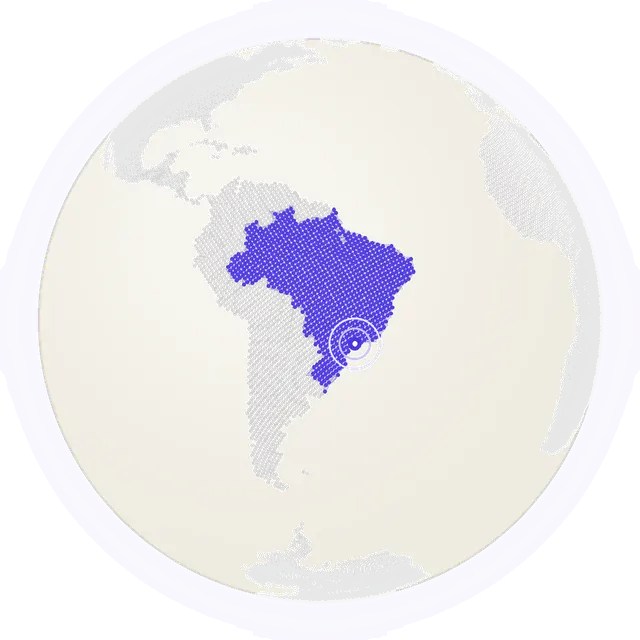
Brazil: all programs
Citizenship, residence, taxes and visas for Brazil - in one place. Not sure what fits? We will help you choose.
Brazil in brief
Brazil is the largest country in Latin America by both area and population, with about 210 million people. The capital is Brasília, and the largest cities are São Paulo and Rio de Janeiro. The economy rests on agriculture - soy, coffee, sugar and beef - on iron ore, oil, industry and a large domestic market. The language is Portuguese, and the currency the Brazilian real.
Brazil suits families planning a birth: the child becomes a citizen at once, and the parents can apply for a passport after just one year in the country. It also suits remote workers, retirees and buyers of property by the ocean. It suits less those for whom low crime and simple bureaucracy come first.
How to move in 2026
| Basis | Main condition | What it gives |
|---|---|---|
| Birth of a child | a child born in Brazil is a citizen from birth | residence for the parents, citizenship after 1 year instead of 4 |
| Digital nomad visa | foreign income from $1,500 a month or $18,000 in the account, consular fee from $290 | up to a year, renewable |
| Buying property | investment in a home, with a lower threshold in the north-east | investor residence |
| Retiree | a regular pension from abroad | residence |
| Marriage and family | marriage to a Brazilian citizen or resident | family reunification residence |
As a general rule citizenship is granted after 4 years in the country with residence, and after 1 year for parents of a Brazilian child and spouses of Brazilians, with a Portuguese language exam. Brazil allows dual citizenship. Citizens of the European Union, the UK and South American countries enter visa-free for up to 90 days, while citizens of the US, Canada and Australia need an electronic visa.
The first 30 days after the move
Brazilian bureaucracy rests on the individual taxpayer number: without it you cannot open an account, rent a flat or buy a SIM card. So the first weeks look much the same for everyone.
- Taxpayer number - before arrival. It is issued by the Federal Revenue Service of Brazil, and a foreigner can obtain it through a Brazilian consulate before the move.
- Registration with the Federal Police - within 90 days. Having received a visa or residence, a foreigner registers with the Federal Police within 90 days of entry, gives fingerprints and receives the national foreigner's card, the main document of a resident.
- Bank account. With the taxpayer number and the foreigner's card you open an ordinary resident account with cards and instant transfers. Before the card arrives only a few banks that work with non-residents will open an account.
- Housing. Landlords ask for a guarantor resident in Brazil, rent insurance or a deposit of several months, and the building fee and property tax add another 20-30% to the rent. For the first weeks a flat paid by the month is convenient while you choose a district on the spot.
- Healthcare. The public health system card is issued at the nearest clinic on a passport, taxpayer number and proof of address, but most newcomers buy a private health plan straight away.
Taxes
A person becomes tax resident after more than 183 days in Brazil within 12 months, and permanent residence holders from the date of arrival. Residents pay income tax on worldwide income on a scale from 0% to 27.5%, and since 2026 income up to 5,000 reais a month is tax-free. Corporate tax together with the social contribution is 34%, and large dividends are taxed at 10% from 2026. Employees pay social contributions of 7.5% to 14%. More on the page about Brazilian taxes.
Property
Foreigners buy flats and houses on the same terms as Brazilians, with restrictions on rural land and border areas. A purchase requires an individual taxpayer number, which can be obtained before arrival through a consulate. The deal is executed by a notary, and a municipal transfer tax, usually 2-3%, and a registry fee are paid. The places most popular with foreigners are the north-eastern coast, Florianópolis and Rio de Janeiro. More on the page about property in Brazil.
Bank and money
Almost all payments in Brazil go through the central bank's instant transfers by phone number or taxpayer number, cards are accepted everywhere, and cash is rarely needed. An ordinary resident account is opened once you have the foreigner's card, while a non-resident can use only a few banks and faces strict source of funds checks.
Money from abroad is transferred through a bank licensed for foreign exchange. A non-resident who invests in Brazil registers with the Central Bank as a foreign investor. Residents report foreign accounts and assets in the annual tax return, and from $1 million also report them to the Central Bank.
We help open a personal account in Brazil, a business account and register a company.
Cost of living
Life in Brazil is cheaper than in Europe but more expensive than you might expect: imported electronics and cars carry high duties. The most expensive cities are São Paulo, Rio de Janeiro and Florianópolis. Public healthcare is free for everyone, including foreigners, but for fast and convenient care most newcomers buy a private health plan. Private schools with bilingual programmes exist in all big cities.
Budget for the first 3 months
One person in São Paulo with rent needs about $1,500-2,500 a month, a couple $2,300-3,500, and a family with a child from $3,100. For three months one person needs $4,500-7,500. On top come a deposit or rent insurance, furniture if the flat is unfurnished, and private health insurance at about $110-310 a month per person. In Florianópolis a single person needs $1,400-2,200 a month, but life on the island is hard without a car.
Detailed prices for rent, food, transport and schools are in the article on the cost of living in Brazil and in the guides to São Paulo, Rio de Janeiro and Florianópolis. A manager in the chat will calculate the full cost of moving for your family.
Where to live
- São Paulo. The business centre of Latin America, with jobs, restaurants and culture, and dense development.
- Rio de Janeiro. Beaches and mountains within the city; the South Zone districts are best.
- Florianópolis. An island with beaches and tech companies in the south, one of the safest big cities.
- Curitiba. A tidy southern city with a cool climate and good infrastructure.
- Fortaleza and the Ceará coast. The north-east, warm all year with affordable housing by the ocean.
Practicalities
- Documents. The taxpayer number is needed for a bank account, phone and lease, and after residence is granted you receive a national foreigner's card.
- Language. Portuguese; English is mainly known in business circles in big cities.
- Safety. Street crime is high, so many people live in guarded condominiums and use ride-hailing.
- Payments. Almost all payments go through the central bank's instant transfer system, and cash is rarely needed.
- Getting there. São Paulo and Rio de Janeiro have direct flights to Europe, the US and across Latin America.
Residence, citizenship and taxes: further reading
- Residence in Brazil - all grounds, documents and timelines.
- Digital nomad visa - for remote work with income from abroad.
- Giving birth in Brazil - citizenship for the child and a fast-track passport for the parents.
- Brazilian citizenship - naturalisation, the language exam and timelines.
- Brazilian taxes - residence, rates and the tax return.
Who Brazil suits
Brazil is one of the fastest routes to a passport for a family with a child: citizenship for the child from birth and for the parents after a year. For remote work there is a nomad visa with a modest income threshold. Write in the chat and we will plan the path to the passport and calculate the full cost of moving for your family.
Services
Murblz services in Brazil
A passport or residence permit opens the door, but life behind it is awkward without a bank account and a roof over your head. Murblz specialists help with the account, property and company in the same country. The quote is fixed in writing before work starts.
Popular questions
FAQ about Brazil
How long must I live in Brazil to get citizenship?
Do I need a visa to visit Brazil?
What income is needed for the Brazilian digital nomad visa?
What should I do in the first month after moving to Brazil?
How much money is needed for the first three months in Brazil?
Can I get Brazilian citizenship through the birth of a child?
Do I need Portuguese for Brazilian citizenship?
Does Brazil allow dual citizenship?
How long does a decision on Brazilian citizenship take?
Can I get Brazilian citizenship through marriage?
What to do when you visit
What to see in Brasília
Praça dos Três Poderes
The Square of the Three Powers is the city's heart, where the congress, presidential palace, and supreme court by Niemeyer all meet.
Catedral Metropolitana
A crown-shaped cathedral of sixteen hyperboloid columns with a breathtaking stained-glass sky overhead.
Museu Nacional Honestino Guimarães
This white domed museum beside the cathedral hosts rotating exhibitions, with the architecture itself as the star.
Palácio da Alvorada
The president's official residence, famous for its slender curved columns that became a symbol of Brazilian modernism.
Santuário Dom Bosco
A church bathed in blue light from 7,400 stained-glass panels, almost mystical at sunset.
Parque Nacional de Brasília
A national park with natural pools and savanna trails right on the edge of the city.
How to send money to Brazil in 2026 →
We can help with the transfer: ask in the chat.
Which route to Brazil fits your plans?
Tell us about your income, family and goals - we compare the nomad visa, retiree or investor residence and the path to Brazilian citizenship and draw up a plan with documents.