Giving birth in Brazil and birthright citizenship
For the parent of a Brazilian child, the law cuts the residence needed for naturalization fourfold: from 4 years to at least one. But that year starts when residence is registered, not on the day of birth, and it has to be lived in Brazil for real, with Portuguese and a clean record.
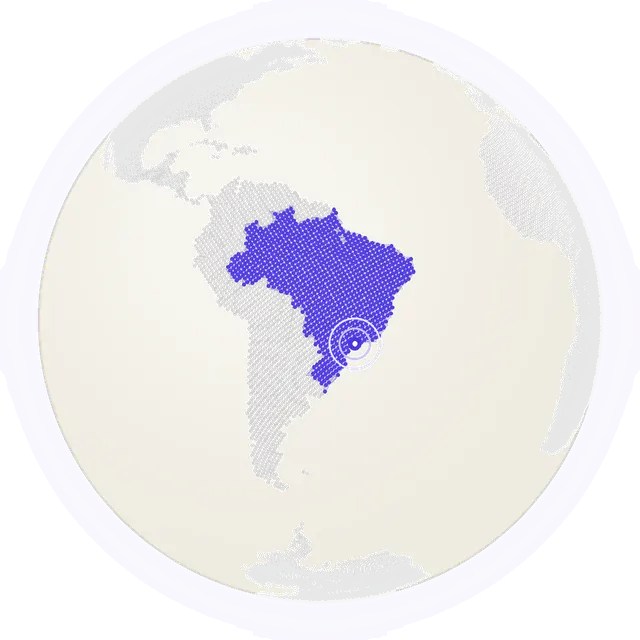
A child born in Brazil becomes Brazilian at the moment of birth, and the parents need no residence permit, no investment and no minimum stay for that to happen. For the parents, the law offers a deal rather than a gift: a family reunion residence permit right after the birth and the right to apply for citizenship after at least a year of genuinely living in the country. Below: what that takes, what it costs and where families most often go wrong.
Does Brazil have birthright citizenship?
Yes, and the parents' status does not matter. Article 12 of the Brazilian Constitution makes everyone born on Brazilian soil a Brazilian by birth (brasileiro nato). A mother can fly in visa-free a few weeks before her due date: it makes no difference to the child's citizenship.
There is one exception: children of foreigners who are in Brazil in the service of their own state, such as diplomats. Everything else is a question of paperwork, not of entitlement.
Brazil is less generous with the parents. They do not become citizens automatically, but Migration Law 13.445/2017 gives them two levers: a residence permit through family reunion and a residence requirement for naturalization cut to a quarter. On the second point Brazil formally beats its neighbours Argentina, Uruguay and Paraguay.
| Who | What they get | When | Legal basis |
|---|---|---|---|
| Child | citizenship by birth, the highest category with no restrictions on rights | at the moment of birth | Art. 12, I, a of the Constitution |
| Child | Brazilian passport | after the birth is registered, by appointment with the Federal Police | fee of ~$55 |
| Parents | family reunion residence permit (autorização de residência para fins de reunião familiar) | the application can be filed as soon as the child's documents are ready | Art. 37 of Law 13.445/2017, Art. 153 of Decree 9.199/2017, Interministerial Ordinance 12/2018 |
| Parents | ordinary naturalization (naturalização ordinária) | application no earlier than 1 year of living in the country on the residence permit, then the review | Arts. 65-66 of Law 13.445/2017, Art. 235 of Decree 9.199/2017 |
A Brazilian passport does not take away the child's right to the parents' citizenship. Whether the child also becomes a citizen of the parents' country depends on that country's law, and the rules differ widely. Check them before you travel and register the child with your consulate after the birth.
We will estimate online the budget for your family: the birth and the child's documents.
What changed for giving birth in Brazil in 2026?
In three years nobody touched Article 12 of the Constitution or the shortened period for parents. Everything around them changed: the border became more attentive, addresses get checked, mobile phone bills no longer count as proof of residence, and Congress is debating new naturalization requirements.
| Date | What happened | What it means for the family |
|---|---|---|
| 3 October 2023 | Constitutional Amendment 131/2023: Brazilians no longer lose citizenship by acquiring another one; a court can cancel a naturalization for fraud in the naturalization process | dual citizenship is safe, but deception during naturalization can cost you the passport even after you get it |
| 12 December 2023 | Law 14.754/2023: residents' income from financial investments abroad and profits of controlled foreign companies are taxed at 15% in the annual return, from 2024 | tax residence became more expensive for owners of foreign assets |
| 7 October 2025 | Decree 12.657/2025: National Policy on Migration, Refuge and Statelessness, amendments to Decree 9.199/2017 | residence procedures are being restructured; the family reunion article did not change |
| 26 November 2025 | Law 15.270/2025: from 1 January 2026, income tax exemption for income up to $1,100 a month, a minimum tax on income above $130,000 a year, 10% withholding on dividends above $11,000 a month from one company | relevant for parents who become tax residents |
| 15 April 2026 | The Chamber of Deputies Committee on Foreign Relations and National Defence approved bill 2523/2019; it now goes to the Constitution and Justice Committee (CCJC) | if passed, naturalization would also require proof of lawful means of subsistence and exclude people facing criminal prosecution; the 1-year minimum for parents of Brazilian children stays in the text |
| 19 May 2026 | Portugal's new nationality law (Organic Law 1/2026) entered into force | Brazilians now need 7 years of residence instead of 5 for a Portuguese passport |
| 6 July 2026 | The Ministry of Justice updated its naturalization requirements: mobile phone bills are no longer accepted as proof of residence | the residence period is proven with water and electricity bills, leases, bank and work records |
| 30 July 2026 | Unofficial accounts emerged of mass entry refusals for pregnant Russian women; this has not been officially confirmed | the declared purpose of travel and a complete set of documents became decisive |
| 12 August 2026 | The Federal Police said there is no special ban: pregnancy in itself is not a ground for refusing entry, and each case is decided individually | the risk of refusal is individual, but not zero |
| 19 August 2026 | The Federal Police ran Operation Pacto Simulado in Rio de Janeiro against a group preparing false declarations of stable union (união estável, a Brazilian de facto partnership) for foreigners' residence permits | fake documents for residence are investigated as crimes |
| 1 September 2026 | Brazilian consulates switched to electronic temporary visas for nationals of visa-exempt countries | a family reunion visa can be obtained without visiting a consulate |
No law passed in 2023-2026 abolished birthright citizenship or the shorter period for parents. The main risk on the horizon is bill 2523/2019: to become law it still has to clear the Constitution and Justice Committee and the Senate.
How much does it cost to give birth in Brazil?
There is no standard price list for births to foreigners in Brazil, and any figure without a clinic's name attached is advertising, not a quote. The price depends on the city, the doctor, the type of delivery, the number of days in hospital and whether the baby needs neonatal intensive care.
Ask two or three clinics for a written estimate before you travel: prenatal care, the birth, doctors' fees and a reserve for a caesarean section and neonatal care, listed separately. Government fees for the child's documents and the parents' residence are in the table.
| Item | Amount | What to know |
|---|---|---|
| Prenatal care and birth at a private clinic | per the clinic's estimate | keep a reserve for a caesarean section and neonatal care |
| Birth registration and first certificate | free | by Law 9.534/1997 |
| Child's passport | ~$55 | Federal Police fee for a regular passport |
| Residence application review, per parent | ~$35 | official Federal Police fee table |
| CRNM card, per parent | ~$45 | CRNM (Carteira de Registro Nacional Migratório) is the foreigner's identity card in Brazil |
| Celpe-Bras Portuguese exam | ~$55 | recommended fee in Brazil for the 2026 session; the test centre sets the final price |
| Naturalization | no government fee | Ministry of Justice service |
| Apostilles, sworn translations, certificates | depends on volume | translation into Portuguese is done by a sworn translator in Brazil (tradutor juramentado) |
| Legal support | quoted after reviewing the documents | Murblz specialists together with partners registered with the Brazilian Bar (OAB) |
Government fees for a family of two parents and one child start from $325: the child's passport, residence for both parents and the Portuguese exam. Naturalization carries no fee.
Fees are the smallest part of the budget. The real money goes on living: a lease in your own name, insurance, Portuguese lessons and at least a year in the country. Those are the costs to compare when you choose between Brazil, Argentina and Uruguay.
Can a foreigner give birth in a public hospital in Brazil?
Brazilian law does not sort patients by passport. Article 196 of the Constitution declares health a right of everyone, and Article 4 of the Migration Law guarantees migrants access to public healthcare without discrimination by nationality or migration status, as provided by law.
The public system is called SUS (Sistema Único de Saúde, the Unified Health System). How it works in practice depends on the city and the specific maternity hospital: capacity, booking of routine appointments, the language spoken. You cannot choose your doctor in advance there.
That is why the budget should be built around a private clinic: you know the doctor, the hospital and the procedure in advance. Buying a private health plan during pregnancy and giving birth on it straight away does not work: Law 9.656/1998 lets insurers set a waiting period (carência) of up to 300 days for a full-term birth.
The clinic signs the contract for medical services with you directly. We do not sell medical services and do not act as an intermediary for them.
How to get the child's documents after birth in Brazil
A Brazilian child's first documents cost almost nothing: birth registration and the first certificate are free by law, and you only pay for the passport. The whole chain starts with a single statement from the maternity hospital.
| Step | Document | Issued by | What matters |
|---|---|---|---|
| 1 | DNV (Declaração de Nascido Vivo), the live birth statement | the maternity hospital | the basis for registering the birth |
| 2 | Birth certificate (certidão de nascimento) | civil registry office (cartório de registro civil) | the key document proving citizenship; registration and the first certificate are free |
| 3 | Brazilian taxpayer number | the Federal Revenue Service, often directly at the cartório during registration | needed for doctors, banks, schools and almost any service |
| 4 | Brazilian passport | the Federal Police, by appointment | ~$55; a minor's passport requires the consent of both parents |
| 5 | Documents from the parents' country | the parents' consulate | procedure and timing are set by that country's law |
If a Brazilian child travels abroad with only one parent, written authorisation from the other parent with a notarised signature is required. This comes from National Council of Justice Resolution CNJ 131/2011. Plan for it in advance if the parents travel separately.
How can parents get residency in Brazil through their child?
The parent of a Brazilian child can apply for a residence permit without leaving the country, even after entering as a tourist. Article 5 of Interministerial Ordinance 12/2018 says so directly: the Federal Police (Polícia Federal, PF) accepts the application, including from a person in visitor status.
The legal basis sits in three acts. Article 37 of Law 13.445/2017 grants family reunion residence to relatives of Brazilians, Article 153 of Decree 9.199/2017 expressly names an immigrant who has a Brazilian child, and Ordinance 12/2018 sets the procedure and the list of documents. The holder of this permit can work and carry out any lawful activity on the same terms as citizens.
If the child has already been born and the parent is abroad, the route is different: a temporary family reunion visa through a consulate. Since 1 September 2026 nationals of visa-exempt countries receive it electronically; see our breakdown of Brazil's electronic visas.
| Document under Ordinance 12/2018 | Comment |
|---|---|
| PF online form and two 3x4 photos | filled in online, followed by an in-person visit |
| Valid passport | the parent's passport |
| Child's birth certificate | proves the family link to a Brazilian citizen |
| The Brazilian child's identity document | the document of the family member you are joining |
| Criminal record certificates | from the countries where you lived in the last 5 years, legalised or apostilled, with a sworn translation |
| Declaration of no criminal record for 5 years | under penalty of law (sob as penas da lei) |
| Declaration that the child lives in Brazil | also under penalty of law, which is why the address must be real |
| Fee receipts | ~$35 for the review and $45 for the foreigner card, together ~$80 |
From what date does the year before citizenship run?
For naturalization, the period is counted not from entry and not from the child's birth, but from the date the residence on an indefinite-term basis (por prazo indeterminado) is registered with the Federal Police. In practice parents of Brazilian children receive exactly this indefinite-term residence. If your CRNM card shows an expiry date, Murblz specialists check before you apply for naturalization which date your residence period actually runs from.
How to keep the status
- The basis must continue: the status is tied to the family link with the Brazilian child.
- Being away from Brazil for more than two years without a valid reason means losing the residence (Art. 135 of Decree 9.199/2017).
- The residence is cancelled at any time if fraud or a concealed impediment comes to light (Art. 136 of the Decree).
A criminal record does not by itself block family reunion residence: Article 132 of the Decree makes an exception for this ground. Naturalization, however, requires a clean record or rehabilitation, so settle that question before you start.
The child opens Brazil's door to the parents only once born. To move earlier, you need a separate basis, for example a Brazil residence permit through buying property.
We will review your situation for free
Describe your task in the chat and we will tell you where to start.
When can parents get Brazilian citizenship?
Article 66 of the Migration Law cuts the standard 4 years of residence to at least one year for anyone who has a Brazilian child. The key words are at least: the law sets a floor for the residence period, not a date for the passport. After that year you still need the language, the certificates and the review of your file.
| Requirement | What exactly is checked | Legal basis |
|---|---|---|
| Legal capacity | under Brazilian law | Art. 65, I of Law 13.445/2017 |
| Residence | 4 years, or at least 1 year on an indefinite-term basis with a Brazilian child, immediately before the application; the period must be completed when you apply | Arts. 65-66 of the Law, Arts. 233 and 235 of Decree 9.199/2017 |
| Trips abroad | no more than 3 months in total per year of the required period; for a 1-year period, no more than 3 months | Art. 233 of the Decree, Ministry of Justice guidance |
| Portuguese | a document from the closed list of Ministry of Justice Ordinance 623/2020 | Art. 65, III of the Law |
| No criminal record | certificates from Brazil and the country of origin, or rehabilitation | Art. 65, IV of the Law |
| Proof of residence | at least one document per year; the CRNM card is mandatory | Ministry of Justice guidance |
The Ministry of Justice accepts water, electricity and landline bills, a lease or purchase deed, a bank statement, proof of work or business, education records, medical records and other papers showing that you live in the country as proof of residence. Mobile phone bills are no longer accepted, as the ministry clarified on 6 July 2026. Owning property does not in itself prove residence (Art. 233 of the Decree), and the ministry cross-checks your data against official databases.
Sample timeline. The child is born in March, and the parent's indefinite-term residence is registered with the Federal Police in May of the same year. The earliest date to apply for naturalization is May of the following year, provided trips abroad during that year did not exceed 3 months and Portuguese is already certified. Then comes the review: Decree 9.199/2017 (Art. 228) gives the procedure 180 days from receipt of the application, but the minister can extend that period when additional checks are needed.
How to prove Portuguese
The Ministry of Justice accepts only documents from a closed list:
- the Celpe-Bras certificate, the national exam run by INEP (the National Institute for Educational Studies and Research);
- a degree or postgraduate diploma from a Brazilian university;
- a pass in the Brazilian Bar (OAB) exam;
- successful completion of a Portuguese course for immigrants at a university accredited by the Ministry of Education (MEC); for distance courses at least one in-person assessment is required, and the certificate must say aprovado, meaning passed, not just enrolled;
- a school certificate through ENCCEJA (Exame Nacional para Certificação de Competências de Jovens e Adultos, the national exam for adults who did not finish school) or completion of a Brazilian school;
- a foreign medical diploma validated through REVALIDA (the national exam for doctors trained abroad), or appointment as a lecturer, technician or scientist by competitive exam at a public university.
Celpe-Bras is held twice a year. The second 2026 session is scheduled for 20-23 October in Brazil and 24-27 November abroad; registration closed on 6 August, and the recommended fee in Brazil is about $55. The oral part is mandatory, so start learning the language before the birth, not a month before you apply.
How the procedure works
| Stage | What happens | Time |
|---|---|---|
| 1. Application | the Naturalizar-se online form through an account on the gov.br government portal, uploading documents | no official estimate |
| 2. Federal Police | file check, appointment, in-person visit with originals and biometrics | depends on the office's workload |
| 3. Decision | the Department of Migration of the Ministry of Justice; requests for additional documents are possible | 180 days from receipt of the application under the Decree, extendable when additional checks are needed (Art. 228 of Decree 9.199/2017) |
| 4. Publication | the decision is published in the official gazette, Diário Oficial da União; naturalization takes effect from publication | - |
| 5. Refusal | appeal within 10 days of notification | 10 days |
| 6. After approval | hand the CRNM card back to the PF, register with the electoral court within a year, obtain citizen's documents and a passport | 1 year for electoral registration |
All naturalisation conditions, documents, the exam and processing times are on the page Brazilian citizenship.
Brazil or Argentina: where is it better to give birth?
In every country in the table below the child becomes a citizen on the day of birth. The difference lies elsewhere: how long the parents wait, how stable the rules are and which passport the family ends up with.
| Country | Parents' minimum residence before citizenship | What matters in 2026 | Passport: visa-free destinations |
|---|---|---|---|
| Brazil | from 1 year on indefinite-term residence | certified Portuguese, criminal record certificates, trips abroad of no more than 3 months a year | 170 |
| Argentina | 2 years under Citizenship Law 346 | Decree 366/2025: permanent residence only with proof of means and no criminal record, tourist stays do not count towards residence, planned care for non-residents at federal hospitals only with insurance or prepayment; on 30 June 2026 the National Electoral Chamber declared the decree null, after other federal courts had already set aside its citizenship provisions; the government said it would appeal to the Supreme Court, which will decide the naturalization procedure | 169 |
| Uruguay | 3 years with family in the country | the rules are in Art. 75 of the Constitution, two witnesses are required, an absence of more than 6 months in a row resets the clock | 156 |
| Paraguay | 3 years of permanent residence | naturalization through the Supreme Court; actual residence must be proven | 145 |
| Mexico | 2 years for parents of a Mexican by birth | the period is shortened by the Nationality Law (Ley de Nacionalidad) | 156 |
On paper Brazil is the fastest. In 2026 Argentina loses not on time but on court disputes: Decree 366/2025 tightened the parents' route, the courts declared its citizenship provisions invalid, and the Supreme Court has the last word. Uruguay is slower, but its rules do not depend on a presidential decree.
Brazil asks more of the parents themselves: certified Portuguese, a year with almost no travel and tax residence. For a family that is ready to move, that is a fair price for the shortest legal residence requirement among the countries in this table. A detailed comparison of six countries is in our review of giving birth abroad for citizenship.
If a birth does not fit your plans, Brazil has other grounds for moving: the digital nomad visa for remote work and other Brazilian residence permits. None of them, however, gives the shortened naturalization period.
Let us check whether you qualify
Describe your situation in the chat and we will tell you right away whether you meet the requirements.
Will Brazil let a pregnant traveller in? Entry rules by nationality
In late July 2026 unofficial accounts emerged that Brazil was turning pregnant Russian women away at airports. On 12 August the Federal Police denied it: there is no special directive, pregnancy in itself is neither a ground for entry nor for refusal, and documents, the purpose of travel and funds are assessed individually. There are no official statistics on refusals, so the risk has to be built into the plan.
Legally, border officers do have tools. Article 45, VII of the Migration Law allows them, after an individual interview and a reasoned decision, to refuse entry to a person whose purpose of travel does not match the grounds for visa-free entry. The rules for getting in differ by passport:
| Passport | Entry for a short trip | Basis |
|---|---|---|
| European Union countries, the United Kingdom | visa-free, up to 90 days | Brazil and European Union agreement promulgated by Decree 7.821/2012 and amended by Decree 12.864/2026; bilateral arrangements |
| United States, Canada, Australia | electronic visa since 10 April 2025, fee $81, stays of up to 90 days | Brazil's Ministry of Foreign Affairs |
| Russia | visa-free, up to 90 days in each 180-day period; each side keeps the right to refuse entry | agreement promulgated by Decree 7.271/2010 |
| Ukraine | visa-free, up to 90 days | bilateral agreement |
| What to carry | Why |
|---|---|
| Proof of real accommodation: a lease or booking for the whole stay | the address will later go into the residence application and the naturalization file |
| Proof of funds: statements, cards | the officer assesses whether you can afford the trip |
| Pregnancy medical records and the contract with the clinic | they show the birth is paid for and organised |
| Travel medical insurance | cover in case of complications before the birth |
| Return or onward ticket | confirms the travel plan |
The rule is simple: state the purpose of your trip truthfully at the border. Before you fly, Murblz specialists help you decide whether visa-free entry suits you or whether a temporary visa for medical treatment makes more sense: Article 14 of Law 13.445/2017 provides for it, and Article 35 of Decree 9.199/2017 requires proof that you can pay for the treatment from your own funds or with insurance valid in Brazil.
What happens if you use a fake address or fake documents?
Giving birth in Brazil and getting the child a passport is legal. Deceiving the state at the border, in the residence application or in the naturalization file is not, and in 2026 it ends in criminal cases, not fines.
Address and documents
Give only the address where you actually live. It goes into the residence application, into the declaration that the child lives in Brazil and later into the naturalization file, where the Ministry of Justice checks it against official databases. Submit only genuine certificates, leases and bills.
What deception leads to
- Refusal of entry and, after a criminal conviction, expulsion (expulsão) with a ban on returning.
- Cancellation of residence at any time if fraud is uncovered (Art. 136 of Decree 9.199/2017).
- Revocation of naturalization by a court for fraud in the naturalization process (Constitutional Amendment 131/2023).
- Criminal cases: under Operation Pacto Simulado in August 2026, the Federal Police is investigating false stable-union declarations for residence permits as false statements in documents (falsidade ideológica) and criminal association (associação criminosa).
The lesson from next door
In Argentina, from December 2022, judge María Servini handled the case of an agency which organised births for Russian women. Investigators found false addresses in dozens of clients' certificates of residence, many of them the same address in the Puerto Madero district. Falsification and fraud were investigated, and clients of such agencies put their own status at risk as much as the organisers.
Brazil itself has had no comparable case. In 2019 births by Russian women in Florianópolis alarmed the Conselho Tutelar, the city's child protection council. The Federal Police looked into the cases and found no migration irregularities: according to federal prosecutors' documents, the families wanted Brazilian nationality and passports for their babies, which is legal.
Who does what
We help plan the route and prepare the documents. Legal representation in Brazil is handled by Murblz specialists together with partners registered with the OAB (Ordem dos Advogados do Brasil, the Brazilian Bar Association). We do not sell medical services: the clinic signs its contract with you directly.
Get the document checklist for this program
Leave a contact in the chat and we will send a list for your family.
What does a Brazilian passport give, and how do naturalized citizens differ?
The Brazilian passport opens 170 destinations visa-free or with a visa on arrival. For comparison, Mexico and Uruguay reach 156 destinations, Ukraine 142 and Russia 114. You can compare passports in our 2026 passport ranking and in the citizenship section.
- Dual citizenship. After Amendment 131/2023, a Brazilian loses citizenship in only two cases: if a court cancels the naturalization for fraud in the naturalization process or for an attack on the constitutional order, or if the person files an express request to renounce it. Your current country sets its own rules; see our article on dual citizenship in 2026.
- Travel. Visa-free to the Schengen Area, the United Kingdom and Japan. The United States and Canada require a visa.
- Mercosur. The Residence Agreement of Mercosur, the South American common market, makes residence permits easier for Brazilians in member states.
- Portugal. Since 19 May 2026, nationals of Portuguese-speaking countries, including Brazil, need 7 years of residence to naturalize in Portugal; most other foreigners need 10.
Limits for naturalized citizens
- The offices of president and vice-president, presidents of both chambers of Congress, justices of the Federal Supreme Court, the diplomatic career, officer ranks in the armed forces and the post of defence minister are reserved for Brazilians by birth (Art. 12, §3 of the Constitution). This does not affect the child, who is Brazilian by birth.
- A Brazilian by birth is never extradited. A naturalized citizen can be extradited for a common crime committed before naturalization or for proven involvement in drug trafficking (Art. 5, LI of the Constitution).
- After naturalization you must register with the electoral court within a year; voting is compulsory for citizens aged 18 to 70.
What taxes do parents face after getting residency in Brazil?
A residence permit changes your tax status as well as your migration status, and for owners of foreign assets that is often the most expensive part of the move. Under Federal Revenue Service Instruction SRF 208/2002, a foreigner with permanent status (today, residence on an indefinite-term basis) becomes a Brazilian tax resident from the date of entry with that status, or, if it was obtained inside the country, from the date it was granted. Without it, you become resident on your 184th day in the country within a 12-month period. A resident declares worldwide income.
| Rule | Substance |
|---|---|
| Law 14.754/2023 | income from financial investments abroad and profits of controlled foreign companies - 15% in the annual return |
| Law 15.270/2025 | exemption for income up to $1,100 a month, a minimum tax of up to 10% on income above $130,000 a year, 10% withholding on dividends above $11,000 a month from one company |
If you have an investment portfolio, a company or trusts abroad, do the tax planning before you get residence, not after. Rates and general rules are collected in our guide to taxes in Brazil, and country comparisons in taxes by country. Also check whether Brazil has a double taxation treaty with your country.
Pros and cons of giving birth in Brazil: who should not choose it
The most expensive mistake is counting the one-year residence period from the date of birth. The clock starts only when indefinite-term residence is registered, and the review of the file still comes after that year.
| Pros | Cons |
|---|---|
| the child's citizenship from birth with no conditions for the parents | the parents do not become citizens automatically |
| parents can get residence without leaving the country | the residence period runs from registration of indefinite-term residence, not from the birth |
| minimum residence for naturalization is 1 year instead of 4 | no more than 3 months abroad per year of residence |
| a strong passport: 170 visa-free destinations | Portuguese must be certified by an exam or a course |
| dual citizenship expressly allowed by the Constitution | tax residence and 15% tax on foreign investments |
| no government fee for naturalization | entry is decided individually at the border |
Pitfalls
- The border. In 2026 there were unofficial accounts of refusals for passengers in late pregnancy, although the Federal Police said that pregnancy in itself is not a ground for refusal.
- You cannot live between countries. Trips abroad of more than 3 months per year of residence put naturalization at risk, and you need proof of residence for every year.
- Portuguese is tested seriously. You need a certificate with an oral part or a course at an accredited university marked as passed.
- A pending bill. Bill 2523/2019, which adds proof of means of subsistence, has already cleared one committee.
- Turnkey packages. An agency that promises entry or a passport by a certain date is selling something outside its control: the decisions belong to the border officer and the Ministry of Justice.
Who it suits and who it does not
It suits families ready to live in Brazil for at least a year after indefinite-term residence is registered, learn Portuguese, become tax residents and prove a real address. For them it is one of the shortest legal routes to a second citizenship for parents in Latin America.
It does not suit those who want a passport without moving, plan to give birth and leave straight away, are not ready for tax residence, or count on public healthcare as the main option. In those cases choose another country or another route.
Practical details on clinics, cities and flights are in our article on giving birth in Brazil in 2026, and the country overview is on the Brazil page.
What Brazilian citizenship gives
Dual citizenship
Since Constitutional Amendment 131/2023, acquiring another citizenship no longer means losing Brazilian citizenship. The rules of your current country need to be checked separately.
170 visa-free destinations
Schengen, the United Kingdom and Japan without a visa. The United States and Canada require a visa.
Mercosur
The Mercosur Residence Agreement makes residence permits easier for Brazilian citizens in Argentina, Uruguay, Paraguay and other member states.
A faster route to Portugal
As citizens of a Portuguese-speaking country, Brazilians need 7 years of legal residence for a Portuguese passport under the law in force since 19 May 2026. Most other foreigners need 10 years.
From birth to naturalization: how the path works
Consultation and plan
We check documents, the entry format, a budget based on a private clinic and your readiness to live in the country for at least a year after getting residence.
Entry
Depending on your passport you enter visa-free or with an e-visa. At the border you state the purpose of your trip truthfully and show a real address and genuine documents.
Birth and the child's documents
A DNV statement from the hospital, a free birth certificate from the cartório, a taxpayer number and the child's passport from the Federal Police for about $55.
Residence for parents
A family reunion application to the Federal Police, biometrics and a CRNM card. Fees of about $35 and $45 per parent.
A year of living in Brazil
At least 1 year on an indefinite-term basis, trips abroad of no more than 3 months, certified Portuguese and proof of residence for every year.
Naturalization
An online application, a Federal Police visit, a Ministry of Justice decision and publication in the official gazette. No government fee.
FAQ
Does Brazil have birthright citizenship?
Do parents get Brazilian citizenship if their child is born in Brazil?
How much does it cost to give birth in Brazil?
Can I give birth in Brazil as a US citizen?
Can parents apply for residence in Brazil after entering visa-free?
Is Brazil cracking down on birth tourism?
Brazil or Argentina: which is better for giving birth?
How do I prove Portuguese for Brazilian naturalization?
Does Brazil allow dual citizenship?
What are the pros and cons of giving birth in Brazil?
Examples of visa-free countries with a Brazilian passport
Europe
Africa
Americas
Oceania
Asia
Services
Murblz services in Brazil
Giving birth abroad is more than a clinic and a birth certificate: the family needs a bank account and housing, and the parents later need residence. Murblz specialists help with the account, property and company in the same country. The quote is fixed in writing before work starts.
Next step for parents - residence and citizenship:
See also
Related programs and destinations
All programs - Brazil:
Similar destinations:
The same program in other countries:
How to send money to Brazil in 2026 →
We can help with the transfer: ask in the chat.
Articles about Brazil
How to send money to Brazil in 2026: reais through a currency exchange in 2 business days and a purpose code
Read →Brazil taxes for foreigners and expats: tax residency
Read →Moving to Brazil in 2026: is it a good place to live?
Read →Giving birth in Brazil in 2026: citizenship for your baby, residency and naturalization for parents
Read →Choosing where to give birth in 2025: the US, Canada, Portugal, Argentina, Chile and Brazil
Read →Giving birth in Brazil: the pros and cons of one of the most popular destinations
Read →Giving birth in Brazil to shorten your path to a passport?
We help with the clinic and your child's documents, arrange the parents' residence and prepare naturalization in Brazil with the reduced residence period. The catalogue covers other routes.
The Murblz consultant replies straight away in the chat on this page. Describe your situation and we will work it out together.
Free consultation