How to send money to Estonia in 2026: euros around the clock from the EU and in 1-3 business days from other countries
In 2026 an Estonian bank credits euros from the EU in up to 10 seconds at any time of day, and a payment from other countries arrives in 1-3 business days. The 20-character account number and the holder's name are enough, and from $10,000 the bank asks where the money comes from.
In short
- An Estonian account number has 20 characters, and an instant euro transfer takes up to 10 seconds.
- Gifts and inheritance in Estonia are tax-free, from relatives and from strangers.
- A company pays 22% only when it pays dividends.
- The first 700 euros ($790) of income a month are tax-free for every resident.
- The guarantee fund returns up to 100,000 euros ($120,000) per person at each bank.
In detail
| From where and to where | Status in 2026 | Time in transit | What to state |
|---|---|---|---|
| Instant euro transfer from an EU country to a personal account | works around the clock | up to 10 seconds | the 20-character account number and the holder's name |
| Transfer from a non-EU country to a personal account | works | 1-3 business days | the recipient bank's code, the payment purpose, for a large sum a document on the origin of the money |
| Transfer to an Estonian company's account | works | as for a personal account | the contract or invoice number in the purpose |
| Paying for a home through a notary's deposit account | works | by the deal date | the contract at the notary and a document on the origin of the money |
| Money transfer service | works | from minutes to a day | the recipient's passport and the reference number |
The table was checked on 8 October 2026. Dollars are calculated at the European Central Bank rate on 7 October 2026, 1.1177 dollars per euro, rounded up. If money comes from a non-EU country, the route depends on the sender's bank and the country whose banks the payment passes through, so the first large transfer is best split up, starting with a test sum.
The Estonian account number and access to the bank with an electronic ID
An Estonian account is recognised by its 20-character international number: the country code, 2 check digits and 16 digits, the first 2 of which identify the bank. The recipient copies the number from the bank's app, and the sender states the holder's name exactly as the bank records it: since 9 October 2025 a bank in the euro area tells the sender about a mismatch between the name and the number before the transfer.
Estonia runs almost all banking online: a resident with an Estonian ID card opens an account, signs contracts and files a tax return from home in one day. Others open an account at a branch, and the bank looks at the link to the country: a residence permit, work, studies or an Estonian company. Grounds for living in the country are in a residence permit in Estonia.

For those who come to work remotely, the digital nomad visa fits; it is covered on the digital nomad visa in Estonia page. With it, it is easier to explain to the bank why you need an Estonian account and where the money comes from.
A company in Estonia and money to its account
In Estonia a company pays the 22% profit tax only when it pays dividends to the owner. Profit that stays in the business and is invested in growth is not taxed, however many years it builds up. That is why an Estonian company is often chosen for a business that works with clients across the EU.
Money reaches a company account as an ordinary euro transfer, but the payment purpose states the contract or invoice, otherwise the bank will ask for an explanation. The owner's contribution to capital is formalised by a founder's decision and transferred from the owner's personal account, so the origin of the money is clear straight away.
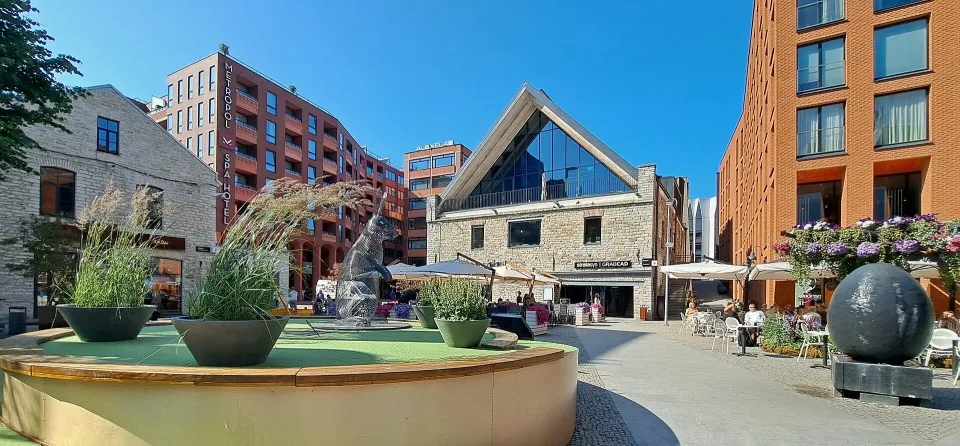
A bank opens an account for an Estonian company faster when it sees real activity in the country: an office, an employee or clients in Estonia. Need an account for a company or a first large capital contribution? A manager will tell you which bank will open an account for your business and which papers to prepare.
We will help you send money to Estonia
Mistakes cost more than fees: the recipient's name not as at the Estonian bank, trying to open a personal account with no link to the country, money to a company account without a contract in the payment purpose, a profit payout without calculating the 22% tax, a large sum without documents on its origin. We will help you avoid them: we will choose a route for you and for the company, prepare documents on the origin of the money and the payment purpose, and coordinate paying for a flat with the notary.
Details and the cost are with a manager in the chat: it all depends on the amount, the bank and your situation.
Gifts and inheritance in Estonia: no tax
A person who receives money, a flat or land in Estonia as a gift or inheritance pays no tax, whether from a relative or from a stranger. Tax arises only when a gifted home is sold at a profit, and not always then: if the person lived in the flat before the sale, the profit is not taxed.
The ordinary income of an Estonian resident in 2026 is taxed at 22%, and the first 700 euros ($790) a month, 8,400 euros ($9,400) a year, are tax-free for every resident regardless of income. Residence rules and rates are on the taxes in Estonia page.
Example: a father transfers 50,000 euros ($56,000) to his son in Tallinn to buy a home. The son pays no tax and does not show this sum in his tax return. For the son's bank, a payment purpose stating a gift and the father's statement showing the money was saved from salary or received from selling a flat are enough.
An investment account: tax only when profit is withdrawn
Since 2011 an Estonian tax resident can hold deposits, shares and bonds in an investment account. Purchases and sales inside the account are not taxed, and 22% is paid only when more is withdrawn from the account than was paid in. Capital transferred to Estonia can conveniently go straight into such an account: the money keeps working without an annual tax on every deal. The tax is calculated on the difference between the sum withdrawn and the sum paid in, so interest and dividends left in the account are reinvested in full. It is opened at an Estonian bank as a separate account alongside the ordinary one.
A flat in Tallinn: the contract at a notary and a deposit account
A home purchase contract in Estonia is certified by a notary, and only after that is ownership entered in the land register. A foreigner buys a flat on the same terms as a resident. The buyer transfers the money to the notary's deposit account, and it goes to the seller after the new owner is registered, so both sides are protected from mistakes.
A flat in Tartu for 150,000 euros ($170,000) is paid for like this: a deposit to the seller under the preliminary contract, the rest on the day of the deal to the notary's deposit account, then the fee for the land register entry. If part of the money comes from a non-EU country, the transfer is sent 1-2 weeks before the deal so that the bank has time to check the origin of the sum. Buying a home in Estonia with money from another country? Ask a manager how to match the transfer with the deal date at the notary.
The notary and the bank will ask to see where the money for the purchase comes from: the sale contract for your previous flat, statements and tax returns. How to prepare such papers is covered in moving home sale proceeds abroad.
The transfer amount and what to show an Estonian bank
- Up to $10,000. A transfer for your own expenses, rent or studies goes through by number and name if the amount fits the purpose stated when the account was opened.
- $10,000-$100,000. An Estonian bank checks the incoming money against income and, on the first large transfer, asks for a statement, a contract or a salary certificate. A document sent in the bank's app on the same day speeds up crediting.
- From $100,000. The bank expects the full history of the money: the sale of a home or business, tax returns, account movements. The guarantee fund returns up to 100,000 euros ($120,000) per person at each bank, so large capital is spread across banks. Tell a manager about your sum, and they will choose the transfer order and the bank. Legal routes for moving capital are on the capital relocation page.
What counts as documents on the origin of money is described in proof of source of funds, and the rules of the sending country in sending a large sum abroad.
Onward from Tallinn: where money is sent most often
An Estonian account and an Estonian company open 4 common destinations, and within the euro area money arrives in seconds.
- To Germany: paying suppliers, work and studies.
- To Cyprus: a second company and a euro account by the sea.
- To the UAE: business outside the EU and settlements in dollars.
- To Portugal: the next move and a residence permit.
Sending money to neighbouring countries
- How to send money to Lithuania: tax-free gifts to family and a flat through a notary
- How to send money to Poland: zloty, euros and the 183-day rule
- How to send money to Finland: a flat as shares in a housing company, 1.5% tax
- How to send money to Latvia: a residence permit through a company
- How to send money to Sweden: kronor in 1-3 business days, a gift with no tax
- How to send money to Norway: kroner and euros at the domestic price
All legal routes for moving capital are on the capital relocation page.
FAQ
Do I have to pay tax in Estonia on money received as a gift?
Does an Estonian company pay tax on profit it does not pay out to the owner?
From what monthly income does an Estonian resident pay tax in 2026?
Can tax on income from shares and deposits be deferred in Estonia?
Can a foreigner buy a flat in Tallinn?
How much does the deposit guarantee fund in Estonia return?
We will suggest the best way to send your money
We will choose a transfer method for your amount and country, prepare the documents on the origin of the money for the bank, make the transfer through licensed partners and follow it until the money is credited. Ask your question in the chat - the manager will suggest the best terms and the cost. The legal side with banks and government bodies is handled by Murblz specialists and locally licensed partners.
Details and cost are with the manager in the chat. Describe your situation and we will reply right away.
Check transfer termsHow we handle a transfer: 4 stages → · Country rules checked