How to send money to Monaco in 2026: a bank certificate for the resident card, gifts and a flat
In 2026 Monaco lives on the euro and is part of the single euro payments area, though not of the EU: a transfer to a 27-character Monaco account arrives in 1 business day from the area and in 1-3 days from others. A large sum is often sent for a resident card: banks expect a deposit from $560,000 (500,000 euros).
In short
- A Monaco account number has 27 characters, and a transfer from the euro area takes 1 business day.
- In practice a bank certificate for the resident card needs a deposit from 500,000 euros ($560,000).
- Income tax for residents is 0%, except for French citizens.
- Gifts between spouses, parents and children carry no duty.
- The duty on a home purchase by a private person is 4.5%, about 6% with the notary.
In detail
How money reaches Monaco now: 3 routes on 8 October 2026
Monaco is not part of the European Union, but under an agreement with it Monaco uses the euro and takes part in the single euro payments area. So on 8 October 2026 there are 3 routes, and all lead to an account at a bank in the principality:
- A euro transfer from a country of the single euro payments area - 1 business day; you need the 27-character account number and the holder's name.
- A transfer from other countries in euros, dollars or francs - 1-3 business days; the bank looks at the payment purpose and asks for a document on the origin of the money for a large sum.
- A transfer between your own accounts from a private bank in another country to a Monaco account - the same time, but the bank does the check when the account is opened, not with every payment.
Dollars on this page are calculated at the European Central Bank rate on 7 October 2026: 1.1177 dollars per euro. A manager will check the route from your bank to the bank in the principality for your case before the first payment.
The payment purpose is written briefly and to the point: a gift to a daughter for a flat, a transfer of own funds, rent. The bank checks this text against the client file, so it matches the contract or the donor's letter word for word.
A Monaco account: 27 characters and French banking rules
A Monaco account number has 27 characters and is built as in France: the country code, 2 check digits, the bank code, the branch code, the account number and a 2-digit key. Banks in the principality work under French banking law, and deposits are protected by the French guarantee fund: up to 100,000 euros ($120,000) per depositor at each bank.
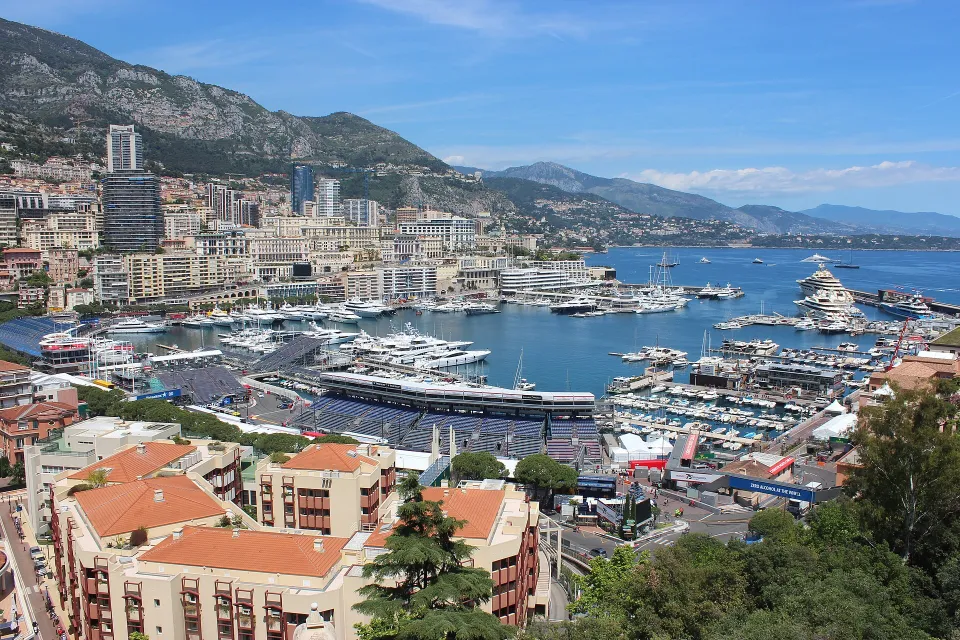
An account at a Monaco bank is opened in 3-8 weeks. The bank asks where the capital comes from, what the client does and why they chose the principality; for a non-resident the entry threshold is higher than for a resident.
Banks in the principality hold accounts in euros, dollars, francs and pounds, so capital arrives with no exchange. Large sums rarely sit on a current account here: they are placed under management with the same bank, and the current account keeps money for living and payments.
A bank certificate for the resident card: how much to keep on the account
For a resident card the principality's police expect 2 things: a home in Monaco under a lease or owned, and proof of means. Those who do not work in the principality prove their means with a certificate from a Monaco bank, and in practice banks issue it for a deposit of 500,000 euros ($560,000) or more from the main applicant.
The money stays on the account after the card is issued as well: the bank confirms the balance on renewal too. The first ordinary card costs 100 euros ($120), a renewal 50 euros ($60). The first card is issued for 1 year and then renewed, and after several years you move to cards for 3 and 10 years; on renewal the means are confirmed again with a bank certificate or an income certificate. The deposit is often held not on a current account but in a managed portfolio at the same bank, and the bank issues the certificate on the total balance.
The order is this: first the account and the deposit, then the lease or the flat purchase, then the application to the police with the bank certificate. The certificate is issued as of the application date, so the money is transferred in advance, not in the week of the appointment.
Is the bank dragging out the check or asking for more documents than you expected? There are usually more options than it seems: tell a manager about your situation, and they will choose a bank that will issue a certificate for your capital. How to get a resident card is described on the Monaco residence permit page.
We will help you send money to Monaco
Mistakes cost more than fees: a resident card deposit at a bank that will not issue a certificate for your amount, capital sent before the account is opened, a flat bought through a company with undisclosed owners and a higher duty. We will help you avoid them: we will choose a route for the amount, gather the file on your capital and carry out the transfer through licensed partners to the notary's schedule.
Details and cost are with a manager in the chat: the price depends on the amount, the bank and whether you need a certificate for the resident card.
Taxes after the move: income with no tax, a gift to children with no duty
0% is the personal income tax for residents of Monaco, except French citizens, who pay tax under French rules. So money is sent here not only to buy a home but also to live on interest and income from capital. A transfer of your own money to Monaco is not taxed: the principality does not treat imported capital as income. What tax residence requires is described in Monaco tax residency and on the taxes in Monaco page.
Gifts and inheritances of property in Monaco are taxed by kinship: there is no duty between spouses, parents and children, 8% for a brother or sister, 10% for an uncle, aunt or nephew, 13% for other relatives and 16% for an unrelated person. Example: a father transfers 1 million euros ($1.2 million) to his daughter in Monaco for a flat, and the duty on the gift is 0 euros. If a sister receives the same gift by notarial deed, the 8% duty comes to 80,000 euros ($90,000), so the circle of donors is discussed before the transfer.
A flat in Monaco: 4.5% duty and payment through the notary
A private buyer pays a registration duty of 4.5% of the price, and together with the notary's work the costs come to about 6%. A company whose owners are not disclosed pays more, so a flat for yourself is bought in your own name or through a company with disclosed owners.
A non-resident needs no separate permit to buy. Little new housing is built in the principality, so most deals are resales of flats, and the deposit under the preliminary contract is usually 10% of the price.
Example: a flat in Monte Carlo for 5 million euros ($5.6 million). The duty is 225,000 euros ($260,000), and the notary's work about 75,000 euros ($84,000). The buyer transfers the price and costs to the notary's account before signing the deed, and the seller receives the money after the deal is recorded.
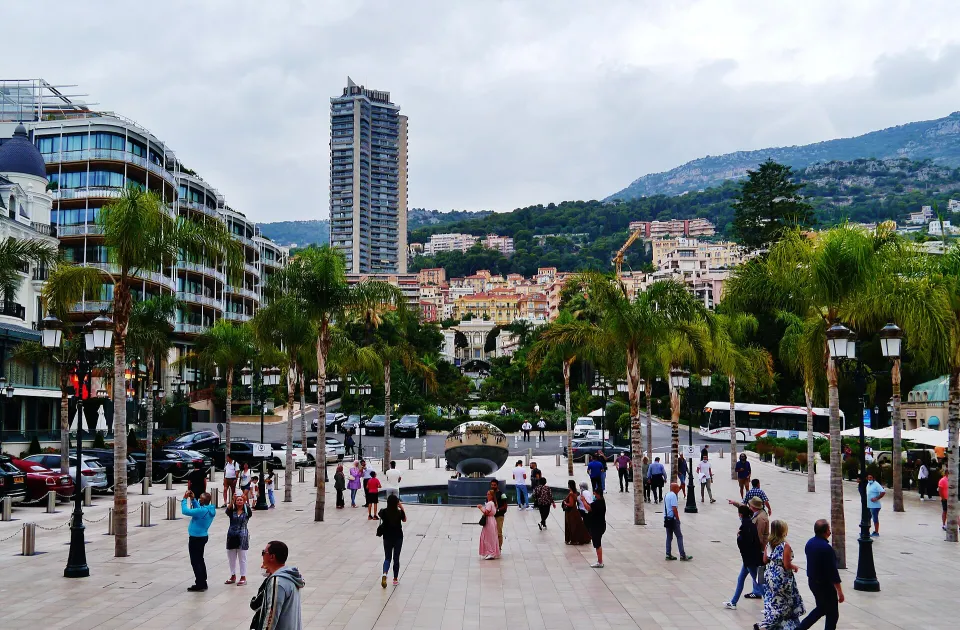
A large sum for a flat goes through faster if the Monaco account is opened in advance and the sale contract for your previous home or income statements are already in the bank's file. We will advise how best to transfer the purchase sum: a manager will split it into the deposit and the balance to match the notary's schedule.
The amount and documents: what a Monaco bank will ask
- Up to $10,000. The payment goes by name and account number, and the bank checks the purpose.
- $10,000-560,000. The bank asks for the sender's statement and a document matching the purpose: a sale contract, a donor's letter, an income certificate.
- From $560,000. This is the deposit level for a resident card: the bank studies the source of the whole fortune over the years, from the sale of a business to an inheritance, and checks it against tax returns.
A Monaco bank checks every payment against the client file, so the second and later transfers of the same origin go through faster than the first.
At the last step capital is transferred to a plan, often from several banks at once. For such sums there is a separate capital relocation page, and how to prove the origin of money is explained in proof of source of funds.
Onward from Monaco: France and Italy across the border
Monaco covers 2 square kilometres, and much of the principality's life happens across its border: school, a second flat, work. A Monaco account is convenient for life on both sides of the border: rent in France, school in Nice and a doctor in Italy are paid by a euro transfer in 1 business day. Most often money leaves a Monaco account for:
- France: a home in the neighbouring coastal towns and school for children.
- Italy: the border is half an hour's drive away, with homes on the Ligurian coast.
- Switzerland: managing capital in francs.
- Spain: a second home by the sea.
Sending money to nearby countries
- How to send money to France: an account, a home and study
- How to send money to Italy: the tax code and a home
- How to send money to San Marino: euros under European rules
- How to send money to Switzerland: francs and large capital
- How to send money to Luxembourg: a large sum and a home
- How to send money to Malta: foreign income is taxed only when brought in
All legal ways to move capital are on the capital relocation page.
FAQ
How much do you need to keep at a Monaco bank for a resident card?
Do residents of Monaco pay income tax?
Is a gift to children subject to duty in Monaco?
Is Monaco part of the single euro payments area?
What duty does a flat buyer pay in Monaco?
How many weeks does it take to open an account at a Monaco bank?
We will suggest the best way to send your money
We will choose a transfer method for your amount and country, prepare the documents on the origin of the money for the bank, make the transfer through licensed partners and follow it until the money is credited. Ask your question in the chat - the manager will suggest the best terms and the cost. The legal side with banks and government bodies is handled by Murblz specialists and locally licensed partners.
Details and cost are with the manager in the chat. Describe your situation and we will reply right away.
Check transfer termsHow we handle a transfer: 4 stages → · Country rules checked
Programs