Taxes in Uzbekistan in 2026 for individuals and business
30 days in the country and 50,000 dollars, and a foreigner's income from abroad goes untaxed in Uzbekistan. Everyone else gets a flat 12% on almost everything, 12% VAT and 1% of revenue for sole traders. A full guide to 2026 taxes under the current Tax Code: salaries, business, property, crypto, residency and the treaty with Russia.
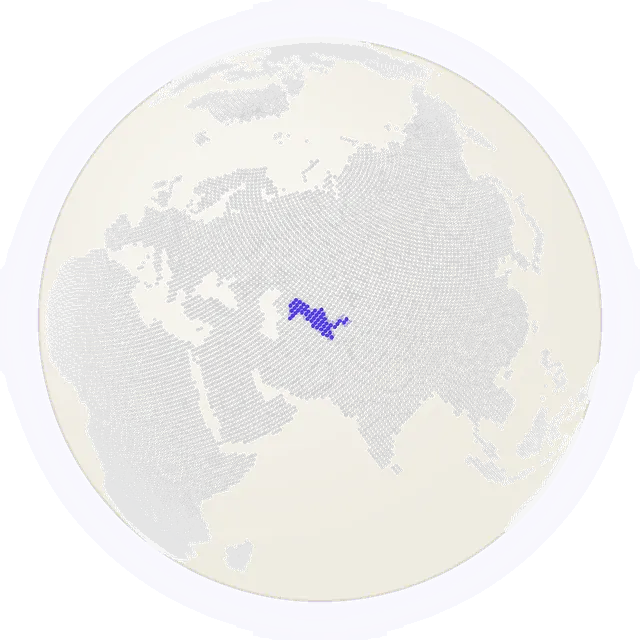
The short answer: in 2026 Uzbekistan charges 12% income tax on almost all of a resident's income, 5% on dividends and interest, 12% VAT and 15% corporate tax for most companies. Sole traders and the self-employed with revenue of up to 1 billion soum pay 1% of turnover, and crypto transactions are not taxed at all until 2029.
Uzbekistan tax rates in 2026 at a glance
Uzbekistan takes 12% of almost any income an individual earns, and a sole trader with turnover of up to 1 billion soum hands the state just 1% of revenue. Compare Russia: its personal income tax became progressive in 2025, running from 13% to 22%, and its VAT rose to 22% in 2026. Uzbekistan's VAT stays at 12%.
The simplicity ends where residency begins. You can become an Uzbek tax resident in well under 183 days: it is enough to spend more time here than in any other single country. And a resident pays 12% on foreign income too, unless they have bought the special regime for foreigners for 50,000 dollars.
Amounts in the Tax Code are set in soum (so'm, UZS), the national currency. At the Central Bank of Uzbekistan's 2026 rate one US dollar buys about 11,800 soum and one rouble about 140 soum. Many thresholds and fines are tied to the BCA, the base calculation amount (bazaviy hisoblash miqdori), a notional unit indexed by presidential decree. Until 31 August 2026 one BCA was 412,000 soum (about 35 dollars); from 1 September 2026 it is 440,000 soum (about 37 dollars). The minimum wage rose on the same date from 1,271,000 to 1,360,000 soum a month.
| Tax | 2026 rate | Who pays and on what |
|---|---|---|
| Personal income tax (PIT) | 12% | Residents on salary, rent, property sales and other income; non-residents on salary from Uzbek sources |
| PIT on dividends and interest | 5% resident, 10% non-resident | Withheld by the paying company; interest on bank deposits is exempt |
| Social tax | 12% | Employer, on top of salary; state-funded bodies 25% |
| Corporate income tax | 15% | Most companies; banks, mobile operators, markets and shopping centres 20% |
| VAT (value added tax) | 12% | Companies with annual income above 12,000 BCA (about 5 billion soum) and voluntary registrants; exports 0% |
| Simplified VAT | 6% | Optional from 1 June 2026 for catering, retail and services; corporate tax then 0% |
| Turnover tax (simplified tax on revenue) | 4%, retail 1-4% | Companies below the VAT threshold, instead of VAT and corporate tax |
| Turnover tax for sole traders and the self-employed | 1% | Revenue of up to 1 billion soum a year, about 85,000 dollars |
| Tax on homes owned by individuals | 0.36-0.64% | Of cadastral value; non-residential and business-let property 1.5% |
| Corporate property tax | 1.5% | On real estate; in Tashkent the base is at least 3.53 million soum per m² |
| Withholding tax on foreign companies | 6-20% | Dividends and interest 10%; royalties, services and rent 20% |
| Crypto-asset transactions | 0% | Until 1 January 2029, when carried out through licensed providers |
There is no annual car tax in this list, and that is not an oversight: Article 17 of the Tax Code lists all ten of the country's taxes and a vehicle tax is not among them. If a reference guide mentions a fixed income tax for sole traders, it is out of date: Law No. ZRU-1108 of 25 December 2025 abolished it from 1 January 2026.
We will calculate online the tax on your income and show how to pay less legally.
Compare taxes in 146 countries: relocation taxes 2026
Who is a tax resident of Uzbekistan
In Uzbekistan the 183-day threshold offers no shelter. Article 30 of the Tax Code treats as resident not only anyone present for more than 183 calendar days in any 12 consecutive months, but also anyone present for less, if they spent more time here than in any other country. Example: four months in Tashkent and three months each in Tbilisi, Istanbul and Dubai over a year make you a tax resident of Uzbekistan specifically.
| Rule | What it means in practice |
|---|---|
| More than 183 days in any 12 consecutive months | The period starts or ends in the year for which status is determined, so the test is a rolling window, not the calendar year |
| Fewer than 183 days, but longer than in any other country | Residency arises even from a short stay if there is no other country where you stayed longer |
| Early recognition on application | You can become resident before 12 months have passed by showing the tax office a long-term employment contract |
| Trips abroad for treatment or study of up to 6 months | Presence in the country is not interrupted |
| Special regime for foreigners | From 1 January 2026 a foreigner who owns or rents a home and has spent more than 30 days in the country in 12 months is treated as resident |
Days are counted from border-control stamps in the passport. Where they are missing, the tax office may rely on data from state bodies and ask for documents: a passport, a temporary residence permit, proof of where you actually lived.
When two countries both claim you
If the laws of two countries each make you resident, the double tax treaty and the centre of vital interests decide. The Code names two signs, either of which puts that centre in Uzbekistan: a spouse or close relatives live in Uzbekistan, or there is a home here, yours or your family's, owned or held on another basis, that you can live in at any time.
A separate rule (Article 397) helps Uzbek citizens returning after 183 or more days abroad: they may file a return within a month of coming back, and foreign income for the period when they were not resident is not taxed.
Residency matters because of what it brings: a resident pays tax on worldwide income, a non-resident only on income from Uzbekistan. How the 183-day rule works in different countries, and why Russian status is not lost automatically, is covered in our article on tax residency and the 183-day rule.
Uzbekistan tax residency: how to get it and count the days
Uzbekistan makes you resident if any 12 months in a row hold more than 183 days. There is also a rule that catches nomads: you become resident if you spent more time in Uzbekistan than in any other country, even without 183 days.
Four months in Tashkent and three each in Tbilisi, Istanbul and Dubai make Uzbekistan your residency. A resident pays 12% income tax on worldwide income, a non-resident only on Uzbek income. The status is confirmed by a Tax Committee certificate.
The law does not stop you from confirming the status on your own. But mistakes cost more: a year with no 183 days anywhere still ends in residency. Murblz support removes these risks: we count days in every country and obtain the certificate. We guarantee professional work and a transparent process, and in most cases a result on the first filing.
183-day calculator
Tax residency calculator for Uzbekistan
Enter your travel dates: the calculator shows whether you are a tax resident of Uzbekistan today and at year end, and how many days are left before the threshold.
Counting by dates needs JavaScript. Below are the same rules by country.
What is the income tax rate in Uzbekistan and what is left of a salary
Uzbekistan's income tax is flat and does not depend on pay: a courier and a finance director both pay 12% (Article 381 of the Tax Code). There is no tax-free threshold, and allowances exist only for specific categories (Article 380), so for an ordinary employee tax is due from the first soum.
| Type of income | Resident | Non-resident (income from Uzbek sources) |
|---|---|---|
| Salary, service contracts, rent, property sales, other income | 12% | 12% |
| Dividends and interest | 5% | 10% |
| International freight income | - | 6% |
The non-resident rate on salary used to be 20%; since May 2022 it has also been 12%. So an employee from Russia or Kazakhstan pays the same tax as a local from the first day of work.
What is exempt from income tax
Article 378 of the Code exempts several kinds of income that matter most when relocating. Interest on bank deposits is tax-free. So is the sale of personal property, with three exceptions: a home owned for less than 36 months, non-residential property, and shares in companies or securities sold off the stock exchange. Inheritances and gifts from individuals are exempt, but real estate, a car, securities and company shares received from a donor who is not a close relative are taxable.
What is left of a salary: worked example
The employer withholds 12% from pay and on top of that pays 12% social tax. There are no separate employee pension contributions: 0.1% of salary goes to an individual funded pension account (INPS), but that amount is taken out of the 12% already withheld, not added to it.
| Worked example, per month | Salary 10 million soum | Salary 25 million soum |
|---|---|---|
| Gross salary | 10,000,000 soum (about 850 dollars) | 25,000,000 soum (about 2,120 dollars) |
| PIT 12%, including 0.1% to INPS | 1,200,000 | 3,000,000 |
| Net pay | 8,800,000 soum (about 745 dollars) | 22,000,000 soum (about 1,860 dollars) |
| Employer's social tax 12% | 1,200,000 | 3,000,000 |
| Total cost of the employee to the company | 11,200,000 soum | 28,000,000 soum |
Of every 100 soum a company spends on an employee, about 21 go to the state. In Russia the general rate of employer insurance contributions alone is 30% up to the contribution cap, before income tax.
Social tax and pensions
Social tax (ijtimoiy soliq) is paid by the employer: 12% of payroll, 25% for state-funded bodies (Article 405). Presidential decrees cut the rate to 1% for some sectors, for example for cotton and textile clusters from 1 September 2025 to 1 September 2028. A sole trader pays at least 1 BCA a month for themselves, which is 412,000 soum until September 2026 and 440,000 soum afterwards. The self-employed pay social tax voluntarily, at least 1 BCA a year, so that the period counts towards their pension record (Article 408).
Corporate income tax and dividend tax in Uzbekistan
Uzbekistan's corporate income tax is 15%: lower than Russia's 25% and Kazakhstan's 20%, but higher than Kyrgyzstan's 10%. The real burden depends on the sector: banks and mobile operators pay 20%, while some social-sector and agricultural companies pay 0% (Article 337 of the Tax Code).
| Who pays | 2026 rate |
|---|---|
| Most companies | 15% |
| Banks | 20% |
| Mobile operators, producers of polyethylene granules | 20% |
| Profit from services of markets and shopping centres | 20% |
| Dividends received by a company | 5% |
| Agricultural producers (on their own produce), social-sector companies, small solar and other renewable generation | 0% on the Code's conditions |
| E-commerce: marketplaces, online shops, subscriptions | 15% from 1 January 2026, previously 10% |
Two reliefs reward growth. A company whose income exceeds 10 billion soum (about 850,000 dollars) for the first time may pay tax at half the rate, 7.5%, for two years, provided income in those years stays below 100 billion soum. And companies moving from turnover tax to corporate tax for the first time from 2026 are fully exempt for one year, except for tax on dividends and interest.
Exporters lost their break: the 0% rate on export revenue was abolished from 1 January 2025. Corporate tax is reported quarterly by the 20th of the following month, with the annual return due by 1 March (Article 339).
How much tax on dividends
Profit an owner takes out of an Uzbek company is taxed at source: 5% for Uzbek residents, individuals and companies alike, and 10% for foreigners (Articles 353 and 382). Worked example: a company earns 1 billion soum of profit, pays 150 million in tax and distributes 850 million. A resident receives 807.5 million soum, a combined burden of about 19.25%. A foreign owner receives 765 million, a burden of 23.5%.
Controlled foreign companies
Since 1 January 2022 Uzbekistan has applied controlled foreign company (CFC) rules, which cover foreign firms owned by Uzbek residents. The undistributed profit of such a company is taxed in the owner's hands if they hold more than 25%, or more than 10% where Uzbek residents together hold more than 50% (Articles 39, 40 and 203). The profit is exempt if the company is active, if the effective tax rate in its country is at least 15%, or if it is a licensed bank or insurer (Article 204).
For anyone relocating with a foreign structure this means one thing: a holding company in Cyprus or the UAE with passive income will have to be disclosed and may be taxed in Uzbekistan. CFC notifications and reports are prepared by Murblz specialists; see CFC filings.
We will review your situation for free
Describe your task in the chat and we will tell you where to start.
What is the VAT rate in Uzbekistan in 2026 and when to register
VAT in Uzbekistan in 2026 is 12% (Article 258 of the Tax Code), and the big news of the year is not the rate but the threshold. From 1 June 2026 a company must register for VAT only once its annual income exceeds 12,000 BCA, about 5 billion soum or more than 400,000 dollars. The threshold used to be 1 billion soum, so it has risen roughly fivefold (Presidential Decree No. UP-100 of 26 May 2026).
The old threshold pushed businesses to split into several firms just to stay out of VAT. The biggest winners are family shops, cafes and service companies, which can now stay on turnover tax for longer.
| Regime or transaction | Rate | Conditions |
|---|---|---|
| Standard rate | 12% | Sales of goods and services in Uzbekistan, imports |
| Export of goods, international transport | 0% | With proof of export; input VAT is refunded |
| Home-grown agricultural produce (except cotton and grain) | 0% | From 1 January 2026 |
| Simplified VAT for catering, retail and services | 6% of all revenue | Optional from 1 June 2026 to 1 January 2030; corporate tax 0%; no input VAT credit; not for large or state-owned companies |
| Mandatory registration threshold | 12,000 BCA of income a year | About 4.9 billion soum at a BCA of 412,000, about 5.3 billion at 440,000 |
Simplified 6% VAT suits cafes and shops with little input VAT: instead of 12% on the margin plus 15% corporate tax, they pay 6% of turnover and file no profit return. Restaurants get one more concession: from 1 June 2026 they are refunded 40% of the VAT they pay whatever their share of cashless revenue, while before the refund fell to 20% if the cashless share was low.
How VAT works in practice
Returns are filed and tax paid monthly by the 20th of the following month (Article 273). All invoices are electronic, and from 1 January 2026 they are screened by an automated, AI-based risk analysis system: a high-risk invoice from a supplier can cost the buyer the right to claim input VAT.
Foreign companies that sell electronic services to private individuals in Uzbekistan (subscriptions, apps, online services) must register and pay VAT themselves (Articles 278-282). A company can also register voluntarily without waiting for the threshold, which makes sense if its main customers are large businesses that need input VAT to offset.
To set up a company under the new threshold and open a corporate account, see company formation in Uzbekistan and business accounts in Uzbekistan.
How much sole traders, the self-employed, IT companies and foreigners on the special regime pay
Since 1 January 2026 sole traders and the self-employed in Uzbekistan pay 1% of revenue up to 1 billion soum a year, about 85,000 dollars. That is one of the lowest small-business rates in the former Soviet Union: Tajikistan's simplified regime costs 6% of income. In return the state scrapped two old concessions: the fixed income tax for sole traders and the exemption for self-employed people earning up to 100 million soum.
| Who | Turnover tax | What else they pay |
|---|---|---|
| Sole traders and the self-employed with revenue up to 1 billion soum | 1% | Sole traders: social tax of at least 1 BCA a month; rental income is subject to 12% PIT |
| Companies in most sectors | 4% | Turnover tax replaces VAT and corporate tax |
| Retail in cities of 100,000 people or more | 4% | Tobacco 4% wherever the shop is |
| Retail in other settlements | 2% | |
| Retail in remote and mountain districts | 1% |
Turnover tax (aylanmadan olinadigan soliq) is not open to everyone: importers, producers of excise goods, fuel sellers, pharmacies and medical businesses, jewellers, markets and shopping centres are excluded (Article 461). It is reported and paid monthly by the 15th.
Worked example for a freelance sole trader with 2026 revenue of 600 million soum (about 51,000 dollars): 1% turnover tax is 6 million soum; social tax for 8 months at 412,000 and 4 months at 440,000 is about 5.06 million. The total is about 11.06 million soum, or 1.8% of revenue. When payments come through the digital platforms of payment institutions, the payment institution withholds the tax on revenue up to 1 billion soum, and for payments from companies to the self-employed the company withholds it (Article 465).
IT Park: breaks for tech companies
Residents of IT Park, the state technology park for IT businesses, pay no corporate tax, VAT, social tax or turnover tax until 1 January 2028, and their employees' salaries are taxed at 7.5% instead of 12%. For exporters earning more than half their revenue abroad, Presidential Decree No. UP-157 of 14 October 2024 extended the breaks: tax on dividends to foreign shareholders of no more than 5% until 1 January 2040, and from 2028 to 2040 exemption from all taxes except VAT. From 1 April 2026 payment institutions, marketplaces and microfinance companies lost IT Park benefits.
Special regime for foreigners: 50,000 dollars to exempt foreign income
The most talked-about tax decision of the year for people moving to Uzbekistan is the special tax regime created by Presidential Decree No. UP-180 of 4 October 2025 and in force since 1 January 2026. A foreigner who owns or rents a home in Uzbekistan and has spent more than 30 days in the country in any 12 consecutive months is treated as a tax resident, and their income from abroad is exempt from PIT.
| Condition | What is required |
|---|---|
| Special fee | 50,000 dollars for the applicant, about 590 million soum |
| Relatives | 10,000 dollars for each adult close relative included in the regime |
| Term | As stated in the application, up to 5 years |
| Home and presence | Owned or rented, more than 30 days in the country in 12 months |
| Money | An account with an authorised Uzbek bank or a crypto wallet on a licensed local exchange |
| Review | Tax Committee (Soliq qo'mitasi) 1 working day, special commission 3 working days; procedure approved by Cabinet of Ministers Resolution No. 270 of 21 May 2026 |
The arithmetic is simple: the fee pays for itself if foreign income taxed at 12% exceeds about 417,000 dollars over the regime's term, or about 1 million dollars for dividends and interest taxed at 5%. Income from Uzbek sources is taxed as usual. The regime can be ended early by a court decision, for involvement in money laundering or if the holder is put on the list of undesirable persons. In July 2026 the Legislative Chamber (the lower house of parliament) passed a law that moves these rules into the Tax Code and sent it to the Senate, so details may still change.
We will calculate your taxes online
The chat will ask about your income and residence and send the estimate.
Property, car, inheritance and crypto taxes in Uzbekistan
A flat in Uzbekistan is taxed on its cadastral value, not its floor area as in Tajikistan, and in 2026 the rates rose by about 7%. Homes of up to 200 m² pay 0.36% a year, large houses in cities up to 0.64% (Article 422 of the Tax Code as amended by Law No. ZRU-1108).
| Property held by an individual | 2026 rate |
|---|---|
| Houses, flats, dachas, parking spaces up to 200 m² | 0.36% |
| Homes in cities of 200-500 m² | 0.48% |
| Homes in cities above 500 m² | 0.64% |
| Homes above 200 m² in other settlements | 0.48% |
| Non-residential property and property let to a company or sole trader | 1.5% |
| Non-residential buildings not completed within the standard period | 3% |
The base is cadastral value, but for homes and parking spaces no less than 42 million soum (about 3,550 dollars). New homes whose title has not been registered are taxed at double the rate. Local councils may multiply the rates by a coefficient of 0.7 to 1.3.
Worked example: a flat with a cadastral value of 800 million soum (about 68,000 dollars) pays 0.36%, or 2.88 million soum, about 245 dollars a year. There is nothing to calculate yourself: the tax office sends a notice by 1 March, and the tax is paid in two equal instalments by 15 April and 15 October (Article 423). Land tax on the plot is charged separately at regional rates, which were also indexed by about 7% in 2026.
If you are looking for property to let, options are collected on investment property in Uzbekistan.
Is there a car tax
Uzbekistan has no annual vehicle tax for car owners. The state collects from motorists in other ways: through excise duty on petrol, diesel and gas already built into the fuel price (rates rose by about 7% from 1 April 2026) and through fees when a car is bought and registered. By comparison, owners in Tajikistan and Kazakhstan pay car tax every year.
Selling property, inheritance and gifts
| Situation | Tax for a resident |
|---|---|
| Sale of a home owned for 36 months or more | 0% |
| Sale of a home owned for less than 36 months, or of non-residential property | 12% on the difference between sale price and documented purchase price |
| Sale of a car and other personal movable property | 0% |
| Sale of shares on the stock exchange | 0% |
| Sale of a company stake or off-exchange securities | 12% |
| Inheritance and gifts from close relatives | 0% |
| Real estate, a car, shares or stakes gifted by a donor who is not a close relative | 12% |
If there are no purchase documents, cadastral value is deducted from the sale price. A non-resident does not get the 36-month relief: income from selling Uzbek real estate is taxed at 12%.
Cryptocurrency
Crypto-asset transactions are not subject to any tax until 1 January 2029, whether carried out by individuals, companies or non-residents (Presidential Resolution No. PP-3832 of 3 July 2018, extended by Decree No. UP-140 of 18 September 2024). There is one condition, and it is strict: Uzbek citizens and companies may buy, sell and exchange crypto only through providers licensed by the National Agency of Perspective Projects (NAPP), the crypto market regulator.
What taxes non-residents and foreign companies pay
A foreign company without a permanent establishment in Uzbekistan pays tax straight out of each payment: the Uzbek customer withholds 6% to 20% of the gross amount with no deduction for expenses (Article 353 of the Tax Code). The most painful rate is 20% on services, royalties and rent, twice the rate on dividends.
| Income of a foreign company | Withholding rate |
|---|---|
| Dividends and interest | 10% |
| Insurance premiums, including reinsurance | 10% |
| International telecoms and international transport (freight) | 6% |
| Interest on loans for investment projects paid by Uzbek banks and lessors to foreign financial institutions | 0% |
| Services, royalties, rent and other income | 20% |
Non-resident individuals pay under Article 382: 12% on salary and service contracts, 10% on dividends and interest, 6% on freight. The payer withholds the tax. A return is needed only for income from which no tax was withheld at source.
When a permanent establishment arises
A permanent establishment is a place through which a foreign company carries on business in the country on a regular basis: an office, branch, warehouse, workshop or construction site. From that point it pays 15% on profit and files full returns like a local firm. Article 36 of the Code adds two important time rules:
| Activity | When it becomes a permanent establishment |
|---|---|
| Construction, installation, assembly and their supervision | More than 183 days in any 12-month period |
| Services, including consulting, through own or hired staff | At least 183 days in any 12-month period on one project or for related parties |
| A warehouse used only to store or display own goods, gathering information | Does not create one if the activity is preparatory or auxiliary |
For service companies this is gentler than next door: in Tajikistan a permanent establishment arises after just 90 days of services.
To apply a reduced treaty rate, the foreign recipient gives the Uzbek tax agent a certificate of tax residence from its own country before payment (Articles 357 and 358). Without it the full domestic rate is withheld, and the difference can only be recovered through a separate procedure.
Let us check where you pay tax
Three questions in the chat show where you are tax resident.
The Uzbekistan-Russia double tax treaty and other treaties
The double tax treaty between Russia and Uzbekistan is in force and has not been suspended. It was signed in Moscow on 2 March 1994, instruments of ratification were exchanged in Tashkent on 27 July 1995, and it has applied since 1 January 1996. Russian Presidential Decree No. 585 of 8 August 2023 suspended parts of tax treaties with 38 states Russia calls unfriendly; Uzbekistan is not on that list.
| Income | Maximum rate in the source country under the treaty with Russia | Uzbekistan's domestic rate for non-residents |
|---|---|---|
| Dividends | 10% | 10% |
| Interest | 10%; 0% for the state, the central bank, export credit agencies and commercial credit for goods and services | 10% |
| Royalties | Taxed only in the recipient's country | 20% |
| Salary | Where the work is actually done; exception for assignments of up to 183 days in 12 months paid by a foreign employer | 12% |
| Sale of real estate | May be taxed where the property is located | 12% |
For dividends and interest the Russian treaty does not lower the rate: Uzbekistan's domestic rate for non-residents is already 10%. The real gain is on royalties, where 20% at source becomes zero. Double taxation of residents is removed by credit: tax paid in the other country is deducted from the home tax, but not beyond the amount the home country would charge (Article 23 of the treaty, Article 399 of Uzbekistan's Tax Code).
Treaties with other countries
Uzbekistan has more than 50 tax treaties in force. Maximum withholding rates under some of them:
| Country | Dividends | Interest | Royalties |
|---|---|---|---|
| Russia | 10% | 0-10% | 0% |
| Kazakhstan | 10% | 0-10% | 10% |
| Kyrgyzstan | 5% | 5% | 15% |
| UAE | 0-15% | 0-10% | 10% |
| Turkey | 10% | 0-10% | 10% |
| Latvia | 10% | 0-10% | 10% |
| United Kingdom | 5-10% | 5% | 5% |
A reduced rate requires a certificate of tax residence, otherwise domestic rates are withheld. In Uzbekistan the certificate is issued by the Tax Committee; in Russia by the FNS (Federal Tax Service), which accepts requests through the taxpayer's online account. Neighbours' rates for comparison: taxes in Kazakhstan, taxes in Kyrgyzstan and taxes in Tajikistan.
Filing deadlines and penalties in Uzbekistan
Unpaid tax in Uzbekistan draws a fine of 20% of the shortfall (Article 224 of the Tax Code), and on top of that late-payment interest accrues every day at 1/300 of the Central Bank's refinancing rate (Article 110). That makes the calendar more important than the rates.
| What | Deadline |
|---|---|
| PIT and social tax on salaries (employer) | Report and pay monthly by the 15th; annual report by 15 February |
| VAT | Return and payment monthly by the 20th |
| Turnover tax, including the 1% for sole traders | Monthly by the 15th; annual report by 15 February |
| Corporate income tax | Quarterly returns by the 20th of the following month; annual return by 1 March |
| Sole trader's own social tax | Monthly by the 15th |
| Individual annual return | By 1 April of the following year |
| Tax on homes and land owned by individuals | Notice by 1 March; payment in equal halves by 15 April and 15 October |
An annual return (Article 397) is filed by anyone with income from which no tax was withheld at source: rent from private tenants, foreign income, property sales. It is filed in the personal account on the Tax Committee's website, my3.soliq.uz, or through the state services portal my.gov.uz. If a home is let to private tenants and the lease is not registered with the tax office, a preliminary return is also needed, within five days after the first month of the lease.
What changed in tax administration in 2026
From 1 January 2026 the tax office itself prepares draft returns for PIT, social tax, VAT and turnover tax, leaving businesses to check and correct them. Invoices are screened by a risk analysis system, and a separate fine now applies for accepting payment outside the electronic system where electronic payment is mandatory.
Filing a report late is not punished by a fine under the Tax Code but through administrative liability of the company's officer or the individual taxpayer (Article 220).
How Murblz specialists help with the reporting of companies abroad is described on audit and accounts for foreign companies.
Get the tax move checklist
Leave a contact in the chat and we will send the steps and documents for you.
What Uzbek taxes mean if you are relocating
On headline rates Uzbekistan is one of the gentlest options in the region in 2026: its VAT is lower than in Kazakhstan, Tajikistan and Russia, and the 1% rate for sole traders is a sixth of Tajikistan's simplified regime. But a low rate does not always mean a low tax bill: residency and the source of income decide everything.
| Country | VAT | Personal income tax | Corporate income tax |
|---|---|---|---|
| Uzbekistan | 12%, simplified 6% | 12%, dividends 5% | 15%, banks 20% |
| Kazakhstan | 16% from 2026 | 10%, 15% on high incomes | 20% |
| Kyrgyzstan | 12% | 10% | 10% |
| Tajikistan | 14%, 13% from 2027 | 12%, other income 15% | 18% |
| Russia | 22% from 2026 | 13-22% on a progressive scale | 25% |
Who gains from Uzbek taxes
Freelancers and small businesses with revenue up to 1 billion soum. 1% of turnover plus the fixed social tax comes to about 2% on revenue of 600 million soum, well below Tajikistan's 6% simplified regime.
Crypto investors. Until 2029, transactions through licensed providers are untaxed.
Wealthy foreigners with large income from abroad. The 50,000-dollar special regime pays for itself if foreign income over the regime's term exceeds about 417,000 dollars.
Home owners. Tax on a flat is 0.36% of cadastral value, a sale after 36 months of ownership is tax-free, and there is no annual car tax.
Who should do the maths first
Remote employees of Russian companies. Since 2024 such salaries count as Russian-source income even when the work is done from Tashkent, and Russian PIT applies. Uzbekistan, as the country of residence, can also claim this income, so the credit mechanism under the 1994 treaty should be checked before moving.
Owners of foreign companies. Since 2022 the CFC rules tax the undistributed profit of passive holding companies.
Those who split the year between several countries. The rule on the country of longest stay makes you resident even with fewer than 183 days.
Importers and pharmacies. Turnover tax is closed to them, so they go straight to 12% VAT and 15% corporate tax.
Related pages: a personal bank account in Uzbekistan, relocation and family office, company formation abroad and taxes by country. Support in disputes with the tax authorities is provided by Murblz specialists together with locally licensed partners.
Your actual tax burden depends on residency, the source of income and the regime you choose. We will review your situation in a free consultation.
FAQ
What is the personal income tax rate in Uzbekistan in 2026?
What is the VAT rate in Uzbekistan in 2026?
How much tax does a sole trader pay in Uzbekistan?
What taxes do non-residents pay in Uzbekistan?
Who is a tax resident of Uzbekistan?
What is Uzbekistan's special tax regime for foreigners?
Is there a car tax and a property tax in Uzbekistan?
Is the Russia-Uzbekistan double tax treaty in force?
Services
Murblz services in Uzbekistan
The tax rate is only half the picture. The other half is where the company sits, where the money is held and who files the accounts. Murblz specialists help with that in the same country. The quote is fixed in writing before work starts.
See also
Related programs and destinations
Similar destinations:
The same program in other countries:
Don’t want to figure this out alone?
We handle the whole process end to end: we check your documents, match a program to your situation and give you honest timelines and costs. Ask your question in the chat: the free consultation starts right here. Legal representation before authorities and courts is handled by Murblz specialists together with locally licensed partners.
The Murblz consultant replies straight away in the chat on this page. Describe your situation and we will work it out together.
Free consultation