Taxes in Kazakhstan
Personal income tax of 10-15%, and how Kazakhstan determines who counts as a tax resident.
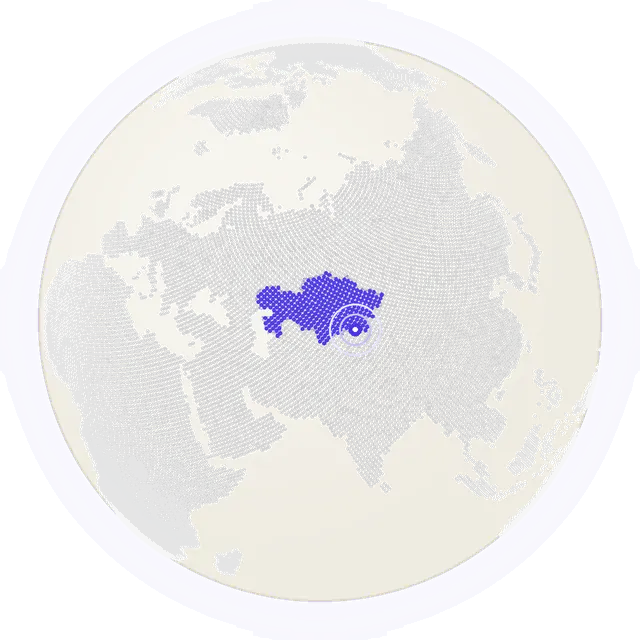
Tax residents of Kazakhstan are taxed on their worldwide income, while tax non-residents are taxed only on income from Kazakhstan sources.
Kazakhstan tax rates in 2026: at a glance
Since 2026 Kazakhstan has had a new Tax Code: income tax became progressive and VAT rose from 12% to 16%. Here are all the main taxes in one table.
| Tax | Rate | Who pays |
|---|---|---|
| Personal income tax | 10% up to 8,500 monthly calculation indices a year, 36.76 million tenge, ~$82,000; 15% above | residents and employees under employment contracts |
| Pension contribution | 10% employee, plus 3.5% employer | employees |
| Health insurance | 2% employee, 3% employer | employees |
| Corporate income tax | 20%, banks and gambling 25% | companies |
| Dividends | 5% up to 230,000 monthly calculation indices, 15% above | individuals |
| VAT | 16%, medical 5%, exports 0% | payers with turnover from 10,000 monthly calculation indices, ~$96,000 |
| Simplified declaration | 4%, 2% to 6% in the regions | sole traders |
| Property tax | from 0.05% for individuals, 1.5% for companies | owners |
| Astana International Financial Centre | 0% on financial services in the centre until 1 January 2066 | centre participants |
| Crypto | 10-15% on gains, 0% on the centre's exchange | individuals |
The monthly calculation index in 2026 is 4,325 tenge. Dollar amounts are at the National Bank rate, about 454 tenge to the dollar, rounded up.
We will calculate online the tax on your income and show how to pay less legally.
Compare taxes in 146 countries: relocation taxes 2026
Personal income tax rate
From 1 January 2026, under the new Tax Code, personal income tax became progressive: 10% on annual income up to 8,500 monthly calculation indices, that is up to KZT 36,762,500, about $82,000, and 15% on the amount above. Dividends are taxed at 5% up to 230,000 indices a year, about KZT 995 million, and 15% above. Private notaries, lawyers and other private practitioners pay 9%.
Every employee receives a basic deduction of 30 monthly calculation indices a month, KZT 129,750, about $290, but no more than 360 indices a year. The monthly calculation index for 2026 is KZT 4,325. Tax residents pay tax on worldwide income, non-residents only on Kazakh-source income. Tenge are converted at the National Bank of Kazakhstan rate of 5 October 2026, KZT 447.73 per dollar, and rounded up.
Salary calculation example
A salary of KZT 1,000,000 a month, about $2,300. A 10% pension contribution of 100,000 and a 2% health insurance contribution of 20,000 are withheld. The taxable base after the basic deduction of 129,750 is KZT 750,250, and 10% income tax is 75,025. Take-home pay is KZT 804,975, about $1,800. On top of the salary the employer pays its own contributions and social tax, so the real cost of an employee is about 15-17% higher.
| Item | Amount a month, KZT |
|---|---|
| Salary | 1,000,000 |
| Pension contribution 10% | -100,000 |
| Health insurance 2% | -20,000 |
| Basic deduction | 129,750, reduces the base |
| Taxable base | 750,250 |
| Income tax 10% | -75,025 |
| Take-home pay | 804,975, ~$1,800 |
Social contributions
Mandatory payments on salary in 2026:
| Payment | Rate | Who pays |
|---|---|---|
| Mandatory pension contribution | 10% | employee |
| Mandatory health insurance contribution | 2% | employee |
| Income tax | 10% or 15% | employee |
| Employer pension contribution | 3.5% in 2026, 5% by 2028 | employer |
| Social contributions | 5% | employer |
| Health insurance contributions | 3% | employer |
| Social tax | 6% | employer |
Each payment has an upper base limit, so the real burden on high salaries is lower. Pension contributions are mandatory for citizens and foreigners with a residence permit, while foreigners working without a residence permit do not pay them.
Sole traders and the simplified regime
A sole trader on the simplified declaration pays 4% of income. Local representative bodies may change the rate by 50% either way, from 2% to 6%, and in 2026 many regions set 2% or 3%. Under the general regime a sole trader pays 10% on income up to 230,000 monthly calculation indices and 15% above.
For themselves a sole trader pays monthly a 10% pension contribution, 5% social contributions and a 3.5% employer pension contribution on the minimum wage of KZT 85,000, plus 5% health insurance on 1.4 minimum wages: about KZT 21,675, about $50, a month in total, by the 25th of the following month. A foreigner can register as a sole trader if they hold a Kazakh residence permit.
Example: a sole trader on the simplified regime
A sole trader with income of KZT 30 million a year, about $67,000, in a region with a 3% rate pays KZT 900,000 in tax, about $2,000, plus about KZT 260,100 a year in social payments for themselves, about $580. The total is about KZT 1,160,100, about $2,600, or 3.9% of income. By comparison, an employee with the same salary gives up more than 20% on income tax and contributions alone. That is why freelancers and consultants with a residence permit often choose this regime.
Who counts as a tax resident
A tax resident of Kazakhstan is an individual who has spent 183 or more days in Kazakhstan during any rolling 12-month period (including arrival and departure days), or has spent fewer than 183 days but whose center of vital interests is located in Kazakhstan.
A center of vital interests is considered to be in Kazakhstan if, during the reporting year, all of the following are true at the same time:
- the individual had Kazakh citizenship or a residence permit;
- the individual's family and/or close relatives resided in Kazakhstan;
- the individual and/or family members owned real estate in Kazakhstan available to them at any time.
Kazakhstan tax residency: how to get it and count the days
Kazakhstan makes you resident with 183 days in any 12 months in a row, and the days of entry and exit count. The second route is a centre of vital interests: citizenship or a residence permit plus family and home in Kazakhstan. From 2026 the status is set by the employer or another tax agent.
A resident pays personal income tax on worldwide income, a non-resident only on Kazakh income. The State Revenue Committee now issues a residency certificate only for use abroad.
Mistakes here are costly: the employer withholds tax at the non-resident rate, and your former country rejects the papers. Murblz specialists count days, gather proof of your centre of interests and obtain the certificate for use abroad.
183-day calculator
Tax residency calculator for Kazakhstan
Enter your travel dates: the calculator shows whether you are a tax resident of Kazakhstan today and at year end, and how many days are left before the threshold.
Counting by dates needs JavaScript. Below are the same rules by country.
Who counts as a non-resident
An individual who does not meet the tax-resident criteria above is a non-resident. A foreign citizen or stateless individual may also be recognized as a non-resident under an applicable double tax treaty (DTT). The foreign tax residency certificate must be submitted by the tax return deadline (March 31 of the year following the reporting year), duly legalized (apostilled), with a notarized Russian/Kazakh translation attached.
Exact tax treatment depends on your situation. On a free consultation we review the details.
EAEU citizens and tax treaties
Citizens of Eurasian Economic Union countries, including Russia, working in Kazakhstan under an employment contract pay income tax at resident rates from the first day of work, without waiting for 183 days. This rule applies only to salary under an employment contract: business and investment income is taxed under the general residence rules. Kazakhstan has double tax treaties with many countries, including a 1996 treaty with Russia: a treaty determines which country taxes income in case of dual residence and allows tax paid in the other country to be credited. This requires a residence certificate, which the State Revenue Committee issues for use abroad.
Corporate income tax
Resident companies pay corporate income tax on worldwide profits at 20%. From 2026 banks and gambling businesses pay 25%. Non-resident companies operating in Kazakhstan pay tax only on profits attributable to the country. On payments to non-residents, 5% is withheld from dividends within the threshold and 15% above it, and 10% from interest. The new code removed the capital gains exemption for foreign shareholders, so we calculate the sale of a stake in a Kazakh company in advance.
Special regimes: the Astana financial centre and tech park
The Astana International Financial Centre is a separate jurisdiction with law close to English law, its own court and online company registration for $500. Until 1 January 2066 its participants pay no profit tax on financial services in the centre, and employees get visas for up to 5 years without work permits.
Members of the Astana tech park for IT companies are exempt from profit tax. Both regimes require real activity and compliance with conditions, otherwise the relief is withdrawn, so the structure is checked before registration.
Crypto: the tax depends on where you trade
In Kazakhstan crypto tax depends not on the holding period but on where the trade took place. Gains on the Astana International Financial Centre exchange are tax-free until 1 January 2066, while gains on a foreign exchange are taxed at 10%, and at 15% on the part of income above 8,500 monthly calculation indices.
A coin-to-coin swap counts as a sale, there is no holding period relief, and mining is allowed only under a licence. More in our article on crypto tax in Kazakhstan.
VAT
From 2026 the standard VAT rate rose from 12% to 16%. Medical services and medicines are taxed at 5% in 2026 and 10% from 2027. Exports of goods and work and services related to international transport are zero-rated. The mandatory registration threshold was halved to 10,000 monthly calculation indices, KZT 43,250,000, about $96,000, of annual turnover. Foreign companies selling electronic services to individuals in Kazakhstan also register and pay VAT.
Property tax and selling a home
Individuals pay property tax on a progressive scale: 0.05% on a flat worth up to KZT 2 million, with the rate rising with value. Companies pay 1.5% of the average residual value of property a year.
When a home is sold at a profit, income tax of 10% or 15% is due if it was owned for less than the set period. For property bought from 1 January 2026 the period is 2 years, while property bought earlier can be sold tax-free after one year of ownership. The rule covers flats, houses, land, parking spaces, country houses and garages.
What changed in 2026
The new Tax Code was adopted on 18 July 2025 and applies from 1 January 2026. The main changes: progressive income tax of 10% and 15%, a basic deduction of 30 monthly calculation indices, 16% VAT instead of 12% and a halved registration threshold, 6% social tax, the employer pension contribution rising to 3.5%, a 4% rate on the simplified declaration, and a two-year holding period for tax-free home sales. Residence is now determined by the employer or another tax agent, and residence certificates are issued only for use abroad.
Comparison with neighbours
| Country | Income tax | VAT |
|---|---|---|
| Kazakhstan | 10% and 15% | 16% |
| Uzbekistan | 12% | 12% |
| Kyrgyzstan | 10% | 12% |
| Georgia | 20%, sole traders 1% | 18% |
| Armenia | 20% | 20% |
Rates for other countries are collected in the general tax table by country.
Who Kazakhstan's taxes suit
Kazakhstan suits sole traders on the simplified declaration at 2-4%, specialists earning up to 8,500 monthly calculation indices a year who pay 10%, and EAEU citizens, who pay as residents from the first day of employment. It is less attractive for companies with large domestic turnover: VAT rose to 16% and the registration threshold was halved. We choose the regime and business form for your income before registration.
What we do
Murblz specialists determine your status by days and centre of interests, register you as a sole trader or set up a company, choose the tax regime, calculate salary and contributions at 2026 rates, prepare the return, obtain a residence certificate for another country and apply double tax treaties. A consultant will calculate the cost in the chat.
What to know about Kazakhstan taxes
Low income tax
10%, and 15% on the part of a large annual income.
Worldwide income for residents
Tax residents are taxed on their worldwide income; non-residents only on Kazakhstan-source income.
Clear residency tests
Residency is determined by a 183-day test or, alternatively, by a center-of-vital-interests test.
FAQ
How much is personal income tax in Kazakhstan?
How is tax residency determined in Kazakhstan?
What is property tax in Kazakhstan?
What is the basic employee deduction?
How much does a sole trader on the simplified regime pay?
How do EAEU citizens pay tax in Kazakhstan?
Do I pay tax when selling a flat?
From what turnover must VAT be charged?
What taxes does the employer pay?
What is the corporate income tax rate?
Services
Murblz services in Kazakhstan
The tax rate is only half the picture. The other half is where the company sits, where the money is held and who files the accounts. Murblz specialists help with that in the same country. The quote is fixed in writing before work starts.
See also
Related programs and destinations
All programs - Kazakhstan:
Similar destinations:
The same program in other countries:
Articles about Kazakhstan
Exchanging a driving licence in Kazakhstan: a guide for foreigners
Read →Kazakhstan citizenship in 2026: rules and route
Read →Individual entrepreneur in Kazakhstan in 2026: how to register
Read →Can foreigners buy an apartment in Kazakhstan? Prices 2026
Read →How to open a bank account in Kazakhstan as a Russian citizen in 2026
Read →Kazakhstan residence permit for Russians in 2026
Read →Which Kazakh tax regime should you choose?
We compare employment, a sole proprietorship on a special regime and an LLP in Kazakhstan, calculate the tax and register the right option. The catalogue covers taxes in every country.
The Murblz consultant replies straight away in the chat on this page. Describe your situation and we will work it out together.
Free consultation