How to become a tax resident of Panama in 2026
More than 183 days this year or last, or a permanent home and centre of interests in the country, 0% on foreign income and the certificate your previous country needs to let you go.
In short: you become a Panama tax resident if you spend more than 183 days in the country in the current or the previous tax year, or if your permanent home and centre of vital interests are in Panama. Panama taxes only income from Panamanian sources, at 0% to 25%: foreign income is not taxed, for residents and non-residents alike.
| Key facts | 2026 |
|---|---|
| Day rule | more than 183 days in the current or the previous tax year |
| Legal basis | Article 762-N of the Panama Tax Code |
| Centre of vital interests | a permanent home where you or your family really live makes you resident without 183 days |
| Special regime | the territorial principle: income from abroad is not taxed at all |
| Residence permit | needed to live in Panama, but it does not make you a tax resident on its own |
| Residence certificate | Directorate General of Revenue; the applicant proves the grounds |
| Income tax | foreign income 0%; Panamanian income 0% up to $11,000 a year, then 15% and 25% |
Data checked: 15.10.2026. Amounts in US dollars, the currency used in Panama.
Panama is one of the few countries where days in the previous year give you residence in the current one too: Article 762-N of the Tax Code treats as resident anyone who spent more than 183 days in the country in the current or the previous tax year. The second route is a permanent home and the centre of vital interests. The rules are the same for every nationality.
The status barely changes your rates: Panama taxes only Panamanian-source income, for residents and non-residents in the same way. You need residence for the certificate: without it, your previous country keeps treating you as its resident.
How days are counted in Panama
The tax year in Panama is the calendar year. You need more than 183 days, in a row or with breaks, in the current or the previous year: after half a year in the country last year, you stay resident this year too.
The tax authority reads a permanent home strictly: buying or renting a flat is not enough. You prove that you or your family really live in it and that your centre of vital interests is in Panama: work, bank accounts, your children's school.
| Situation | Result |
|---|---|
| More than 183 days in the current tax year | resident |
| More than 183 days in the previous tax year | resident this year too |
| A permanent home and the centre of vital interests in Panama | resident without counting days, once proven |
| Only a residence permit, without days or a home | not resident |
| Resident or non-resident | tax only on Panamanian income |
You prove days with the entry and exit records of the migration service, and your home with a lease, utility bills and family documents. Count your days from travel dates in our tax residency calculator.
How to become a tax resident of Panama: step by step
A residence permit and tax residence are different things in Panama: the residence card proves nothing on its own. You arrange the right to live in the country, then collect proof of days or of a lived-in home for the certificate.
- Get a residence permit. For example, through the programme for citizens of friendly nations, by investment or as a pensioner.
- Rent or buy a home. A lease in your name, electricity and water bills and your family's registration show that the home is lived in.
- Get a tax number. You register it with the Directorate General of Revenue; you need it to apply for the certificate.
- Move your centre of interests. A Panamanian bank account, your children's school, local insurance and work or business in the country.
- Count your days. More than 183 days in a calendar year; entry and exit records come from the migration service.
- Apply for a residence certificate. You apply to the Directorate General of Revenue with proof of days, or of a home and centre of interests.
- Close your residence in the previous country. The Panamanian certificate is your main proof, but the previous country applies its own exit rules.
We will work out your taxes after the move
The chat will ask about your income and countries and tell you where and how much you will pay.
Panama tax residence certificate and double taxation agreements
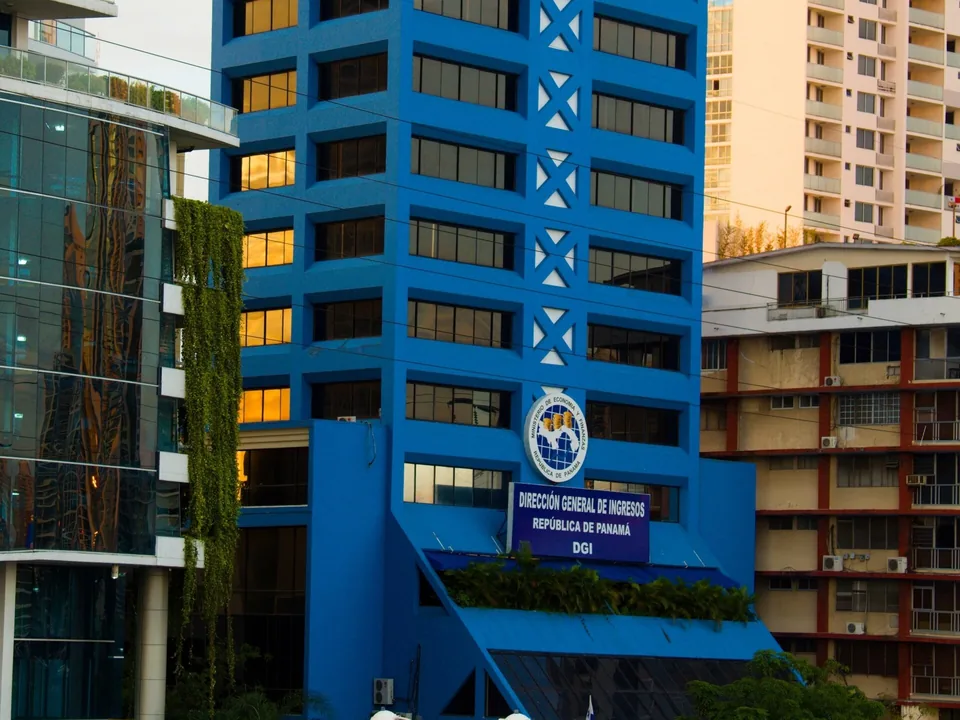
The Directorate General of Revenue of Panama issues the tax residence certificate under resolution 201-0354 of 13 January 2016. The applicant proves the grounds: without 183 days or a lived-in home there is no certificate.
Panama has 17 double taxation agreements in force, among them with Spain, Italy, Portugal, France, the UK, Ireland, the Netherlands, Luxembourg, the Czech Republic, Israel, the UAE, Singapore, South Korea, Vietnam, Mexico and Barbados. There is no agreement with the US. When both countries treat you as resident and an agreement applies, it settles the question: permanent home, then centre of vital interests, then habitual abode, then nationality.
What changes in your taxes once you are resident in Panama
Panama taxes only money earned inside the country: the first $11,000 of Panamanian income a year is tax-free, then the rate is 15%, and 25% on income above $50,000. Income from abroad is not taxed at all: this is the territorial principle of Article 694 of the Tax Code.
The line runs where the work is done and where the source is: a salary from a Panamanian company and services to Panamanian clients are local income; dividends from foreign companies, interest from foreign banks and gains on foreign assets are not. A non-resident who works for a Panamanian client for less than 183 days a year pays 15% income tax and a 2.75% education contribution, without deductions.
| Income | Tax for a resident of Panama |
|---|---|
| Foreign income | not taxed |
| Dividends | 10% or 5% |
| Interest | 0% on deposits |
| Capital gains | 10%, foreign gains 0% |
| Sale of property | 10% of the gain or 3% of the price |
Only income from Panama is taxed: foreign dividends, interest and sales of assets abroad stay tax-free. All rates, business taxes and examples are on the page taxes in Panama.
How to avoid being tax resident in Panama and another country
The Panamanian zero on foreign income works only once your previous country stops treating you as resident: until then, it taxes your worldwide income at its own rates. When both countries treat you as resident and an agreement applies, it decides: first your permanent home, then your centre of vital interests, then where you habitually live, then your nationality.
With most countries Panama has no agreement, so there is nothing to settle the question: each country applies its own law. Plan your exit from the previous residence under its rules and attach the Panamanian certificate as proof of the move.
Does nationality matter for tax residence in Panama?
No: the rules of Panamanian tax residence are the same for every citizenship. What differs is entry, the residence programmes and the treaties.
Citizens of friendly nations have their own residence programme; others use the programmes for investors, pensioners or specialists. US citizens pay US tax by citizenship wherever they live, and there is no agreement between the US and Panama, so Panamanian residence does not end US tax.
Panama tax residency means a certificate your previous country accepts
The law does not stop you from becoming a Panama resident on your own. But mistakes cost more than fees: a residence card with no proof of days or of a lived-in home; a certificate application without the evidence the tax authority asks for; Panamanian and foreign income mixed up; residence in the previous country never closed, so it keeps taxing your worldwide income. Murblz support removes these risks: Murblz specialists choose the residence programme, arrange the tax number and home, collect the proof, obtain the certificate and plan your exit from the previous country.
The cost of support depends on the residence programme and your previous country; a manager will calculate it in the chat.
This topic in other countries
Tax residency in other countries:
- How to become a tax resident of the UAE in 2026
- How to become a tax resident of Singapore in 2026
- How to become a tax resident of Thailand in 2026
- How to become a tax resident of Georgia in 2026
- How to become a tax resident of Cyprus in 2026
- How to become a tax resident of Portugal in 2026
- How to become a tax resident of Spain in 2026
- How to become a tax resident of Italy in 2026
- How to become a tax resident of Greece in 2026
- How to become a tax resident of the UK in 2026
- How to become a tax resident of Monaco in 2026
- How to become a tax resident of Turkey in 2026
- How to become a tax resident abroad
Life and taxes in Panama:
- moving to Panama
- taxes in Panama
- life in Panama City
- crypto tax in Panama
- cost of living in Panama
- buying an apartment in Panama
- sending money to Panama
- Panama or Costa Rica
FAQ
How do I become a tax resident of Panama?
How many days do you need to live in Panama for tax residency?
Is Panama still a tax haven?
Does a Panama residence permit make you a tax resident?
How do I get a Panama tax residence certificate?
What is the income tax in Panama?
Do US expats pay taxes in Panama?
Why get Panama tax residence if the rates are the same?
Don’t want to figure this out alone?
We handle the whole process end to end: we check your documents, match a program to your situation and give you honest timelines and costs. Ask your question in the chat: the free consultation starts right here. Legal representation before authorities and courts is handled by Murblz specialists together with locally licensed partners.
The Murblz consultant replies straight away in the chat on this page. Describe your situation and we will work it out together.
Free consultationHow to send money to Panama in 2026 →
We can help with the transfer: ask in the chat.
Programs