Taxes in Mauritius in 2026
A Mauritius resident's foreign income is taxed only when the money is remitted to the island, and capital gains and inheritances are not taxed at all. 2026 rates, the 15% levy on high income, companies, VAT, property and treaties.
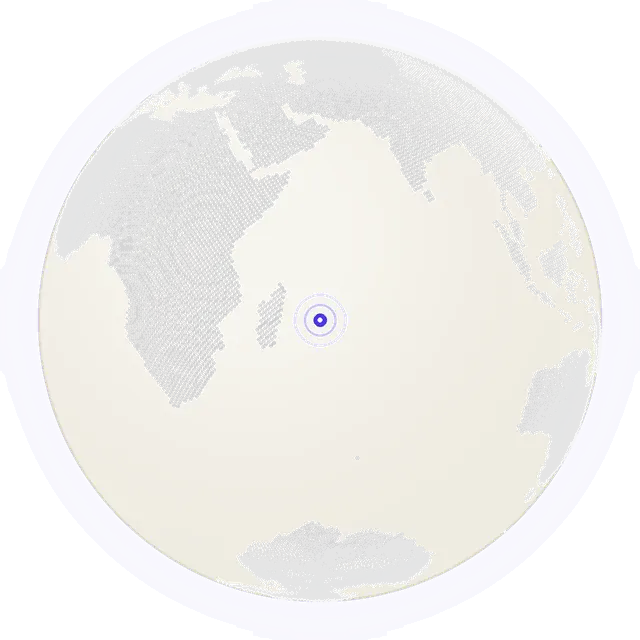
Mauritius offers a moderate tax system for individuals and companies, with relief for income from foreign sources.
Tax rates in Mauritius in 2026: at a glance
Mauritius takes no more than 20% income tax from a resident and taxes foreign income only when the money is remitted to the island. There is no capital gains tax, no inheritance tax and no withholding tax on dividends. The main taxes are in one table.
| Tax | Rate in 2026 | Who pays |
|---|---|---|
| Income tax | 0%, 10% and 20% | residents; foreign income only when remitted to Mauritius |
| Contribution on high income | 15% of income above 12 million rupees a year | individuals with high income, until 30 June 2028 |
| Employee social contribution | 1.5% or 3% of salary | employees |
| Corporate income tax | 15%, 3% for exports and freeport zones | companies |
| Fair share contribution for companies | 5% or 2% with income above 24 million rupees | large companies, until 30 June 2028 |
| Dividends | 0% | no withholding tax |
| Capital gains | not taxed | - |
| VAT | 15% | buyers; registration from 3 million rupees of turnover |
| Land transfer tax | 5% | the seller |
| Registration duty | 5% | the buyer, including under non-citizen schemes |
Dollar amounts use about 47.7 rupees per dollar, as in the other calculations on this page. Taxes are collected by the Mauritius Revenue Authority, and the tax year runs from 1 July to 30 June.
We will calculate online the tax on your income and show how to pay less legally.
Compare taxes in 146 countries: relocation taxes 2026
What has changed since July 2025
- A 15% contribution on high income. From the tax year that began on 1 July 2025, and for two more years, a person with income above 12 million rupees pays 15% on the amount above that threshold. Dividends from Mauritian companies count towards it.
- A contribution for large companies. 5% or 2% of chargeable income when it exceeds 24 million rupees, until 30 June 2028.
- Home purchases by foreigners. The rise in registration duty under non-citizen schemes from 5% to 10%, planned for 1 July 2026, was repealed by the Finance Act 2026: the rate stays at 5%. A separate 10% duty paid by the seller applies only to flats in buildings of three floors or more on State land sold to non-citizens.
- Permanent residence later. The right to it now comes after 5 years with an occupation permit or retirement permit instead of 3.
Personal income tax
The scale is progressive, with these rates in force from the tax year that began on 1 July 2025.
| Annual income, rupees | Approx. in dollars | Rate |
|---|---|---|
| first 500,000 | up to $10,483 | 0% |
| next 500,000 | $10,483 - $20,965 | 10% |
| remainder | above $20,965 | 20% |
| income above 12 million | above $251,573 | plus a 15% contribution |
Residents pay on worldwide income, but foreign income is taxed only to the extent it is brought into Mauritius. Non-residents pay only on Mauritian-source income. Salary for work done on the island is taxed even if it is paid into an account abroad.
A worked example
A resident earning a salary of 3 million rupees a year (about $62,894). The first 500,000 rupees are tax-free, the next 500,000 are taxed at 10%, which is 50,000, and the remaining 2 million at 20%, which is 400,000. The total is 450,000 rupees (about $9,434), or 15% of income. Another 3% of salary goes to the social contribution.
A resident with income of 15 million rupees (about $314,466). Income tax: 50,000 plus 20% of 14 million, 2,850,000 rupees in all. The 15% contribution on the 3 million above the threshold adds 450,000. The total is 3,300,000 rupees (about $69,183), or 22% of income.
If the same person earns income abroad and does not bring it to Mauritius, that income does not enter the calculation at all. This is the basis of planning: what to earn on the island and what to keep in accounts abroad.
Mauritius tax residency rules: 183 days or 270 days over three years
Mauritius offers two day-count routes to residency, and the second is softer. Section 73 of the Income Tax Act 1995 makes you resident after 183 days on the island in a tax year. Or after 270 days over this year and the two before it combined: three winter stays of 90 days, and the status is yours.
The tax year here starts on 1 July, and that is the main trap when counting. The Mauritius tax office celebrates New Year in July, in the island winter, with no tree but with a tax return. A resident pays 0-20%, and foreign income is taxed only when the money is brought into Mauritius. The calculator below counts days by the Mauritian tax year and takes the two previous years into account.
Mistakes cost more: the 270-day rule is easy to miss, and money transferred to Mauritius becomes taxable income. Murblz support removes these risks: we count days over three tax years, plan your transfers, obtain the tax residency certificate and apply double tax treaties where they are in force. We guarantee professional work and a transparent process, and in most cases a result on the first filing.
183-day calculator
Tax residency calculator for Mauritius
Enter your travel dates: the calculator shows whether you are a tax resident of Mauritius today and at year end, and how many days are left before the threshold.
Counting by dates needs JavaScript. Below are the same rules by country.
Investment income and inheritance
- Capital gains are not taxed in Mauritius, whether on shares or on property.
- Dividends from Mauritian companies are exempt from income tax, but count towards the 15% contribution for income above 12 million rupees.
- A resident's foreign dividends, interest and rent are taxed only to the extent they are brought into Mauritius. Money left in an account abroad is not taxed on the island.
- There is no inheritance or gift tax.
This is why an investor should plan which money to bring to the island and when: savings built up before becoming resident can be brought in for living costs, while fresh income stays abroad.
Resident and non-resident
| Resident | Non-resident | |
|---|---|---|
| Income in Mauritius | on the 0-20% scale | on the 0-20% scale |
| Foreign income | only what is remitted to Mauritius | not taxed |
| Residency certificate for treaties | issued | not issued |
| How to qualify | 183 days in a year or 270 days over three years | below these thresholds |
Corporate income tax
- Standard rate - 15%. Resident companies pay on worldwide income, non-residents only on Mauritian income.
- Reduced 3% rate - for export of goods and freeport operators.
- Global business licence companies pay 15%, but 80% of certain foreign income is exempt: dividends, interest, ship and aircraft leasing. The effective rate on such income is 3%.
- Fair Share Contribution. If a company's chargeable income exceeds 24 million rupees a year (about $503,145), from 1 July 2025 to 30 June 2028 it pays a further 5% of chargeable income, and companies taxed at 3% a further 2%. Global business companies and companies on tax holidays are excluded.
- A 2% climate levy on chargeable income applies to companies with turnover above 50 million rupees a year (about $1,048,219).
Social contributions and other taxes
The mandatory social contribution is withheld from salary together with income tax.
| Monthly salary | Employee | Employer |
|---|---|---|
| up to 50,000 rupees (~$1,049) | 1.5% | 3% |
| above 50,000 rupees | 3% | 6% |
- VAT - 15%.
- Land transfer tax - 5% of the price, paid by the seller.
- Registration duty on purchase - 5%, including for foreigners buying under non-citizen schemes.
We calculate the exact tax burden for your situation - business, investment or relocation - in a free consultation.
VAT: rate and registration threshold
The standard VAT rate in Mauritius is 15%, and exports are zero-rated. From 1 October 2025 the mandatory registration threshold was halved, from a turnover of 6 million rupees to 3 million, about $63,000 a year. For a small business that means registering sooner than before.
Accountants, auditors, attorneys, consultants, valuers and surveyors must register whatever their turnover. From 1 January 2026 foreign suppliers of digital and electronic services to customers in Mauritius must also register and charge VAT, with no revenue threshold.
Property for foreigners
A foreigner can buy a home in Mauritius only in projects approved under government schemes for non-citizens, or a flat priced above 6 million rupees (about $125,787) in a building of at least three storeys. A purchase from $375,000 gives a residence permit to the buyer and family.
| Charge | Who pays | Amount |
|---|---|---|
| Registration duty | foreign buyer | 5% |
| Land transfer tax | seller | 5% |
| Tax on gain on sale | seller | none |
| Rental income | owner | on the 0-20% scale |
The 5% duty should be in the budget from the start: on a $500,000 flat it comes to $25,000. The rise to 10% planned for 1 July 2026 was repealed by the Finance Act 2026.
Non-residents and withholding taxes
A non-resident pays tax only on Mauritian income, usually withheld by the payer. Dividends from Mauritian companies carry no withholding tax, which is why the island has long been used for holding companies.
| Payment to a non-resident | Withholding tax |
|---|---|
| Interest | 15%, final tax |
| Royalties | 15% |
| Rent from property in Mauritius | 10% |
| Dividends from a Mauritian company | 0% |
| Salary for work on the island | on the 0-20% scale, withheld by the employer |
A double tax treaty may reduce the rate on interest and royalties if the recipient lives in a partner country and proves it with a residence certificate.
For a non-resident who lets a flat in Mauritius through a local agent, the tenant or agent withholds the tax, but it is still worth filing an annual return on the rental income to account for expenses and avoid overpaying.
Double tax treaties
Mauritius has 46 treaties in force, mainly with countries in Africa, Asia and Europe, including the UK, Germany, France, Italy, Luxembourg, Malta, Cyprus, Sweden, the UAE, Qatar, Singapore, Hong Kong, China, India and South Africa. They reduce withholding tax and help avoid paying twice on the same income.
A treaty with Russia was signed in 1995 but never entered into force, so national rules apply between the two. For a resident of the island much depends on remittance: income left abroad is not taxed in Mauritius at all.
If income has already been taxed abroad and is then remitted to Mauritius, the Mauritian tax authority credits the foreign tax up to its own tax on the same income. This requires proof of tax paid in the other country, so receipts and certificates from abroad should be kept together with remittance statements. Without them no credit is given, and the same income may be taxed again.
Tax year and tax return
The tax year runs from 1 July to 30 June. Employers withhold income tax and the social contribution every month and pay them by the 20th of the following month. The annual return is filed in the autumn, after 30 June. The self-employed and people with income from which no tax was withheld calculate the tax themselves and make advance payments. The Mauritius tax authority issues residency certificates for banks and tax authorities abroad.
Steps: tax number, return and residence certificate
The Mauritian tax system is almost entirely electronic, and most steps are done online through the tax authority's portal. The key is not to confuse the Mauritian tax year with the calendar year.
- Tax number. For an employee the employer arranges it; for the self-employed and investors the tax authority issues it on application with a passport and residence permit.
- Withholding during the year. The employer withholds income tax and the social contribution monthly, while the self-employed and companies make quarterly advance payments.
- Annual return. After the tax year ends on 30 June, individuals file a return in autumn and report foreign income remitted to the island. Companies file within six months of the end of their financial year.
- Residence certificate. Issued by the tax authority, it is needed by banks, brokers and other countries' tax offices to apply a treaty or confirm where you pay tax.
- Tracking remittances. It is best to keep separate accounts for savings built up before residence and for current income: that makes it easier to prove a transfer is not taxable.
For a late return or unpaid tax the authority charges a penalty and interest, and questions about the source of remittances usually come after filing. So it is best to gather documents on savings and income in advance, not on the day of an audit.
Common mistakes
- Counting days by calendar year. The Mauritian tax year starts on 1 July, and the 183 or 270 days are counted by it.
- Bringing income to the island without a plan. Each transfer of foreign income is taxed at up to 20%, while savings built up before residency are not. It is worth keeping them in separate accounts.
- Forgetting the 15% contribution. Large dividends from a Mauritian company are not subject to income tax, but they count towards the contribution.
- Not budgeting for the 5% duty on a home. The buyer pays it on top of the price.
Retirees and remote workers: an example
A retiree applying for residence as a retired non-citizen must transfer at least $1,500 a month to Mauritius. That money is exactly the remitted income, so part of the pension is taxed. But the scale is gentle, and the tax is modest.
| Example for a tax year | Amount |
|---|---|
| Pension remitted to Mauritius, $18,000 | about 858,600 rupees |
| First 500,000 rupees | 0% |
| Next 358,600 rupees at 10% | 35,860 rupees |
| Total tax | ~$760, about 4% of the remitted amount |
The rest of the pension or income left in a foreign account is not taxed in Mauritius. A remote worker on the digital nomad visa who has spent 183 days on the island also becomes resident, and their foreign salary is taxed to the extent it is remitted. The calculation uses about 47.7 rupees per dollar.
What this means if you are moving
Mauritius suits people who live on the island and earn abroad: tax arises only when money reaches a Mauritian account, and savings built up before residence can be brought in tax-free. Those who work on the island get a scale of up to 20% and a social contribution.
The order of steps matters. Remote workers and retirees often arrive on the digital nomad visa: after 183 days on the island they become tax residents, and from then on it matters what money they remit and when. Buying a home from $375,000 gives residence to the family; deal costs are covered in buying a flat in Mauritius, and you can register a company on the island for global business or local work.
Mistakes cost more than the tax: remitting fresh income instead of savings, missing the 270-day rule and filing on the wrong tax year. Murblz specialists plan remittances, count days and prepare returns.
Who Mauritian taxes do not suit
Mauritius works well for people living on the island on foreign income and savings. But there are cases where the advantage disappears.
- A high salary on the island: the scale of up to 20% plus the 15% levy on income above 12 million rupees a year adds up, with the social contribution on top.
- Spending all income locally: if every dollar earned abroad is remitted to Mauritius, the remittance advantage disappears and the income is taxed on the scale.
- Needing a treaty with a particular country: the 46 treaties do not cover everyone, and then the tax credit depends only on national rules.
- Buying a home on a budget: the 5% registration duty and the $375,000 entry threshold for residence make the island expensive for small investments.
In such cases it is worth comparing Mauritius with other countries where foreign income is not taxed or taxed at a reduced rate and property is cheaper.
How we help
We count days by the Mauritian tax year, plan transfers of money to the island, choose a residence permit that fits your goals and support property purchases. We obtain a tax residency certificate and apply double tax treaties where they exist.
FAQ
Does Mauritius have double tax treaties?
From what turnover must you register for VAT in Mauritius?
What is the personal income tax rate in Mauritius?
Is foreign income taxed?
What is the corporate tax rate in Mauritius?
What is the transfer tax on property?
Is there capital gains tax in Mauritius?
What is the 15% contribution in Mauritius?
Are dividends taxed?
How much does a foreigner pay to register a home purchase?
Is there inheritance tax?
When does the tax year start?
Services
Murblz services in Mauritius
The tax rate is only half the picture. The other half is where the company sits, where the money is held and who files the accounts. Murblz specialists help with that in the same country. The quote is fixed in writing before work starts.
See also
Related programs and destinations
All programs - Mauritius:
Similar destinations:
The same program in other countries:
How to send money to Mauritius in 2026 →
We can help with the transfer: ask in the chat.
What tax advantages could Mauritius offer you?
We calculate tax on your income and company profits in Mauritius and check residency and double tax treaties. The catalogue covers taxes in every country.
The Murblz consultant replies straight away in the chat on this page. Describe your situation and we will work it out together.
Free consultation