Moving to Uruguay in 2026: how to relocate and get a passport
Five routes to permanent residence, including the decree of 8 October 2026, documents to collect before you fly, life from $1,600 a month, an 11-year tax holiday and a passport after 3 or 5 years. Plus a plan from departure to passport.
In short
- Entry: no visa for most passports, and you apply for permanent residence in Uruguay within the first weeks after arrival.
- Routes: income from abroad, work, business and investment, family, and the decree of 8 October 2026 for former asylum applicants.
- Money: about $120 in government fees per adult, from $6,000 for the first 3 months and $1,600-2,000 a month for one person in Montevideo.
- Taxes: a 0-36% scale on local income, while a new resident pays no tax on foreign passive income for 11 years.
- Passport: after 3 years in the country with family or 5 without, and you keep your previous citizenship.
In detail
Moving to Uruguay in 2026 takes no visa and no investment for most passports: you enter for 90 days and apply for permanent residence based on income, work or family right in Montevideo. Government fees come to about $120 per adult, one person lives on $1,600-2,000 a month, and citizenship opens after 3 years with family or 5 without.
In October 2026 Uruguay added one more route: a decree of 8 October opens permanent residence to foreigners who had applied for asylum. Dollar amounts use the Central Bank of Uruguay rate of 40.15 pesos per dollar on 7 October 2026, rounded up.
What does Uruguay offer a newcomer in 2026?
Uruguay gives a newcomer permanent status without a temporary stage, a passport after 3-5 years of living in the country and an 11-year tax holiday on foreign passive income.
- Status from the first month. You apply for permanent residence right after entry, and an identity card is issued even before the decision.
- A passport for years of residence. Under Article 75 of the Constitution citizenship is granted for residence, with no investment needed.
- You keep your current passport. Uruguay does not ask you to give up your previous citizenship.
- Gentle taxes on capital. Uruguay does not tax foreign pensions, and a new resident pays no tax on foreign dividends, interest and capital gains for 11 years.
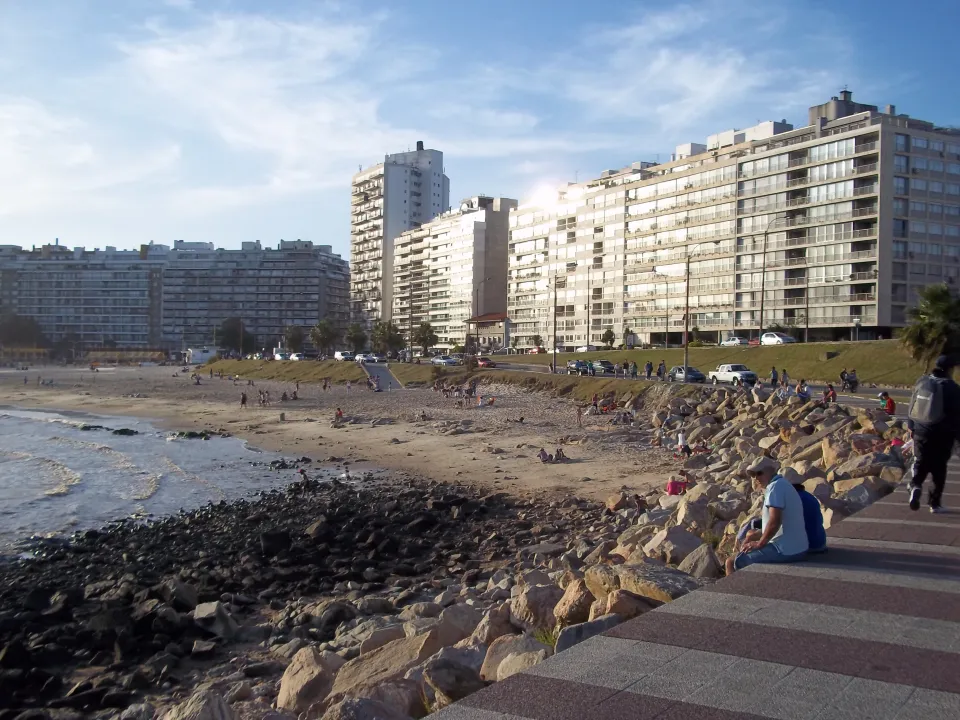
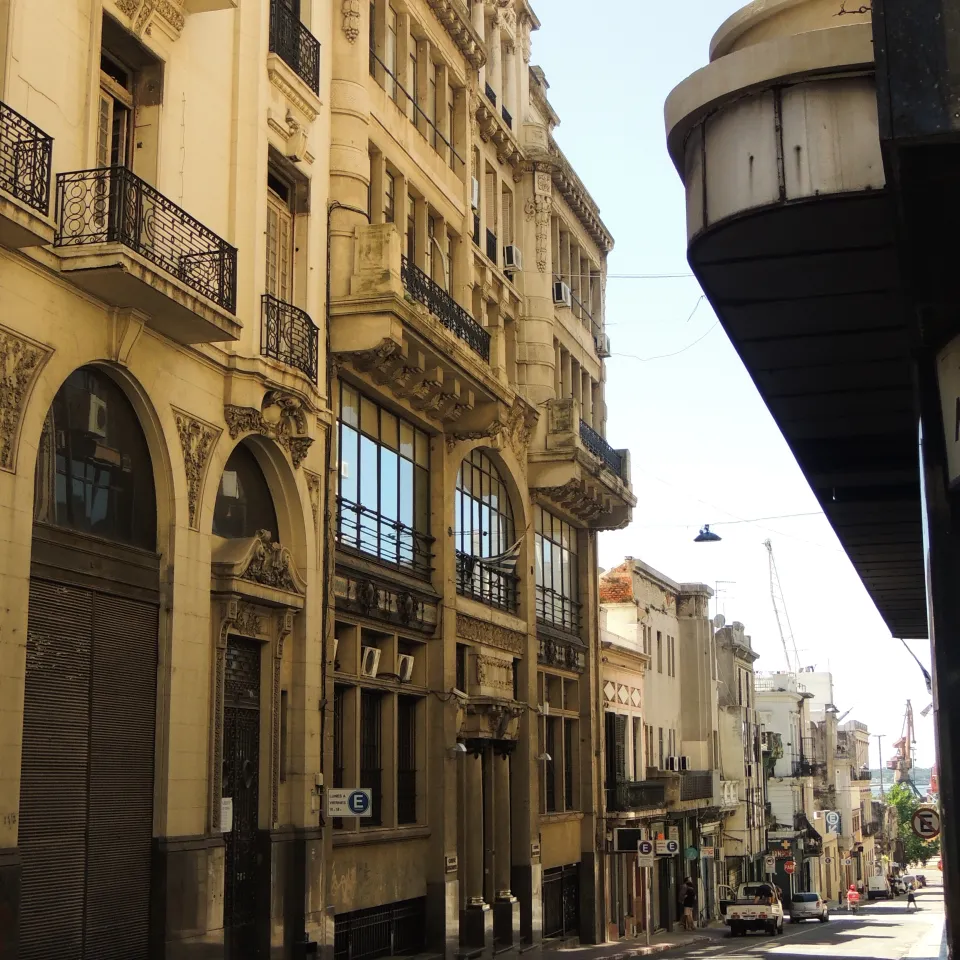
Most newcomers live in Montevideo, home to jobs, schools, clinics and the National Migration Directorate. Those who want to live by the ocean choose Punta del Este. All of the country's programs are on the page Uruguay.
What are the 5 routes to permanent residence in Uruguay?
Five routes lead to permanent residence in Uruguay: income from abroad, work for a Uruguayan company, your own business and investment, family, and the decree of 8 October 2026. Migration Law 18.250 sets no fixed income threshold: the migration service assesses whether you have enough to live on in Uruguay.
Data for 2026.
| Route | Who it suits | What proves the right | Status |
|---|---|---|---|
| Income from abroad | retirees, people living on capital, remote employees of foreign companies | a notary certificate of monthly income and how it reaches Uruguay | permanent residence at once |
| Work in Uruguay | employees of Uruguayan companies | an employer letter: position, term, salary from $640 (25,383 pesos) | temporary residence for up to 2 years or permanent residence |
| Business and investment | company owners and investors | a notary certificate of company or capital income | permanent residence at once |
| Family | spouses, partners, parents and siblings of Uruguayan citizens, including parents of a child born in Uruguay | marriage and birth certificates with an apostille | fast-track permanent residence |
| Decree of 8 October 2026 | people who entered before 1 January 2026 and applied for asylum | income above the minimum wage | permanent residence by settlement |
| Remote worker document | people working for foreign clients | a declaration | 180 days plus a 180-day extension |
For income from abroad, the benchmark is $1,500 a month per person, see retiring in Uruguay. An employee in Uruguay needs a salary of at least the minimum wage: from 1 July 2026 it is $640 (25,383 pesos) a month under Decree 319/025. How to file each route is covered in Uruguay residence permit.
Permanent residence under the decree of 8 October 2026
The decree of 8 October 2026 grants permanent residence to foreigners who entered Uruguay legally before 1 January 2026 and applied for asylum. It covers those who switch to permanent residence instead of the asylum claim and those whose case closed without refugee status, if they have no other basis to stay.
The money condition is income above the minimum wage, $640 a month. The decree takes effect 90 days after official publication, with 12 months to apply and up to 12 more months of extension. If a certificate from the home country is hard to get, the migration service can waive it, see asylum in Uruguay and the new route to residence.
Remote worker document: a year in Uruguay on a declaration
The remote worker document under Decree 238/022 is issued for 180 days with one extension for another 180, and fees for the year come to about $20. No income certificates are needed, only a declaration that you work for foreign clients.
To stay longer than a year, you apply for temporary or permanent residence under the same decree, so prepare criminal record certificates for permanent residence right away. Conditions are on the page Uruguay digital nomad visa.
Get the document checklist
Leave a contact in the chat and we will send a list for your situation.
How does investment lead to residence in Uruguay?
An investor gets permanent residence in Uruguay under the general procedure: investment income proves the means to live, and the migration law sets no minimum amount. You need a notary certificate of monthly income from capital, rent or a company and of how the money reaches Uruguay.
Larger investments add tax residence to permanent residence. Under Decree 148/007 in 2026, tax residence goes to the owner of:
- real estate worth more than $590,000 (3.5 million indexed units) bought since 1 July 2020, with at least 60 days a year in the country;
- real estate worth more than $2.5m (15 million indexed units), with no day count;
- a project under the investment law worth more than $7.5m (45 million units), or more than $2.5m with 15 new jobs.
The indexed unit is Uruguay's accounting unit, recalculated daily for inflation: on 7 October 2026 it was worth 6.66 pesos. Want to invest in property and get tax residence at once? A manager will pick an option for your capital.
Which documents should you collect before flying to Uruguay?
For permanent residence in Uruguay you bring criminal record certificates and marriage and birth certificates with an apostille from home, and the rest is done locally. The list follows the National Migration Directorate procedure for 2026:
- a passport with a legal entry stamp;
- national criminal record certificates from your country of citizenship and from every country where you lived for 6 months or more in the last 5 years, with an apostille, for everyone over 18;
- a marriage certificate issued within a year before filing and children's birth certificates, with an apostille;
- proof of income: a pension, a contract with a foreign company, statements of capital income;
- for children from 4, a school certificate, and for minors, parental consent.
Locally you add a medical certificate and a vaccination record from a clinic approved by the Ministry of Public Health, a notary certificate of income and translations by a Uruguayan sworn translator. Electronic documents that can be verified online need no apostille.
If you leave Uruguay for more than 6 months while your residence is in process, you add a criminal record certificate from the country where you lived on your return.
How much does moving to Uruguay cost in 2026?
A move to Uruguay costs one person from $6,000 for the first 3 months including rent, a landlord guarantee and healthcare. After that, life in Montevideo costs $1,600-2,000 a month for one person and $2,400-2,900 for a couple, and from $3,500 for a family with a child.
Data for 2026.
| Item | Cost |
|---|---|
| Permanent residence fee | ~$95 per person |
| Certificate for the identity card | ~$10 |
| First identity card | ~$15 |
| Re-entry permit before the residence decision | ~$40 per trip |
| One-bedroom flat in central Montevideo | $700-800 a month |
| Groceries for one | $350-450 a month |
| Private health insurance | $50-120 a month |
| International school | $6,000-20,000 a year |
| Budget for one with rent | $1,600-2,000 a month |
Apostilles, sworn translations and the notary certificate are counted separately by the number of documents, and prices item by item are in cost of living in Uruguay.
Savings for rent and the first months are best moved in advance; routes are covered in how to send money to Uruguay.
What taxes apply after moving to Uruguay?
A new Uruguayan tax resident pays no tax on foreign passive income for 11 years: the year residence starts plus 10 more. That is how the tax holiday works under Budget Law 20.446 and Decree 188/026 of 10 August 2026, while local income is taxed on a 0-36% scale.
A Uruguayan tax resident is a person who spends more than 183 days in the country in a calendar year or keeps the centre of vital or business interests there, such as family. Permanent residence alone does not make you a tax resident. The holiday goes to those who became resident from 2026 and were not resident in the two previous years, under one of three conditions:
- more than 183 days in Uruguay every year;
- real estate in Uruguay worth more than $2.1m (12.5 million indexed units) bought since 1 September 2025;
- investment of $110,000 (625,000 units) or more every year in investment funds that finance production, research and innovation.
Outside the holiday, foreign dividends and interest are taxed at 12%, and from 1 January 2026 Law 20.446 added gains from selling foreign shares and stakes. Foreign pensions are not taxed, and the first $1,200 (48,048 pesos) of monthly salary is free of income tax.
Decree 225/026 of 16 September 2026 lets the same property count for both tax residence and the holiday. A calculation for your income is on the page Uruguay taxes.
When can you get Uruguayan citizenship and a passport?
A newcomer gets Uruguayan citizenship after 3 years in the country with family there, or after 5 years without family, under Article 75 of the Constitution. The Electoral Court issues the legal citizenship certificate free of charge, and the passport costs about $140 (5,455 pesos from 1 July 2026).
Years in the country are proven with a National Migration Directorate certificate of residence and trips: an absence of more than 6 months in a row resets the count. Appointment slots at the Montevideo Electoral Court open on Mondays at about 10:00.
You come to the interview with witnesses over 25 who have known you for 3 or 5 years. The conversation is in Spanish: the language is needed for citizenship, while for residence you can come with an interpreter.
With a Uruguayan passport you keep your previous citizenship, see Uruguay dual citizenship and Uruguayan citizenship in 2026. The file for the court is covered on the page naturalization in Uruguay, and the budget for the whole path in how much Uruguayan citizenship costs.
On timing Uruguay keeps pace with its neighbours: in Paraguay you apply for citizenship after at least 3 years with permanent residence. Argentina and Uruguay are compared on timing, taxes and prices in Argentina vs Uruguay.
What is the plan from departure to passport?
Moving to Uruguay takes 6-15 months from collecting certificates to the residence decision, and you apply for citizenship after 3 years in the country with family or 5 without. The steps:
- 1-2 months before departure. Criminal record certificates and civil certificates with an apostille, proof of income.
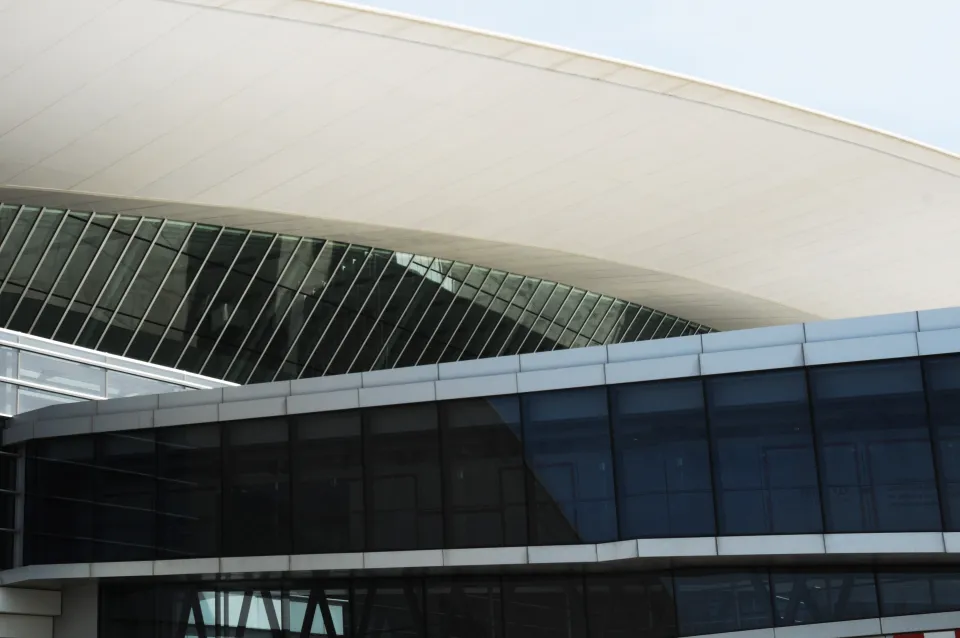
- Arrival day. Visa-free entry for 90 days through Carrasco airport.
- Weeks 1-2. A medical certificate and vaccinations at a clinic approved by the Ministry of Public Health, sworn translation, a notary certificate of income.
- Weeks 2-4. The permanent residence application online on the government portal and a fee of about $95, then an appointment with originals at the National Migration Directorate, in Montevideo at Mercedes 1004.
- Right after filing. A migration certificate and a resident identity card while the case is in process: with it you open an account and sign a lease.
- After 4-12 months. The permanent residence decision.
- After 3 or 5 years. An Electoral Court appointment, the interview with witnesses, the citizenship certificate and the passport.
Timing depends on a complete file: the migration service takes missing documents in one package, and foreign certificates only with an apostille and a translation by a Uruguayan sworn translator. That is why the order of certificates is planned before departure.
We will help you move to Uruguay
Murblz specialists handle the whole path to Uruguay: we pick the route to permanent residence, list the certificates for your history, order apostilles in the right sequence, arrange translations and the notary certificate, support the filing at the National Migration Directorate and, after 3-5 years, prepare the file for the Electoral Court.
The first step is free: in the chat on the site a manager will review your situation and suggest the fastest route to permanent residence with a week-by-week plan. Details and the cost are with the manager. Get a free consultation.
FAQ
Can I move to Uruguay as a US citizen?
Is Uruguay a tax haven for foreigners?
Where do most Americans live in Uruguay?
Is Uruguay a good country to move to?
What does permanent residency in Uruguay give you?
How long can I stay in Uruguay without a visa?
What is the difference between temporary and permanent residency in Uruguay?
Don’t want to figure this out alone?
We handle the whole process end to end: we check your documents, match a program to your situation and give you honest timelines and costs. Ask your question in the chat: the free consultation starts right here. Legal representation before authorities and courts is handled by Murblz specialists together with locally licensed partners.
The Murblz consultant replies straight away in the chat on this page. Describe your situation and we will work it out together.
Free consultationHow to send money to Uruguay in 2026 →
We can help with the transfer: ask in the chat.
Programs