How to send money to the UK in 2026: pounds to a British account in 1-3 business days and large sums
In 2026 money can be sent to the United Kingdom by bank transfer to a British account or through a money transfer service: there is no currency control and no tax on bringing in your own money. Deposits are insured up to $160,000, home sale proceeds up to $1,900,000 for six months, and since April 2025 new residents pay no tax on foreign income for 4 years.
In short
- There is no currency control, and bringing in your own money is not taxed.
- An ordinary account is opened with a British address; without one, at banks' international divisions.
- New residents pay no tax on foreign income for 4 years; earlier residents have a 12% rate until April 2027.
- A non-resident pays stamp duty with a 2% surcharge when buying a home.
In detail
Money reaches the United Kingdom by bank transfer to a British account in 1-3 business days, with no currency control or tax on bringing in your own money. Checked on 8 October 2026; dollars are at the Bank of England rate of 7 October 2026, 1.3220 dollars per pound, rounded up.
The British tax year runs from 6 April to 5 April.
Transfers to the UK in 2026: routes and their status
On 8 October 2026 there are 4 routes to the UK: 3 for any sum and 1 for large balances at a bank's international division.
| Route | Status | Received in | Limit | Time | Documents |
|---|---|---|---|---|---|
| Bank transfer to your own account at a British bank | works | pounds or foreign currency in a currency account | no legal limit | 1-3 business days | the sort code and account number or the international number, the name as at the bank |
| Transfer to a private person's British account | works | pounds | no legal limit | 1-3 business days | the same details, the payment purpose |
| Money transfer service | works | pounds | service limits | from a few minutes | the recipient's passport |
| Transfer to a non-resident account at a bank's international division | works for large balances | pounds, dollars, euros | the bank sets the minimum balance | 1-3 business days | a full check of the source of the money |
Which route is faster and cheaper for your sum and sending bank? Tell a manager where you are sending from and how much: they will check your case and suggest a recipient bank.
Sort code, 8 digits and name checking: British account details
Inside the country a British account is a 6-digit sort code and an 8-digit account number, while for a transfer from abroad the bank issues a 22-character international number: the country code, 2 check digits, a 4-letter bank code, the sort code and the account number. A sender from another country needs exactly this number and the bank's international code.
Within the UK the sending bank checks the recipient's name against the account number and warns if they do not match: this is how the country fights fraud. There is no such check for an incoming transfer from abroad, so the name is written exactly as at the British bank: then the transfer is credited the first time. A pound account accepts a transfer in any currency but exchanges it at the bank's rate; a currency account in dollars or euros lets you exchange later.
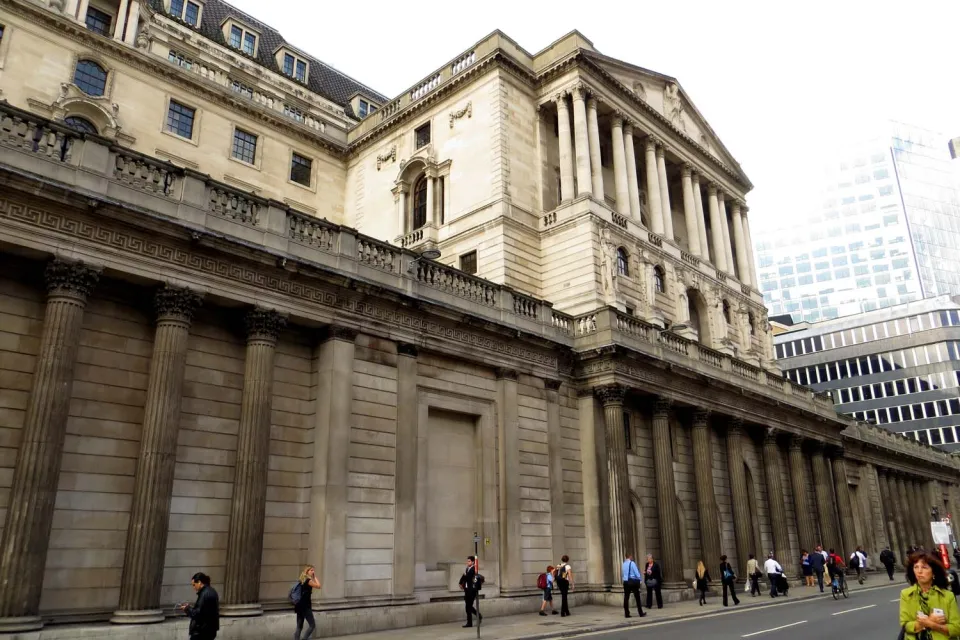
Domestic payments in pounds between British accounts usually arrive in seconds around the clock, but each bank sets its own limit per payment. A large sum, for example for buying a flat, may be sent by the bank only after a call from the client or at a branch, so the payment date is agreed in advance.
A transfer to a British account without a British address
In 2026 an ordinary account at a British bank is opened with a passport and proof of an address in the UK: a tenancy agreement, a utility bill or a letter from an employer. Without an address, the option is banks' international divisions, which accept non-residents but expect a high account balance and check the source of the money more thoroughly than an ordinary bank.
So the order for people moving is: a visa, an address, then an ordinary account, and until then the money is kept in the country you are moving from or in an account at an international division. A manager will tell you the best way to send money without a British address.
An account with an electronic money institution licensed in the UK is opened faster, but the money in it is not covered by the deposit guarantee scheme: it is protected only by the obligation to keep client funds separate. For a large sum for buying a home or for years of living, you need a bank.
A transfer to a private person, for example a relative or a landlord, goes to their British account with the same details. In England a landlord must place a rental deposit in a government deposit protection scheme, so a deposit is paid only under a tenancy agreement and to the account stated in it.
We will help you send money to the UK
Mistakes cost more than fees: a transfer before the account is opened, with nowhere to receive it, the recipient's name not as at the bank and a week of waiting, a large sum without documents that makes the lawyer delay the deal, foreign income brought in without checking the 4-year regime. We will help you avoid them: we will choose a transfer route for your status, prepare the source-of-funds documents for the bank and the lawyer, check the tax regime before the transfer and the route through banks that work with British banks.
Details and terms are with a manager in the chat: they depend on the sum, the purpose of the transfer and your situation.
From April 2025: 4 years without tax on foreign income and a 12% rate
On 6 April 2025 the UK abolished the old scheme under which a foreigner paid tax on foreign income only when bringing it into the country. In its place is a regime for new residents: anyone who was not a UK tax resident in any of the previous 10 tax years can, for the first 4 years, pay no British tax on foreign income and capital gains if they claim it in their tax return.
For those who used the old scheme there is a temporary regime: money earned abroad before 6 April 2025 can be declared and brought in at 12% in the 2025-2026 and 2026-2027 tax years and at 15% in 2027-2028. After 5 April 2028 such sums are taxed at the ordinary rates of up to 45%. Transferring your own savings that are no longer untaxed income is not taxed.
The 4-year regime has a price: the exemption is claimed every year in the tax return, and in the years it is claimed a person loses the personal allowance for income tax and the annual capital gains exemption. So with small foreign income claiming it is sometimes not worthwhile, and this is worked out before moving.
A person automatically becomes a UK tax resident by spending 183 days or more in the country in a tax year; in other cases residence is determined by ties to the country. More details are in UK tax residency and on the taxes in the UK page. If you are not sure whether you qualify for the 4-year regime, a manager will tell you before the first large transfer.
A gift from parents and the 7-year rule
There is no gift tax for the recipient in the UK: money from parents or other relatives is not income. Inheritance tax of 40% above $430,000 (£325,000) can affect a gift only if the donor is themselves liable to this tax in the UK and dies within 7 years of the gift.
Since 6 April 2025 this tax also depends on residence: it covers the worldwide assets of anyone who has been a UK tax resident for at least 10 of the last 20 years. So a gift of money from abroad from parents who have never lived in the UK creates no British tax, while the gift documents are needed for the bank to explain the source of the money.
Example. A mother living in Kazakhstan sends her daughter in London $200,000 for the deposit on a flat. There is no British tax. The daughter gathers her mother's gift letter, a statement showing where the mother's money came from and confirmation of the transfer: both the bank and the conveyancing lawyer expect this.
Money for studies: 28 days in the account and paying the university
For a UK student visa, the money for living costs must stay in the account for at least 28 consecutive days, and the last day of that period must be no more than 31 days before the application. The monthly sum for London and the rest of the country is set by the immigration rules and changes, so it is checked on the date of application.
Tuition fees are transferred directly to the university's account against the invoice it issued, not through acquaintances: the university records the payment in the confirmation of acceptance, and a smaller sum is left to show for the visa. The bank also checks parents' money in the student's account, so the documents on it are prepared together with the visa application.
How much you are sending: British thresholds from $14,000 to $1,900,000
In the UK the bank's questions and the rules protecting money change at 3 levels of sum: up to £10,000, up to £120,000 and up to £1.4 million.
Thresholds in 2026:
| Amount | What matters in the UK | What to prepare |
|---|---|---|
| Up to $14,000, under £10,000 | the transfer is credited according to the payment purpose | the name as at the bank, a clear payment purpose |
| $14,000-160,000 | the bank asks about the source of the money for unusual sums; deposits are insured up to $160,000 (£120,000) per bank | the sender's account statement, a sale contract or an income certificate |
| From $160,000 | proceeds from selling a home or an inheritance are protected up to $1,900,000 (£1.4 million) for 6 months; the conveyancing lawyer checks the source of funds | a full set of documents on the money and how it was accumulated |
Source-of-funds documents are covered in proof of source of funds. For a transfer from $160,000 discuss the route and documents with a manager, and all legal ways of moving capital are gathered on the capital relocation page.
Buying a home in England: stamp duty and a 2% surcharge for non-residents
Buying a home is the main reason for large transfers to the UK, and since 1 April 2025 stamp duty in England has been calculated in bands of the price: 0% up to £125,000, 2% up to £250,000, 5% up to £925,000, 10% up to £1.5 million and 12% above. A non-resident pays a further 2% on the whole price, and since 31 October 2024 an additional 5% applies to a second home. Scotland and Wales have their own taxes on home purchases with different rates instead of stamp duty.
Example. A non-resident buys a first flat for $670,000 (£500,000): the usual duty of £15,000 plus a £10,000 non-resident surcharge, $34,000 (£25,000) in total. If the buyer already owns a home in any country, another £25,000 is added, $67,000 (£50,000) in total. The money for the flat goes through the conveyancing lawyer's account, and before the transfer they check where it comes from: anti-money laundering law requires this, and with the documents ready the deal completes on time.
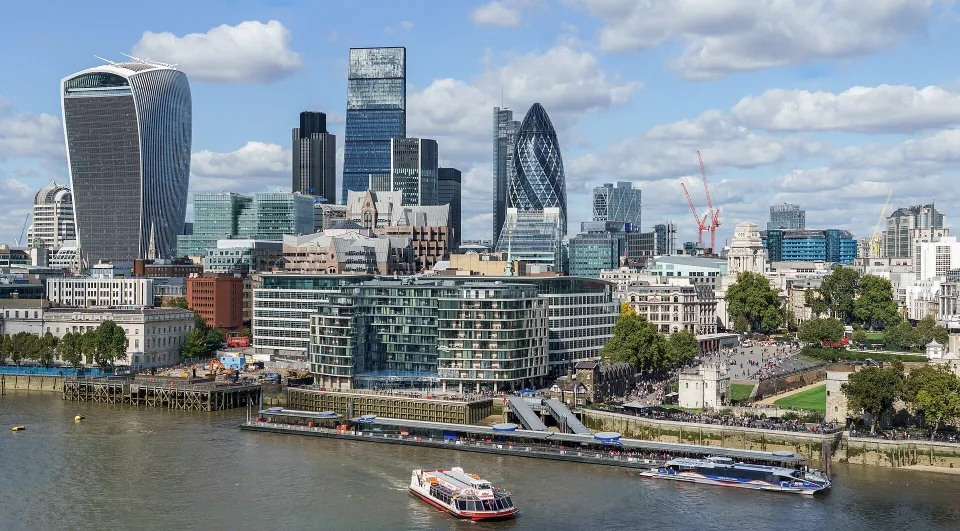
If the purchase is paid for with money from selling a home in another country, the documents on that deal are gathered as described in moving home sale proceeds abroad. Prices and the purchase procedure are in buying a flat in the UK, and support on the property in the UK page.
From Kazakhstan to England and beyond: neighbouring routes
Money moves through the UK in 2 directions. It is most often sent into the country from Kazakhstan and other countries where families have businesses or savings, and out of the country back home and to the places of the next move.
- Kazakhstan: a corridor in both directions; from Kazakhstan, studies and housing in England are usually paid by bank transfer in dollars or pounds, and the rules on the Kazakh side are gathered on that country's page.
- UAE: a frequent direction for those who split the year between London and Dubai.
- Armenia: an account for business and family transfers.
Sending money to neighbouring countries
- Guernsey - open market housing and a tax cap
- Ireland - tax only on remitted income
- Jersey - pounds and euros, deposits paid out in 7 business days
- Gibraltar - pounds to a 23-character account
- Switzerland - francs, euros or dollars
- USA - deposits insured up to $250,000
All legal ways of moving capital are on the capital relocation page.
FAQ
How long does a bank transfer to the UK from abroad take?
Does the recipient pay tax on a gift in the UK?
Can you open an account at a British bank without an address in the country?
What sum on a deposit does the state guarantee in the UK?
Is transferring your own money to the UK taxed?
What stamp duty does a non-resident pay when buying a home in England?
What is the rate under the temporary regime for bringing in old foreign income?
How many digits does a British account number have?
We will suggest the best way to send your money
We will choose a transfer method for your amount and country, prepare the documents on the origin of the money for the bank, make the transfer through licensed partners and follow it until the money is credited. Ask your question in the chat - the manager will suggest the best terms and the cost. The legal side with banks and government bodies is handled by Murblz specialists and locally licensed partners.
Details and cost are with the manager in the chat. Describe your situation and we will reply right away.
Check transfer termsHow we handle a transfer: 4 stages → · Country rules checked
Programs