How to send money to Turkey in 2026: dollars, euros and lira in 1-5 business days
In 2026 money goes to Turkey by bank transfer to the recipient's account in dollars, euros or lira in 1-5 business days, or through a money transfer service in minutes. Currency is credited with no mandatory sale. From $10,000 a Turkish bank asks where the money comes from: statements for 6-12 months or an income certificate.
In short
- A bank transfer takes 1-5 business days in dollars, euros or lira, and the amount is not limited by law.
- Money reaches a Turkish bank card through the 26-character number of the account the card is issued for.
- From $10,000 the bank asks where the money comes from: statements for 6-12 months or an income certificate.
- An account needs a 10-digit tax number; a residence permit holder uses the foreigner number starting with 99.
- Buying currency is taxed at 0.2%, selling currency to a bank is tax-free.
In detail
Your situation and the way to send money to Turkey
5 common situations on this route and what to prepare for each before sending.
| Situation | How to send | What to prepare |
|---|---|---|
| Helping family in Turkey | to the recipient's account by its 26-character number, the money is available on their card at once | the recipient's tax number, purpose: family support |
| Money for yourself to live on and pay rent | dollars to your own foreign currency account, into lira as you spend | a 10-digit tax number, purpose: transfer of own funds |
| A large sum from $10,000 | one bank transfer to your own account after a test payment | statements for 6-12 months, an income certificate or tax return |
| Proceeds from selling a home in another country | dollars to your own account in one payment | the sale contract and a statement showing the money received by the seller |
| Buying a flat, including for citizenship | dollars to your own account and a sale of the currency to a Turkish bank | the contract and the bank's document on the currency sale |
How to send money to Turkey in October 2026
In October 2026 there are 4 routes to Turkey, and for a large sum the right one is a bank transfer to an account in your name.
| Method | Status on 8 October 2026 | Currency | Amount limit | Timing | What you need |
|---|---|---|---|---|---|
| Bank transfer to your own account | works | lira, dollars, euros | not limited by law | 1-5 business days | an account with a Turkish tax number, documents on the origin of a large sum |
| Transfer between Turkish banks | works around the clock | lira | set by the central bank and the client's bank | seconds | an account at a Turkish bank |
| Money transfer service | works | lira or foreign currency | set by the operator | from minutes to 1 business day | the recipient's passport |
| A card from your bank in another country | works within the card's limits | lira when paying and withdrawing | daily limits of the card-issuing bank | immediately | a card accepted in Turkey |

The 1-5 business days of a bank transfer depend on how many correspondent banks the money passes through. The lira fluctuates more than the dollar and the euro, so savings in Turkey are kept on a foreign currency account and exchanged as you spend. General rules for large transfers are in sending a large sum abroad, and we will suggest the best way to send your amount with the smallest loss on the exchange.
The tax number: the first step to a transfer to Turkey
A 10-digit Turkish tax number is the first thing a Turkish bank will ask for: without it a foreigner cannot open an account. You get it at a tax office with your passport or online through the revenue administration, and for a residence permit holder it is replaced by the 11-digit foreigner number starting with 99. The tax number is issued free of charge, and the foreigner number comes with the residence permit and then works both at the bank and at the tax office.
With a tax number an account is usually opened with your passport in 1 branch visit, in lira and in foreign currency at once. Some banks work only with residence permit holders, so choose the bank for your status in advance.
When opening the account the bank will ask you to fill in a tax residence form: Turkey exchanges account information with the tax authorities of other countries. When the answers in the form match the real operations, the account works without extra questions. If you need an account for your status, a manager will check which bank will accept you faster.
26 characters and a current account: bank details for a transfer to Turkey
A Turkish account number for an international payment has 26 characters: the country code, 2 check digits, the bank code and the account number. The sender needs this number, the recipient's name exactly as the bank holds it and the bank's international code.
A transfer from abroad is credited to a current account, not to a deposit: the money lands on the current account in the right currency, and from there you move it to a deposit in the bank's app. If you send dollars, give a dollar account; if euros, a euro account. The transfer currency must match the account currency, otherwise the bank exchanges it at its own rate, and buying currency adds a 0.2% tax.
0.2% on buying currency: how not to overpay on exchange in Turkey
The purchase of foreign currency by an individual in Turkey is taxed at 0.2% of the amount under Presidential Decision No. 3031 of 30 September 2020, while selling currency to a bank is not taxed. The bank withholds the tax itself at the moment of purchase, you do not pay it separately. That is why money from abroad is credited to a foreign currency account and exchanged into lira as you spend, and not converted back into dollars without need.
Example. Selling $10,000 to the bank and receiving about 492,000 lira is tax-free. Buying the same $10,000 with lira costs 0.2% tax, that is $20. So dollars you will need later are best kept in dollars from the start.
An individual in Turkey has no mandatory sale of foreign currency, and this is the main difference from countries with currency control: you can freely receive, hold and send it back out by bank transfer. Deposits at a Turkish bank are insured up to $25,000 (1.2 million lira) per person at each bank, in lira and in foreign currency, so a large sum is spread across several banks.
The bank withholds tax at source on deposit interest. The rate is set by presidential decision, depends on the currency and term of the deposit and changed several times in 2025-2026, so the bank quotes the current rate when you open the deposit.
Within Turkey, in lira: rent, purchases and everyday payments
Sale and rental contracts for property between Turkish residents are concluded in lira in 2026, so for renting or buying from a local resident the currency is exchanged into lira before payment. Transfers between Turkish banks take seconds around the clock and are often free, so it is convenient to pay the landlord from your Turkish account to their account number.
For everyday spending a Turkish bank card in lira is enough: you use it in shops, for transport and utilities. A card from your bank in another country also works for paying and withdrawing, but the exchange and withdrawals follow the tariff of the issuing bank, so a local card is cheaper for living in the country. It is issued for the lira account during the same visit when you open the account.
A transfer to a relative in Turkey: to their account and with a clear purpose
In 2026 money for a relative in Turkey is sent to their Turkish account by its 26-character number, and the recipient must have their own tax number, otherwise they have no account. State the purpose plainly: family support, a gift, paying for studies.
For a large sum the recipient's Turkish bank will ask who is paying and where the money comes from. A gift or loan agreement and documents on the sender's income, translated into Turkish, settle the question in advance, and the money is credited without delay.
Moving to Antalya with $60,000: the route step by step
A family moves to Antalya with $60,000, about 2.95 million lira, rents a flat and after a year considers buying. The 5-step route looks like this.
- Tax number - at a tax office with a passport or online in the first days.
- Account - at a bank that works with your status, in lira and dollars at once.
- Test payment - a few hundred dollars to the dollar account with the same purpose as the main one.
- Main sum - to the dollar account in one payment, with statements on the origin of the money.
- Spending - lira for rent under the contract are exchanged as payments fall due, and a large sum is spread across banks under the $25,000 insurance.
A year later, if the family decides to buy a flat, the money is already on a Turkish account with a clear history, and the bank makes the payment to the seller without new checks on its origin.
From $10,000 to $400,000: what a Turkish bank will ask for
A Turkish bank checks the client under the financial intelligence rules, and its questions differ across 3 amount levels.
The levels in 2026:
| Amount | What the bank will ask | What to attach |
|---|---|---|
| Up to $10,000, about 492,000 lira | the payment purpose and the tax number | passport, tax number, a clear purpose |
| $10,000-100,000 | where the money comes from | statements for the sender's account for 6-12 months with no gaps, an income certificate or tax return |
| From $100,000 to $400,000 and above | the whole chain of the money and the purpose | a contract for the sale of property, a stake or a business, a statement showing the money credited; for citizenship, the bank's document on the currency sale |
Lira in the table are converted at the Central Bank of the Republic of Turkey rate on 7 October 2026: 49.20 lira per dollar.
Documents in other languages are translated into Turkish, and the bank checks the amount, dates and sender against the payment. Answer the bank's request the same day: until you answer, the money waits on the account, and once you do, it is credited at once. The bank asks you to explain where the money comes from? A manager will tell you which document pack a Turkish bank accepts fastest. What goes into such a pack is covered in proof of source of funds, and routes for large capital on the capital relocation page.
A flat and Turkish citizenship: the bank's document on the currency sale
Turkish citizenship is granted for property from $400,000 held for at least 3 years. The currency for such a purchase is transferred from abroad and sold to a Turkish bank, and the bank issues a document on the currency sale: this is what proves the investment for the programme.

A residence permit through buying a home has its own value threshold, and the purchase is made in districts open to foreigners: check the address before the deposit. Pay for the purchase through a bank, so the deal has a full banking trail: you need it both for the residence permit and for a future sale of the flat with the money sent back out. In detail on the pages Turkish residence permit, Turkish citizenship, property in Turkey and in how to buy a flat in Turkey.
Example. A buyer of a $400,000 flat for citizenship transfers dollars to their own foreign currency account, sells them to the bank and receives a currency sale document for the full amount, then pays the seller in lira under the contract. Selling currency to the bank carries no 0.2% tax: it applies only to buying currency.
More than 6 months in Turkey: taxes on your money
A Turkish tax resident is a person who has lived in the country for more than 6 consecutive months within a calendar year: they declare worldwide income on a scale from 15% to 40%. Turkey has no tax on bringing in your own money, however much you transfer.
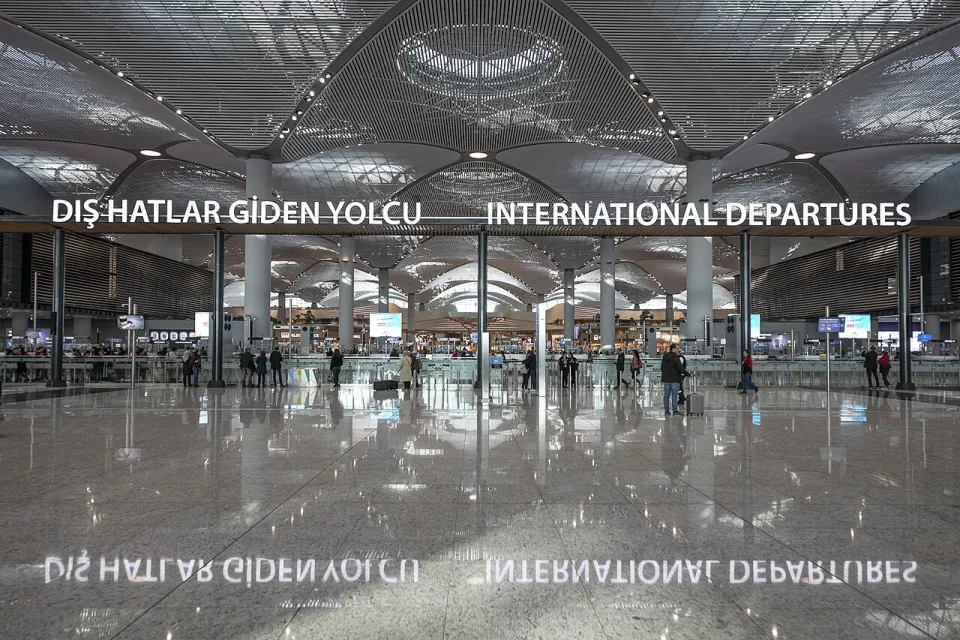
Days are counted by calendar year: 6 consecutive months from January to December make a person resident, and short trips within that period do not break it. A resident also declares foreign income, so moving to Turkey for a full year is worth checking against the taxes of the country you are leaving. For a non-resident, tax arises only on Turkish income: deposit interest, rent, the sale of a flat. Days in the country are counted by entry and exit stamps, so check them in advance if you plan to stay longer than half a year. Rates and deductions are on the taxes in Turkey page.
From Kazakhstan to Turkey: dollars, lira and the recipient's tax number
2 routes take money from Kazakhstan to Turkey: a bank transfer to an account and a money transfer service. Without a bank account, a Kazakhstan resident sends up to $10,000 (4.54 million tenge) per transfer under the rules of the National Bank of Kazakhstan, and a large sum is sent from your own account.
Dollars are the most convenient to send: a Turkish bank holds them on a foreign currency account without mandatory sale and exchanges them into lira when you need to pay rent or for a purchase. To receive money on an account, the recipient in Turkey needs a 10-digit tax number and a 26-character account number. If the money is for a flat, send it to your own account in Turkey: the bank's document on the currency sale will be needed for the deal.
In 2026 the Central Bank of the Republic of Turkey rate is 49.20 lira per dollar and the National Bank of Kazakhstan rate is 453.65 tenge per dollar; both rates are for 7 October 2026.
Money from Turkey back home: Kazakhstan, Kyrgyzstan, Uzbekistan, Belarus
In 2026 money from Turkey most often goes to 4 countries, and the bank checks an outgoing transfer under the same rules as an incoming one. Before sending, lira are exchanged into dollars or euros at your bank, taking the 0.2% tax on buying currency into account, and if the money sits on a dollar account it goes straight out in dollars without that tax.
- To Kazakhstan: an individual identification number in 1-3 days, and savings in tenge under a state guarantee.
- To Kyrgyzstan: transfers to family and to your own account.
- To Uzbekistan: money for family in som and dollars.
- To Belarus: family transfers and support for parents.
Sending money to neighbouring countries
- Georgia - an account in three currencies
- Azerbaijan - manats to your own account
- Greece - a tax number by video call
- Cyprus - the bank expects a link to the island
- Egypt - a foreign currency account and a floating rate
- Iran - a neighbour to which 1.72 million people have returned
All legal routes for moving capital are on the capital relocation page.
FAQ
Do I need a Turkish tax number to receive a transfer to an account?
Is there a tax on currency exchange in Turkey?
Can I hold dollars on an account at a Turkish bank?
How much of a deposit does Turkey insure?
How much do you need to invest in property for Turkish citizenship?
After how many months in Turkey do you pay tax on worldwide income?
Will a Turkish bank open an account for a visitor on a tourist visa?
Can I pay rent for a flat in Turkey in dollars?
How do I send money to a Turkish bank card?
How do I send dollars to Turkey?
We will suggest the best way to send your money
We will choose a transfer method for your amount and country, prepare the documents on the origin of the money for the bank, make the transfer through licensed partners and follow it until the money is credited. Ask your question in the chat - the manager will suggest the best terms and the cost. The legal side with banks and government bodies is handled by Murblz specialists and locally licensed partners.
Details and cost are with the manager in the chat. Describe your situation and we will reply right away.
Check transfer termsHow we handle a transfer: 4 stages → · Country rules checked