How to send money out of Morocco under the 2026 rules
Morocco sets no single ceiling. Your status, the purpose and the origin of the money decide the limit, from $1,100 a year for family to no cap on a currency account.
In short
- There is no single ceiling. The 2026 General Instruction on Foreign Exchange Operations lists permitted transfers by purpose, and anything it does not name needs approval from the Office des Changes.
- Foreign employees send net salary with no percentage cap, monthly or for the last 12 months at once, on a contract approved by the employment ministry.
- Leaving for good: $5,100 (50,000 dirhams) per full year of continuous residence for money with no right of transfer. The rest stays in a dirham account that can only be spent in Morocco.
- Residents: $1,100 (10,000 dirhams) a year for family in difficulty and up to $51,000 (500,000 dirhams) a year for personal travel.
- The first payment decides the exit. An investment paid for in foreign currency leaves in full. Without that proof, a non-resident foreigner gets 25% at once and the rest over three years.
In detail
Morocco has no single limit on money leaving the country. The 2026 General Instruction on Foreign Exchange Operations, in force since January 1, works as a list: if your transfer fits a named purpose, your bank sends it without asking the foreign exchange office, the Office des Changes. If it fits none, you need that office's approval first. A foreign employee sends home net salary with no percentage cap, a foreigner leaving for good gets $5,100 (50,000 dirhams) per full year of residence for money with no right of transfer, and a resident helping family abroad gets $1,100 (10,000 dirhams) a year.
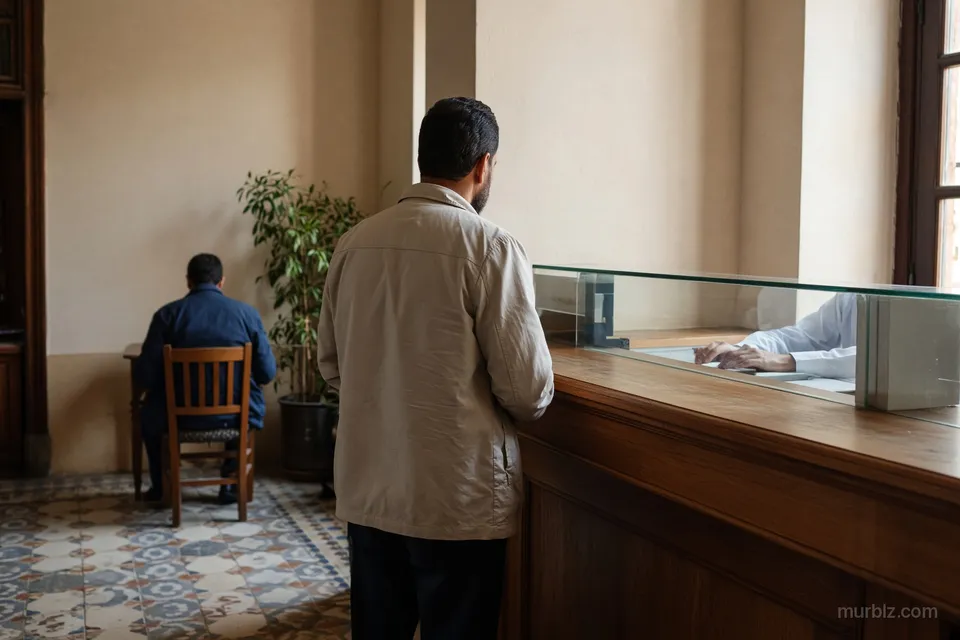
Your status, the purpose and the origin of the money decide which rule applies. "Resident" here means resident for Moroccan tax, whether Moroccan or foreign. Figures change with each edition: the travel ceiling was $31,000 (300,000 dirhams) under the last one. Dollar amounts use 9.9765 dirhams per dollar, rounded up.
What you can send, by purpose
| Purpose | Who qualifies | 2026 limit | What the bank checks |
|---|---|---|---|
| Salary | Foreign employees; Moroccans living abroad after 5 years of work abroad | Net salary, no percentage cap | Approved contract, salary certificate |
| Pension | Foreigners; Moroccans living abroad | Net pension received in Morocco | Proof from the payer |
| Self-employed income | Foreigners | Last year's taxable income minus tax | Income declaration, tax receipt |
| Leaving for good | Foreign residents | $5,100 (50,000 dirhams) per full year of continuous residence | Origin of the money, departure certificates, tax clearance |
| Inheritance | Non-resident foreign heirs without Moroccan citizenship | The same limit, on the deceased's years of residence | Inheritance deed, death certificate, tax clearance |
| Family in difficulty | Residents; foreigners passing through | $1,100 (10,000 dirhams) per sender per calendar year | ID, proof of kinship |
| Personal travel | Moroccan and foreign residents, Moroccans living abroad | $11,000 (100,000 dirhams) plus 30% of last year's income tax, ceiling $51,000 (500,000 dirhams) a year | ID, passport, tax proof |
| Study | Moroccan residents, Moroccans living abroad, foreigners with a Moroccan parent | Tuition and rent as billed, living costs $1,600 (15,000 dirhams) a month, more with proof | Enrollment certificate, lease |
| Medical treatment | Moroccan and foreign residents, Moroccans living abroad | The amount on the medical papers | Doctor's certificate, invoice or estimate |
| Investment paid for in foreign currency | Foreign investors, Moroccans living abroad | Income and sale proceeds, no limit | Bank payment proofs, tax receipts, deeds |
| Currency or convertible dirham account | Foreigners, Moroccans living abroad | The balance, for any payment | Where each deposit came from |
Salary and self-employed income
A foreign employee faces no percentage limit, but the base is not the gross salary. The Instruction counts pay after tax, contributions and other deductions, then takes off what you spend on living in Morocco. Expense allowances do not count. You can transfer monthly or catch up on the last 12 monthly payments at once. A thirteenth month back falls outside this window, and those savings can end up under the tighter limit for people leaving.
In the private sector the bank that receives your salary wants a contract approved by the employment ministry and a certificate from the employer; Moroccans living abroad and citizens of countries with an establishment agreement with Morocco skip the approval. A filing receipt starts the transfers, but the approved contract must reach the bank within 6 months of the first. Miss that date and the bank stops the payments and sends your file to the Office des Changes.
New hires without a foreigner's registration card (carte d'immatriculation) get a temporary dirham account for 6 months and can send savings from it. Without the card by then, even the remaining balance leaves only with the Office's approval. Self-employed foreigners can split last year's after-tax income into several transfers. Severance needs a final court decision or a settlement endorsed by the employment ministry.
Leaving Morocco for good
A foreign resident who leaves permanently can take out money with no right of transfer, such as old dirham savings or the proceeds of something bought in dirhams, up to $5,100 (50,000 dirhams) per full year of continuous residence. Ten full years give $51,000 (500,000 dirhams). Nine years and eleven months count as nine, so leaving a month early costs $5,100.
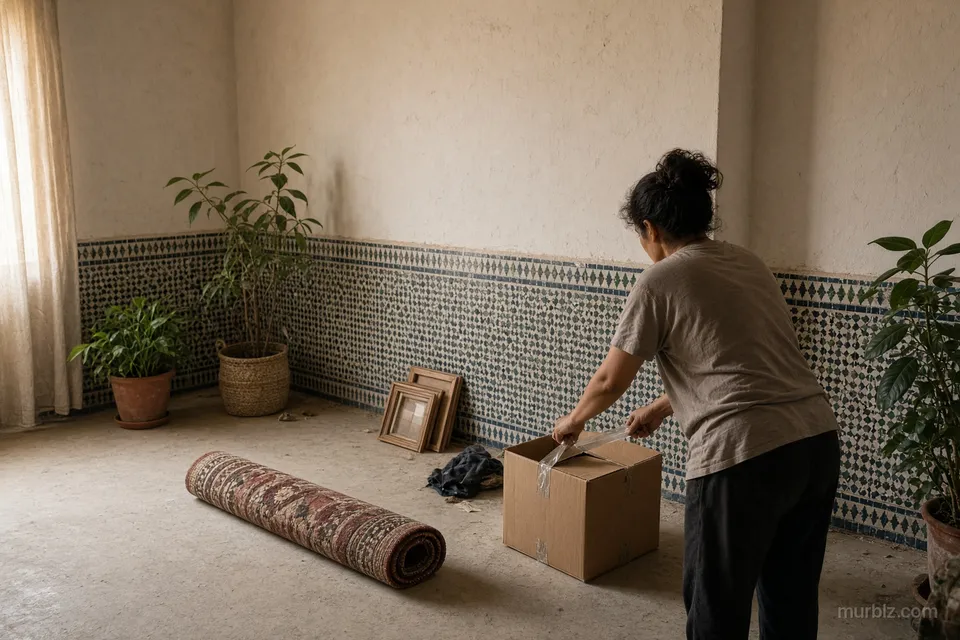
The bank wants proof of where the money came from, such as a sale contract, an account statement, a certificate of removal from your consulate's register, a police certificate showing your length of stay, and a tax clearance. Whatever exceeds the limit goes to a special dirham account: you can spend it in Morocco, but you cannot send it abroad or move it to a currency account.
Moroccan citizens who emigrate have no equivalent: the current Instruction contains no emigration allowance.
Invested money: the first payment decides the last one
Pay for an investment in foreign currency and the Instruction guarantees you can take the money back out, whether you bought a company, shares, a property or a term deposit. Foreign investors and Moroccans living abroad then transfer income, sale proceeds and the principal of shareholder loans with no limit. The evidence is the payment document your bank issued when the money came in, plus tax receipts and the deeds. Our guide to sending money to Morocco explains how to bring it in so that it can leave.
| Seller | Paid for in foreign currency, with proof | Paid for in dirhams, or no proof |
|---|---|---|
| Non-resident foreigner | Full transfer | Staged account: 25% at once, then 25% on each of the next three anniversaries |
| Foreign resident | Full transfer | Dirhams in hand in Morocco; the leaving-for-good limit applies later |
Only non-resident foreigners can hold this staged account (compte convertible à terme). Money waiting there can be spent in Morocco or reinvested, and a new investment gains the same guarantee after two years.
A non-resident foreigner receives rent, dividends and interest with no limit, however the investment was paid for, once Moroccan tax is paid. A foreign resident who has held an investment for at least 10 years without proof of foreign currency can send last year's income, up to $210,000 (2 million dirhams) a year.
A foreigner selling to another foreigner or to a Moroccan living abroad can be paid directly abroad, but the buyer inherits the seller's status: a stake with no proof of foreign currency stays that way.
A missing bank document can stretch your exit over three years
Three mistakes cost the most here: paying for a stake or a property without the bank document that proves foreign currency, letting salary transfers slip past the 12-month window, and planning a departure without counting full years of residence. The first can turn one transfer into four over three years, or leave the money in dirhams if you live in Morocco. Murblz checks which rule covers your money before you act, prepares the documents for the bank in Morocco and stays with the file until the money is credited. We guarantee professional work and a transparent process.
The cost of support depends on your status, the origin of the money and the amount; a manager will calculate it in the chat.
Currency accounts: free to spend, strict to fill
Foreigners, resident or not, and Moroccans living abroad can hold a bank account in Morocco in foreign currency or in convertible dirhams, which can be changed back and sent abroad. The balance can pay anyone in Morocco or abroad with no cap. The real limit is what may go in: mainly transfers from abroad, foreign cash with a customs declaration up to 6 months old (a foreign resident has 30 days from entry), income and repayments from capital operations, and interest. Hold such an account and the Instruction obliges you to spend from it first.
Moroccan residents outside the commercial register with income from abroad get a narrower version: they keep up to 70% of what they bring home and sell the rest for dirhams, and the balance cannot buy property or financial assets abroad.
Family, rent and trips
Family. A resident can send $1,100 (10,000 dirhams) per calendar year in total to parents, grandparents, children, grandchildren, siblings or a spouse in difficulty abroad, through a bank or a payment institution licensed by the central bank. Support ordered by a court is separate.
Rent. The Instruction names rent only for students: it goes as billed, and a deposit of up to 3 months' rent must be brought back or used for rent within 60 days of the lease ending. A long lease abroad for any other reason is not named: a Moroccan resident needs the Office's approval, while a foreigner with a currency account can pay from its balance.
Trips. The allowance works only for trips from Morocco: $11,000 (100,000 dirhams) plus 30% of the income tax you paid or had withheld last year. Pay $21,000 (200,000 dirhams) in tax and the top-up is $6,100 (60,000 dirhams), for $17,100 (160,000 dirhams) in total. Cash is capped at $11,000 (100,000 dirhams) per trip, unused money must be sold within 30 days of your return, and any allowance unused on December 31 expires. Foreign residents have qualified since 2026, for medical treatment too.
What needs approval, and the shortcuts that backfire
Article 1 closes the list: anything the Instruction does not name, or that misses its conditions, needs the Office's approval, requested through your bank or directly. It singles out settling by offset (a friend pays your bill abroad and you repay in dirhams), paying in foreign currency inside Morocco and advancing money to a non-resident. Moroccan residents also need approval to open an account or hold assets abroad, including a home or a stake, with narrow exceptions such as a student's account, and must declare any assets abroad they come to own within 3 months.
Travelers can carry only $210 (2,000 dirhams) in dirham notes, and foreign cash from $11,000 (100,000 dirhams) must be declared to customs on entry and on exit. Non-residents taking foreign notes out must show the entry declaration at any amount, so declare small sums on entry too. The Office treats deals in virtual currencies as a breach of exchange rules, with penalties and fines, and warns against moving money outside licensed intermediaries. Banks decide on each transfer after checking sanctions lists and the origin of the money.
How Murblz handles a transfer out of Morocco
You can try this on your own: find your rule in a 256-article Instruction, build the file and answer the bank. It is safer with professionals, because the costly mistakes come long before the transfer. Our process is clear and transparent: we start with your status and the origin of the money, suggest an account and a route, prepare the bank documents and stay with the file until the money is credited. The cost is available on request from a manager.
Personal account in Morocco
Resident and non-resident accounts, documents and what can go in.
Learn more →Company in Morocco
Registering a company with a clear way out for capital and profit.
Learn more →Capital relocation
Moving savings between countries with the paperwork banks expect.
Learn more →FAQ
How much money can I send out of Morocco?
Can a foreigner working in Morocco send their salary abroad?
How much can a foreigner take out when leaving Morocco for good?
Is there an emigration allowance for Moroccan citizens?
Can I pay rent abroad from Morocco?
Can someone living in Morocco buy property abroad?
We will suggest the best way to send your money
We will choose a transfer method for your amount and country, prepare the documents on the origin of the money for the bank, make the transfer through licensed partners and follow it until the money is credited. Ask your question in the chat - the manager will suggest the best terms and the cost. The legal side with banks and government bodies is handled by Murblz specialists and locally licensed partners.
Details and cost are with the manager in the chat. Describe your situation and we will reply right away.
Check transfer termsHow we handle a transfer: 4 stages → · Country rules checked
What happens next
- An expert reviews your situation and goal.
- We contact you the way you prefer and answer your questions.
- You get a work plan, honest timelines and a written quote.
Programs
Programs in Morocco
Morocco: citizenship.