Can I keep my UK bank account if I move abroad in 2026
Most accounts stay open under your bank's terms. What changes for tax on interest, ISAs, the basic account and the State Pension, and how your account is reported to your new country.
In short
- A UK account stays open after you move abroad when your bank's terms cover customers in your new country; no UK law asks you to close it.
- For accounts opened from 28 April 2026 a bank gives at least 90 days' notice and a clear reason before closing one; for older accounts the notice is at least 2 months.
- Interest on UK savings stays UK income: banks pay it without deducting tax, and a non-resident usually reports it on a paper return with form SA109.
- An ISA (individual savings account) keeps its tax relief after the move, but new money goes in only once you are UK resident again.
- Your bank reports the account to HMRC, the UK tax authority, which shares the data with the tax authority of your new country.
In detail
Yes, you can keep your UK bank account when you move abroad. No UK law asks you to close it, and the account continues under your bank's terms. Each bank decides which countries of residence it serves, so the first step is to give the bank your new address and tax residence. Below: notice periods, tax on interest and reporting.
Can you keep a UK bank account when you move abroad
A current or savings account is a contract between you and the bank, and moving to another country does not end it by itself. What matters is the account terms: banks and building societies set which countries they serve customers in, which address they accept and which services stay available from abroad, such as cards, online banking and transfers.
Three things decide whether your account stays as it is:
- your new country: the bank's terms either cover customers living there or not;
- the type of account: a basic bank account is tied to living in the UK, an ordinary current or savings account is not;
- up-to-date details: your real address abroad and your tax residence, which the bank needs for its checks and reports.
If your bank does not serve customers in your new country, it tells you in advance and in writing, and you have time to move your money and open an account elsewhere.
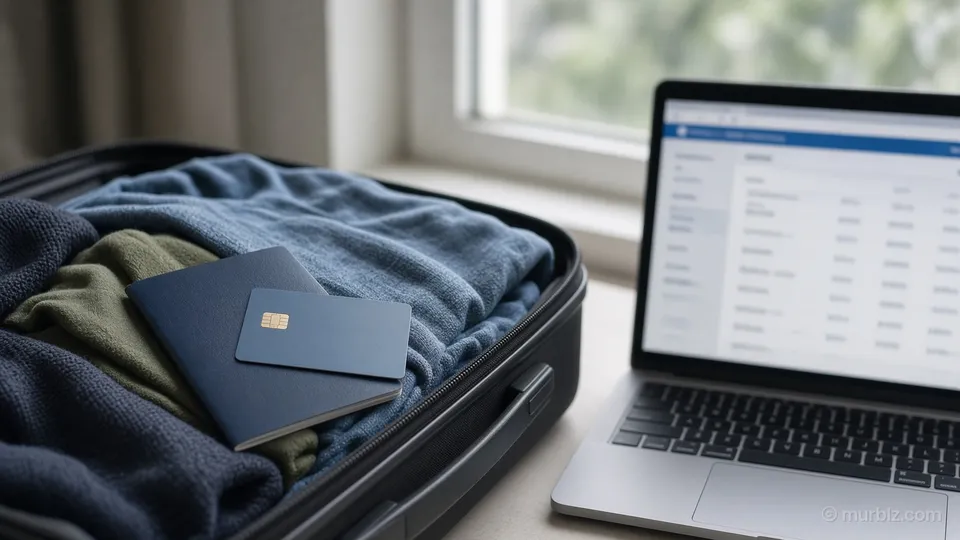
Tell your bank your new address and tax residence
When you move, give your bank your new address abroad and your new country of tax residence. The bank asks where you live for tax purposes, and if you are tax resident in another country, it asks for your tax identification number in that country.
Keep the details real: the bank uses them for its checks and for the yearly report to HMRC, the UK tax authority. If you do not answer the bank's request about tax residence, it could share incorrect information with the tax authority and may refuse to open new accounts for you.
A UK mobile number for security codes, online banking on your phone and a card that works abroad keep everyday access simple. Check with your bank how it sends security codes to a foreign number before you leave.
When a bank can close the account and how much notice you get
From 28 April 2026 UK law gives account holders more time when a bank decides to close an account:
- for accounts opened on or after 28 April 2026, the bank gives at least 90 days' notice with a reason detailed enough to understand the decision, and explains how to complain to the bank and to the Financial Ombudsman Service;
- for accounts opened before 28 April 2026, the notice is at least 2 months, if the account terms provide for closure.
Shorter notice applies only in exceptional cases set by law, such as financial crime checks the bank cannot complete or incorrect information given when the account was opened. A move abroad on its own is an ordinary case: you receive full notice and time to transfer the money.
The basic bank account: tied to living in the UK
A basic bank account is a fee-free account that designated banks must offer to people legally resident in the United Kingdom who have no other suitable account. Because the right to it depends on living in the UK, the law lets the bank close it when you are no longer legally resident in the UK.
The bank tells you the reason in writing and free of charge, with at least 2 months' notice, or 90 days for accounts opened from 28 April 2026. The same notice applies if the account has had no transactions for more than 24 months in a row. If you hold a basic account, ask the bank before the move whether it can switch you to an ordinary current account that serves customers abroad.
Tax on interest from UK savings
Interest from UK banks and building societies remains UK income after you move. Banks pay it without deducting tax, and a non-resident usually reports taxable savings interest on a Self Assessment return.
- HMRC's online services are not available to non-residents for reporting income, so the return goes on paper with form SA109, through commercial software that supports SA109 or through a tax adviser.
- The deadline for a paper return is 31 October after the end of the tax year.
- Interest on UK government bonds (gilts) is usually not taxed in the UK for non-residents.
- If a double taxation agreement already gives you relief on this income, you do not report it to HMRC; overpaid UK tax is reclaimed on form R43 or in the return.
Your new country usually taxes your worldwide income, including UK interest, and the double taxation agreement decides which country taxes it first. How residence changes for tax is explained in how to become a tax resident of another country, and UK rates are on the UK taxes page.
ISAs, the State Pension and other payments into the account
ISA. You can keep your ISA (individual savings account) open after the move, and the money and investments in it keep their UK tax relief. You cannot pay new money into it while you are not UK resident, unless you are a Crown employee working overseas or their spouse or civil partner. Tell your ISA provider as soon as you stop being UK resident. You can still transfer the ISA to another provider from abroad, and pay in again once you return to the UK.
State Pension. It can be paid into a bank or building society account in the UK or into a bank in the country where you live, every 4 or 13 weeks. Payments to an account abroad are converted into local currency, with a 0.39% conversion charge. A UK account is convenient for the pension and other UK income, such as rent from a UK home. Pension rules abroad are covered in moving abroad from the UK.
An account you stop using. If you make no transactions on an account for 15 years and the bank cannot trace you, the balance may be transferred under the Dormant Assets Scheme. The money stays yours and can be reclaimed at any time through the bank or building society.
How your UK account is reported to your new country
UK banks, building societies and investment firms collect the tax residence of their customers. Once you are tax resident in another country, the provider sends HMRC the details of your account every year, and HMRC shares them with the tax authority of that country:
- your name, address, date and place of birth;
- your tax identification number in the new country;
- the account number and the name of the bank;
- the balance or value at the end of the year, including interest and dividends.
The exchange works both ways: HMRC also receives data on accounts that UK tax residents hold abroad. Declaring your UK account and its interest in your new country keeps the data that arrives through this exchange in line with your tax return there.

We will open an account in your new country
We pick a bank that works with your country of residence and your income, prepare the file so the bank opens the account the first time and stay with you until the card is in your hands. The UK account stays for your UK income, and the new one covers everyday life abroad.
Details and cost are with a manager in the chat: everything depends on the country, the bank and your case.
A second account in your new country
A UK account is convenient for UK income, but everyday life in another country runs on a local account: rent, utilities, a local salary and residence permit fees. Banks in the new country usually ask for a passport, a residence permit or visa, proof of address, your tax number and the purpose of the account. Opening it before or right after the move keeps both accounts working in parallel.
We help open personal accounts in Portugal, Spain, the United Arab Emirates and other countries from the full list. Money between the two accounts moves by bank transfer: see how to send money to the UK.
Checklist before you leave the UK
- Read your account terms or ask the bank whether it serves customers in your new country.
- If you hold a basic bank account, ask to switch to an ordinary current account.
- Give the bank your new address and tax residence once you have them, and your tax number in the new country.
- Tell your ISA provider that you are no longer UK resident.
- Check how the bank sends security codes to a foreign number and that your card works abroad.
- Decide which account receives the State Pension and other UK income.
- Open an account in the new country and keep the UK account active with occasional transactions.
The whole move, from choosing a country to the first months abroad, is in our step-by-step guide to moving abroad.
FAQ
Can I keep my UK bank account if I move abroad?
Can you keep a UK bank account without a UK address?
What happens to my UK bank account if I move abroad?
How much notice does a UK bank give before closing an account?
Can a non-UK resident open a UK bank account?
Do I pay UK tax on savings interest if I live abroad?
Can I keep my ISA if I move abroad?
Can HMRC see my bank account abroad?
Don’t want to figure this out alone?
We handle the whole process end to end: we check your documents, match a program to your situation and give you honest timelines and costs. Ask your question in the chat: the free consultation starts right here. Legal representation before authorities and courts is handled by Murblz specialists together with locally licensed partners.
The Murblz consultant replies straight away in the chat on this page. Describe your situation and we will work it out together.
Free consultation