Living in Santa Teresa, Costa Rica: a family's road from Prague to a villa by the Pacific
Tereza and Jakub swapped grey Czech winters for the Nicoya Peninsula. In two years they went from digital nomad visas and a rented villa to their own house, residence permits and a plan for a second passport. Here is the whole road, with real costs.
In short
- Climate: 26-28°C on average all year, a dry season from November to April and a green season from May to October with sunny mornings and short afternoon rains.
- Renting first: a villa with three bedrooms and a pool rents for around $4,500 a month, according to Murblz experts.
- Buying: a comparable villa costs around $1.5 million, on titled land outside the 200-metre maritime zone.
- Visas and residence: two digital nomad statuses for the first two years, then investor residence through a home worth at least $150,000.
- Long term: permanent residence after three years, citizenship after seven, with no need to give up a European passport.
- Murblz: visas, accounts, the villa, the company, staff and residence in one plan, with the first consultation free.
In detail
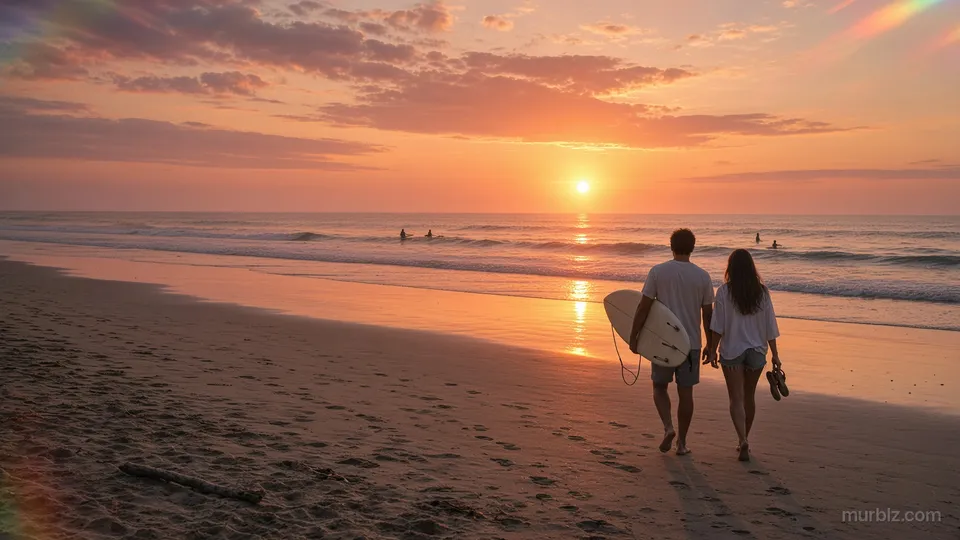
At twenty to six the sun touches the Pacific, and the whole beach at Santa Teresa turns the colour of apricot jam. The tide is low, the sand is hard and wet, and it holds the light like a mirror. Tereza walks out of the water with her board under her arm, salt drying on her shoulders. Jakub is waiting by the driftwood log with Ema, who is four and has her own opinions about pelicans. Behind them the jungle climbs the hill in dark green layers, and somewhere up there a troop of howler monkeys is announcing the end of the day.
"In Prague at this hour in November I was switching on the desk lamp at half past three," Tereza says, wringing out her hair. "Here we finish work, go down to the water and watch the sun go out. Every single day."
Two years ago Tereza, a product designer, and Jakub, a software engineer, lived in a two-room flat in the Czech capital. Both worked for clients across Europe from a laptop. Today they own a villa with a pool in the hills above the beach, hold Costa Rican residence permits, run their work through a local company and are counting the years to a second passport. Murblz took them through every step: the visas, the bank accounts, a year of renting, the purchase, the company, the residence permit and the plan for permanent residence and citizenship. They agreed to tell their story so that other families could see the whole road, with real figures, from the first grey morning to the first evening on the terrace.
Why they left the grey winter behind
The decision was made on a Tuesday in November 2023. Jakub remembers the date because the sun had not appeared for eleven days in a row. "It was not a bad life," he says carefully. "Prague is beautiful. Our friends are there, our parents are there. But from October to March we lived under a lid. Ema had one cold after another. We worked, we went to sleep, it was dark again."
That evening they opened a spreadsheet. On one side went the cost of their Prague life: the flat, the small car, nursery, the gym they rarely visited, the two holidays a year spent chasing sun somewhere warm. On the other side they put a question: what would the same money buy somewhere the sun is part of the daily routine?
They looked at Spain, Portugal and the Canary Islands, then further away. Costa Rica won on three points. It has a special status for remote workers that frees their foreign income from local tax. It lets foreigners own land and houses on the same terms as citizens. And it has no rule that would force them to give up Czech citizenship one day: Costa Rica does not ask new citizens to renounce their old passport, and since 2014 Czech law has let Czechs keep their citizenship when they take another.
"For what we paid for the flat in Vinohrady and everything around it, we now rent... no, we now own a house with a pool and a view of the ocean," Jakub laughs, correcting himself. "That sentence still sounds strange to me."
The village they chose sits on the southern tip of the Nicoya Peninsula. Santa Teresa, its neighbours Mal País, Playa Hermosa, Playa Carmen and Manzanillo, and the inland town of Cóbano form a district of the province of Puntarenas where, according to official data, about ten thousand people live. A single road runs parallel to the beach, lined with fruit stands, surf racks and wooden houses half hidden in the trees. The jungle comes down to the sand, and the tide table matters more than the clock.
Tereza laughs at the coincidence of the name only now. "My friends said: of course you went to Santa Teresa. I did not even think about it when we chose."
A climate that sets the rhythm of the day
The first thing that changes in Santa Teresa is the relationship with the weather. In Prague it was something to check before leaving the house. Here it is a calendar, a clock and a mood, and it is generous.
The southern Nicoya Peninsula has two seasons. According to official data, the dry season runs from November to April, and January and February are the driest months of the year. The sky is clean blue from morning to night, the sea is glassy at dawn, and the hills behind the village turn gold and then brown. From May to October comes the green season. Mornings are still sunny, and the rain arrives in the afternoon as a short, heavy downpour that smells of hot earth and wet leaves. Within a week of the first rains the hills turn emerald. In July and August the rains ease off for a few weeks, a pause locals call the veranillo, the little summer. September and October are the wettest months.
The temperature barely moves. The average annual air temperature in the region is 26-28°C, according to official data, so there is no winter wardrobe and no heating bill. Santa Teresa lies less than ten degrees north of the equator, and the day lasts close to twelve hours all year round. Sunrise comes before six, the sun sets around six, and life organises itself between the two.
"I thought the green season would be the hard part," Tereza says. "It is my favourite. Everything is wet and alive, the waves are bigger, there are fewer people on the beach. You work in the afternoon while it pours, and at five the sky clears for the sunset."
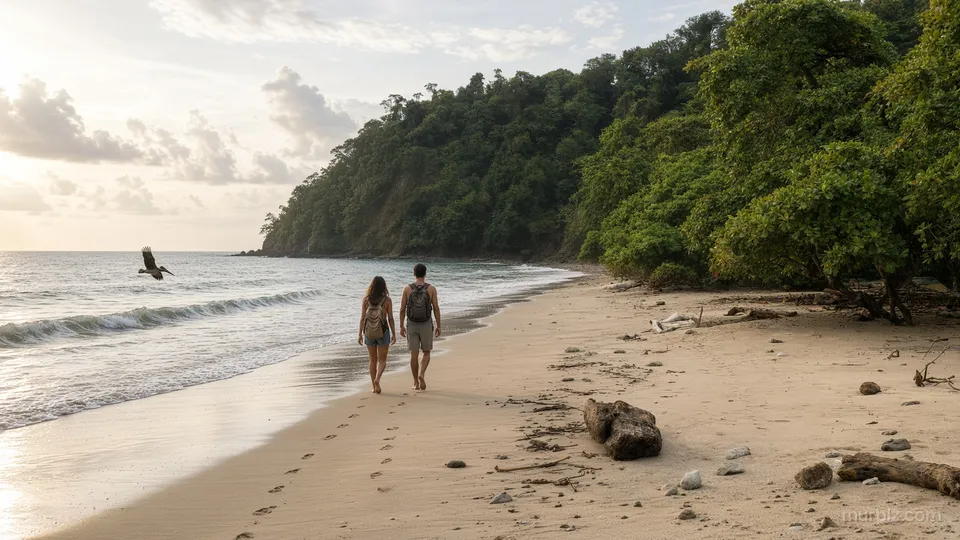
At the very tip of the peninsula, a short drive from the village, lies the Cabo Blanco reserve. Created in 1963, it was the first protected area in Costa Rica, and according to official data it covers around 1,270 hectares of forest, along with a strip of the sea. A trail leads through tropical forest to beaches where the only footprints belong to hermit crabs. On a weekday morning Tereza and Jakub can walk there for an hour and meet no one but a pair of brown pelicans skimming the surf.
The ocean is the other half of the climate. The water stays warm enough for a board and a swimsuit all year, without a wetsuit. Ema learned to swim in the tide pools at low water, where the rocks hold warm, clear basins full of tiny fish. Jakub, who had never surfed before, now goes out at six every morning before his first call.
Two digital nomad visas for one couple
The legal road began in Prague, two months before the flight. Costa Rica created its digital nomad status in 2021 for people who work remotely for clients or employers abroad. It is a stay rather than a residence permit: a status of up to one year, which can be extended once for another year. During that time the holder's foreign income is exempt from Costa Rican income tax.
According to official data, the applicant needs a stable income of at least $3,000 a month, or $4,000 when the application includes family members, and health insurance for the whole stay. The state fee is $100 per application, and another $90 is paid when the document is issued.
Murblz experts suggested that Tereza and Jakub file two applications instead of one. Jakub applied with Ema as his dependant, which raised his income threshold to $4,000. Tereza applied on her own at $3,000. Both earned well above the bar, and the split gave something important: the tax exemption applies to the holder, not to family members, so two applications meant that both incomes were covered.
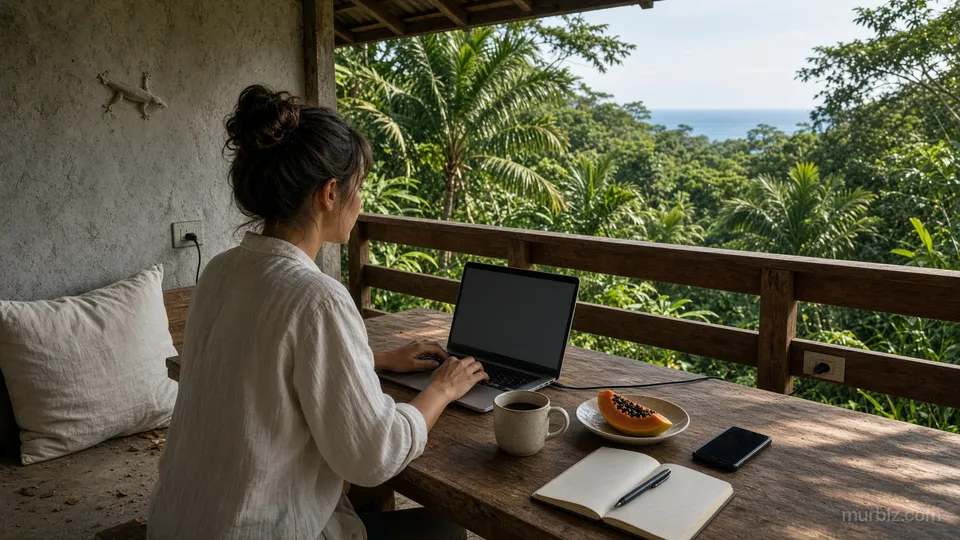
The time difference turned out to be a gift. Costa Rica does not change its clocks, and it is seven hours behind Prague in winter and eight in summer. Tereza and Jakub start at six or seven in the morning, when their European clients are finishing lunch, and close the laptops by two. "The afternoon belongs to us," says Jakub. "In Prague I had the whole day of work and no daylight left. Now it is the other way round."
The nomad years have a limit. Two years in this status do not count as residence for permanent residence or citizenship, and when the second year ends the family has to move to another category. That is why the plan Murblz drew up for them had a second chapter from the start: by the end of the second year they would buy a house and switch to residence as investors. More on the Costa Rica digital nomad visa and its conditions.
Digital nomad visas for your family
We check incomes, choose between one family application and two separate ones, prepare the documents and plan the switch to residence before the second year ends.
Bank accounts before the first rent
Before the move Murblz opened personal accounts for both of them in Costa Rica, in colones and in dollars. Rent, deposits and large purchases are quoted in dollars, while daily life runs in colones. The dollar account received transfers from Europe, the colón account paid for everything else.
Within a week Tereza discovered SINPE Móvil, the central bank's instant transfer system linked to a phone number. The fruit seller at the weekly market, the surf instructor, the woman who sells tamales from her car on Fridays: everyone takes payment to a mobile number in a couple of seconds. "In two years I have paid in cash five times at most," she says.
The details of opening an account as a foreigner, before and after arrival, are on the page about personal accounts in Costa Rica.
A year in a rented villa
Murblz experts gave the family one firm piece of advice: rent for a year before buying anything. Santa Teresa is not one place but a string of small worlds along several kilometres of coast. The north end around Playa Hermosa is quieter and greener, the centre of Santa Teresa is lively, Mal País in the south is a fishing village with tide pools and rocks. Up on the hills the air is cooler and the views open wide; down by the road the beach is a two-minute walk away, and so is the dust of the dry season.
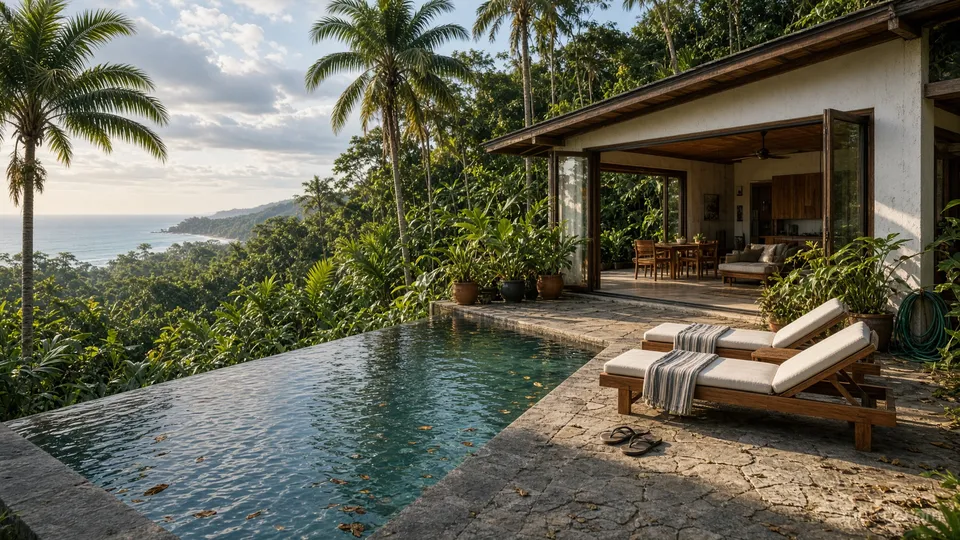
The first house was a three-bedroom villa in the jungle above Playa Carmen: white walls, a tiled roof, a pool the colour of jade, a wide covered terrace with a long wooden table and a hammock. From the pool you could see a slice of the ocean between the palm trees. In the mornings a family of white-nosed coatis crossed the garden in single file, tails up like flags.
The rent was $4,000 a month on a twelve-month lease, furnished, with utilities paid separately and one month's deposit. That is close to what the market asks. According to Murblz experts, who compared 30 houses and villas with three or more bedrooms and a pool offered for rent around Santa Teresa, Mal País, Playa Hermosa and Playa Carmen in October 2026, a villa of this kind rents for around $4,500 a month on a long lease. Within a short walk of the beach the figure is around $5,000, and in the villages inland it is lower. Owners who rent month by month ask up to $8,000 in the high season, from December to April, and the same house taken as a holiday home for a single month costs around $17,000. Many leases include electricity, water, internet and pool service in the rent.
Three offers from the October 2026 selection show the range:
- Mal País, three bedrooms: a house with a pool and a garden, five minutes from the beach, from $3,000 a month in the green season and up to $8,000 in the high season.
- Mal País, five bedrooms: a villa with an infinity pool facing the jungle, an eight-minute walk from the beach, $5,000-8,000 a month with electricity, water, fibre internet, weekly cleaning, a gardener and pool service included, and a one-month deposit.
- Santa Teresa, five bedrooms: a villa with a pool and an ocean view, three minutes from the beach, $10,000-20,000 a month.
"The first month I kept waiting for the catch," says Tereza. "There was none. There was a gecko living behind the fridge, and the electricity bill in April was higher than I expected because of the air conditioning and the pool pump. That's it."
The year of renting paid for itself. They learned which hill catches the evening breeze, which road turns into a river in October and how long it takes to reach the beach with a four-year-old on foot. By the end of it they knew the exact street where they wanted to live.
A day in Santa Teresa
The day starts with the howler monkeys. Around five, before the first light, the males in the trees behind the house begin their deep, rolling roar, and the whole hillside wakes up with them. By half past five the sky over the ocean is pink. Jakub checks the waves from the terrace, takes his board and drives down the dirt track to the beach. Tereza makes coffee from beans grown in the mountains of the Central Valley and opens the laptop while the house is still cool.
On Saturdays the family goes to the farmers' market. Under a row of white tents, growers from the peninsula lay out what the season brings: in the dry months mangoes so ripe they perfume the air, watermelons, pineapples and papayas; in the green season the hairy red mamón chino, which Ema peels with her teeth, star fruit, avocados the size of a fist and bunches of bananas still on the stem. There is fresh cheese wrapped in banana leaves, sourdough from a local baker, honey from the hills and a stall with cold coconut water served straight from the nut with a straw.
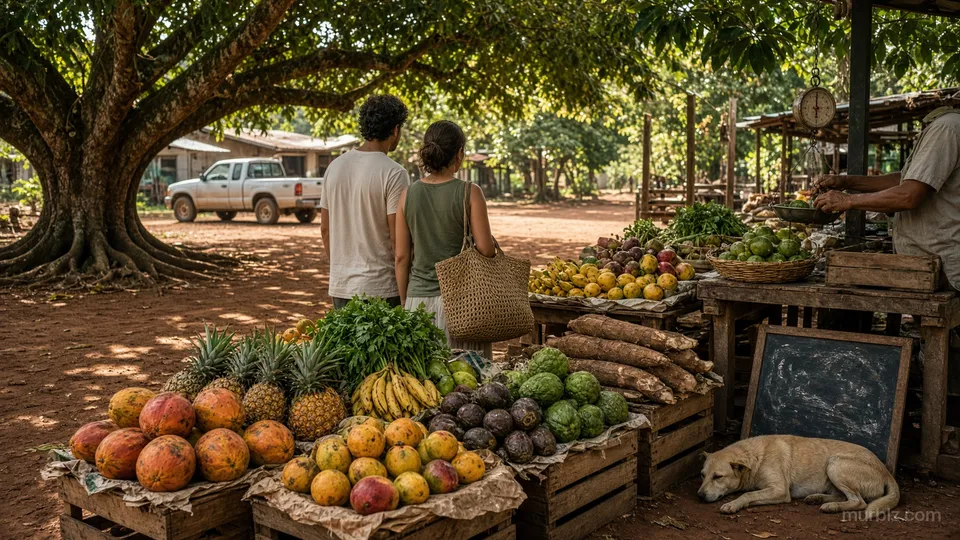
"In Prague, a mango was a small event," says Tereza. "Here Ema eats one every morning and complains when the season ends."
Lunch is often a casado, the plate that feeds the whole country: rice, black beans, a salad, fried sweet plantain and a piece of fish, chicken or meat. In a small local soda it costs a fraction of a lunch in a European capital, and the fish was swimming that morning. On the beach, men sell fresh coconuts from the back of a pickup. In the evening the village fills with the smell of grilled snapper and woodsmoke from the restaurants along the main road.
Afternoons belong to the family. Ema goes to a small bilingual preschool in the mornings, where she has picked up Spanish faster than either of her parents. Tereza takes Spanish lessons twice a week on the terrace with a teacher from Cóbano. Jakub has joined a group of fathers who take the children to the tide pools at low water. "In Prague, people asked what you do for a living," he says. "Here they ask what time the tide is."
At weekends the peninsula opens up. A short drive away, on the other side of the hills, a river drops over dark rock into a deep green pool at Montezuma. In the dry season the water is cool and clear, and families from the whole coast come to swim under the falls.
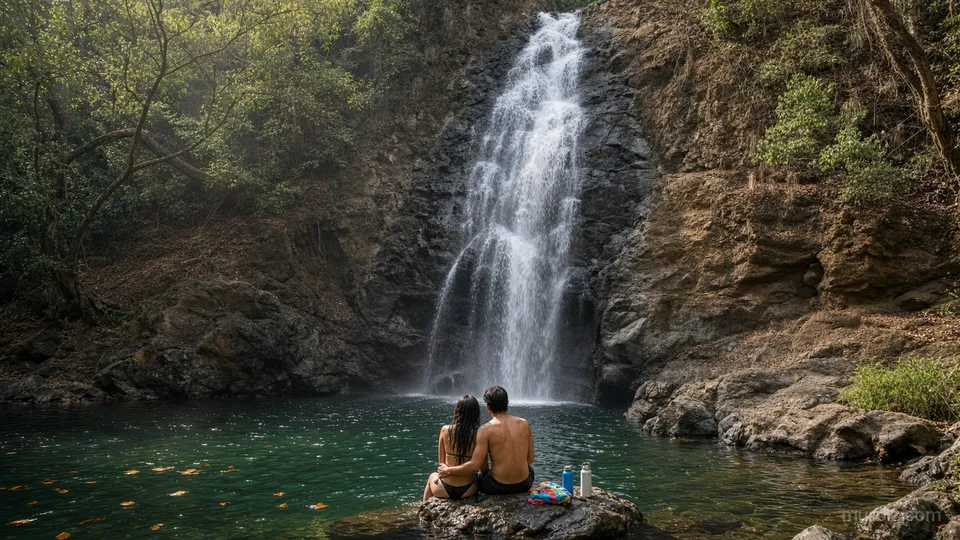
Other weekends they take the boat from Montezuma to the islands in the Gulf of Nicoya, drive north along the coast road to empty beaches or simply stay home, read in the hammock and watch the iguanas sun themselves on the roof. "We stopped planning holidays," Tereza says. "Where would we go?"
Getting here is part of the deal. The international airports are in San José and Liberia. From the capital the road leads to the port of Puntarenas, where a car ferry crosses the Gulf of Nicoya, and on to the southern tip of the peninsula. A small airstrip at Tambor, a short drive away, takes domestic flights from San José. The trip keeps the village quiet and its pace slow, which is exactly why people come.
Help at home: a housekeeper and a pool man
Doña Marielos arrives at seven on Mondays, Wednesdays and Fridays in a small car full of music. She has worked in houses on the hill for twelve years, knows every family in the village and has taught Ema more Spanish words than the preschool has. She cleans, does the laundry, cooks a pot of black beans for the week and, when asked, a fish soup that Jakub calls the best thing he has eaten in his life.
Domestic work in Costa Rica is regulated as carefully as any other job. According to official data, the minimum monthly wage for full-time domestic work in 2026 is ₡268,731, around $592. Part-time work is paid in proportion, and most families on the coast pay above the minimum. The employer registers the worker with the social security fund online and pays the contributions by direct debit: the general employer rate is 26.83% of the wage, and for part-time domestic workers the fund applies a reduced base. Every December the worker receives the aguinaldo, a thirteenth salary equal to one average month, paid by the 20th, and she is entitled to paid holidays and public holidays like any employee.
"At first it felt strange to have help," says Tereza. "Then I understood that here it is a normal job with a contract, insurance and a pension, and that Marielos chose to work with us. Now she is part of the family. Ema runs to the gate when she hears her car."
The pool and the garden are looked after by Don Álvaro, who works for several houses on the hill on a service contract. Twice a week he checks the water, cleans the filter, cuts back the heliconias and the bougainvillea that would otherwise take over the terrace in a month of green-season rain. His fee, $500 a month for the pool and the garden together, is part of the family budget below.
Murblz prepared the paperwork for both: the employment contract and social security registration for Marielos, the service agreement for Álvaro, and a short calendar of what is paid when, from monthly contributions to the December bonus.
What a month in a villa costs a family
Jakub keeps the family budget in the same spreadsheet he opened on that grey Tuesday in Prague. The table below shows a month for two adults and a four-year-old in a three-bedroom villa with a pool, first in the rented house and then in their own. Amounts are in US dollars, according to Murblz experts, at the October 2026 rate of ₡454 to the dollar.
| Item per month | Year one, rented villa | Today, own villa |
|---|---|---|
| Rent | $4,000 | own house |
| Property and luxury home taxes | none | $400 |
| Repairs and upkeep of the house | paid by the owner | $300 |
| Electricity, with air conditioning and the pool pump | $300 | $300 |
| Fibre internet and a satellite backup | $125 | $125 |
| Groceries and the market | $780 | $780 |
| Restaurants, six dinners for two | $260 | $260 |
| Private bilingual preschool | $580 | $580 |
| Housekeeper three days a week, with social security | $500 | $500 |
| Pool and garden service | in the rent | $500 |
| Health insurance | $1,200 | $400 |
| Fuel for the car | $160 | $160 |
| Total per month | $7,905 | $4,305 |
Both columns are at October 2026 prices. The electricity line assumes air conditioning in the bedrooms and a pool pump running eight hours a day; in the dry season, with air conditioning around the clock, the bill can reach $400. In the first year the pool and the garden came with the rent, as they do in many rented villas on the coast. In year one the family held the international health policy the nomad status requires; with residence they pay the social security contribution, which depends on income and is not included here, and keep a local private policy for faster appointments.
"In Prague we spent less on the flat and more on everything we did to escape it," Jakub says, scrolling to the bottom line. "Here the house is the holiday. And on the hill, for the same money, we have the ocean in the window."
A budget for your family by the ocean
We calculate a monthly budget for your family in Santa Teresa: the villa, staff, school, health insurance and taxes, for renting and for buying.
A wider comparison of rents, groceries and services across the country is in the guide to the cost of living in Costa Rica.
Buying a villa: titled land on the hill
By the end of the first year they knew exactly what they wanted: the same hill, a little higher, a view of the ocean from the pool, a ten-minute walk to the beach for Ema and a road that does not wash out in October. Murblz experts drew up a shortlist, and over six weeks the family visited eleven houses.
Prices on this coast depend on three things: the view, the distance to the sand and the land title. According to Murblz experts, who compared 89 offers of houses and villas with three or more bedrooms and a pool offered for sale in Santa Teresa, Mal País, Playa Hermosa and Playa Carmen in October 2026, a typical villa of this kind costs around $1.5 million. With an ocean view the typical price is around $1.72 million, and among gardens and jungle without a view, around $1.03 million. The entry level is a compact three-bedroom house with a pool and no view, from under $300,000, and with an ocean view prices start at around $550,000.
Three houses from the same selection show how the price grows with the view and the land:
- Santa Teresa, four minutes from Playa Carmen: three bedrooms, a pool, no view, a house of 100 square metres on a lot of 587 square metres, $285,000.
- Santa Teresa, on the hill: three bedrooms, a pool, a view of the ocean and the valley, a lot of 5,000 square metres, $899,000.
- Santa Teresa, a gated community on the hill: three bedrooms, a pool, an ocean view, a house of 400 square metres on a lot of 5,000 square metres, $1,795,000.
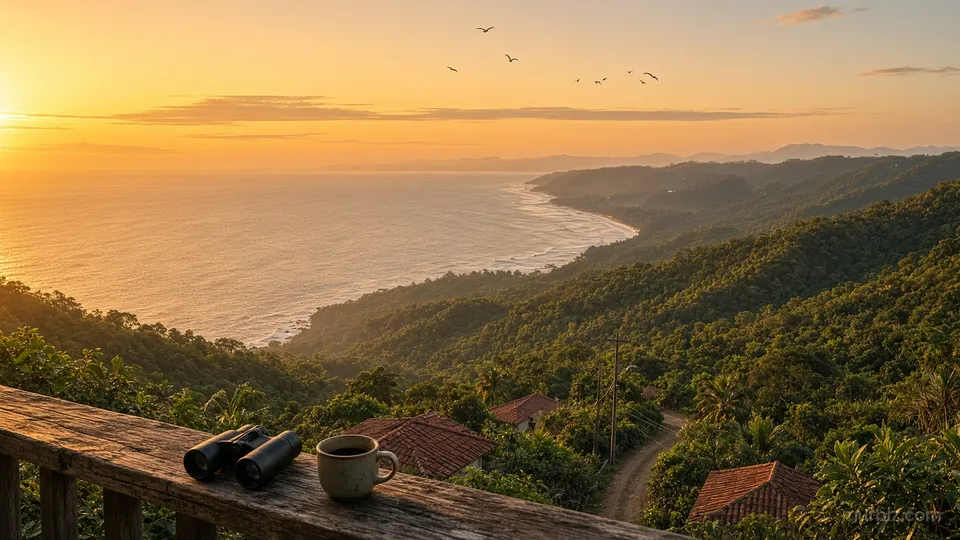
The first rule Murblz experts set was about the land itself. Along the whole Pacific coast of Costa Rica, a strip 200 metres wide from the line of ordinary high tide belongs to the state. According to official data, the first 50 metres are public and open to everyone; nobody may build or own there. The next 150 metres can be used only under a concession granted by the local council for a period of 5 to 20 years. A foreigner who has lived in Costa Rica for less than five years cannot hold a concession, and neither can a company in which foreigners own more than half of the capital.
So the house hunt went to titled land, recorded in the National Registry like any other property, outside the 200-metre zone. On the hills above Santa Teresa that is the norm: the houses sit higher than the maritime strip, and the view is better from there anyway. Tereza and Jakub chose a three-bedroom house on a lot of 1,600 square metres, a short walk above Playa Hermosa, with a pool facing the sunset and a covered terrace that became their office. The price was $940,000, below the typical price for a house with a view, because the house itself is compact, around 210 square metres.
A villa is easy to fall in love with and harder to check
The view sells the house, but the papers decide whether it is worth buying. Three mistakes cost families the most. First: a house inside the 200-metre maritime zone, where a foreigner cannot hold the land. Second: a villa bought through a company, which then does not count for investor residence. Third: missing building permits or no water letter, discovered after the signing. Our experts check the title, the zoning, the permits and the water before you make an offer, and plan the residence permit on the same property.
The cost of support depends on the route, the property and the size of the family. A consultant calculates it in the chat.
From offer to notary
In Costa Rica the notary is a lawyer who prepares the deed of sale, certifies the signatures and files the deed with the National Registry. Before that point Murblz ran the checks that decide whether a house is worth buying at all: the title and the history of owners in the registry, mortgages and liens, the cadastral plan and its match with the boundaries on the ground, building permits, legal road access and the letter from the local water board confirming the house has a water connection. The money waited in an escrow account until the deed was registered.
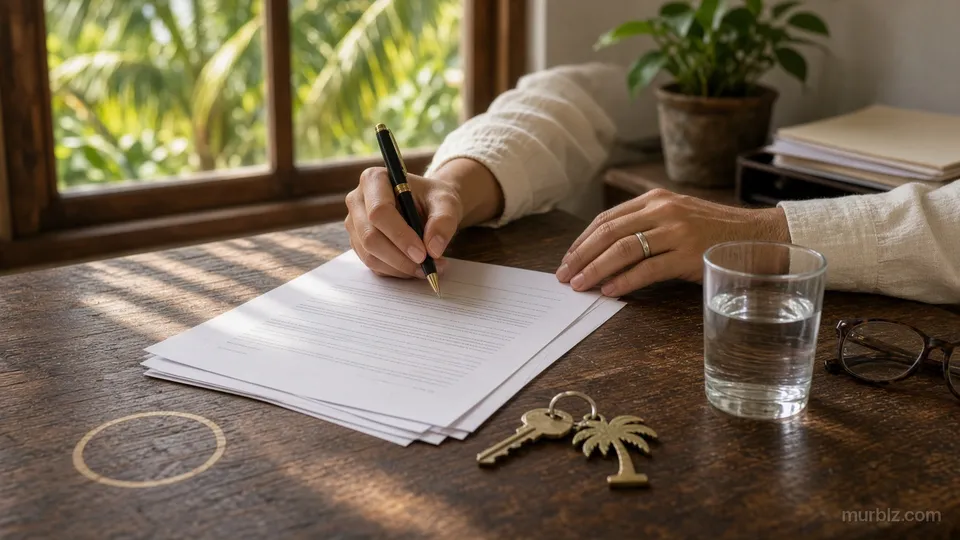
The signing took forty minutes in a cool office with a ceiling fan. Ema drew a picture of the new house on the back of a spare sheet. "I expected more drama," Jakub says. "We read, we signed, the notary stamped everything, and that was it. The drama was all in the checks before, and Murblz took that on."
The costs of buying are predictable. According to official data, the transfer tax is 1.5% of the price and the registration fee 0.5%, plus stamp duties. With the notary's fees, the total closing costs come to 3.5-4% of the price, according to Murblz experts: for the family's house that meant around $33,000-38,000.
Owning a house brings two annual taxes. The property tax is 0.25% of the value recorded by the municipality, which for the villa comes to around $2,350 a year. Houses whose construction value, without the land, exceeds ₡143 million, around $315,000, also pay the solidarity tax on luxury homes, at 0.25% to 0.55% a year depending on the value of the property, declared and paid by 15 January. The family's house is above the threshold, and Murblz prepares this declaration for them every January.
A villa that brings residence
We select houses on titled land, check the title, zoning, permits and water, take you through the notary and registration and file the investor residence on the same property.
A residence permit through the villa
The house was bought for living, but it also carried the family into the next legal chapter. Costa Rica grants temporary residence to investors who put at least $150,000 into the country, and a home counts. According to official data, the property must be registered in the applicant's own name in the National Registry: a house held by a company does not qualify for this status. Murblz experts structured the purchase around that rule from the first offer, and the villa went into the registry in the names of Tereza and Jakub.
The investor residence permit is issued for two years and renewed for the same period for as long as the investment is kept. Spouse and children receive residence with the main applicant, so one property covered the whole family. Residents must join the public health system run by the social security fund and pay a monthly contribution, and in return they use its clinics and hospitals. The family also kept private insurance for quick appointments with specialists.
The file went in during January 2026, while both nomad statuses were still valid, so the family moved from one category to the other without leaving the country. The 2021 investor law also offered extra benefits for five years, including duty-free import of household goods and a car. That window closed on 14 July 2026, and new applicants now receive the residence permit without those extras. The threshold of $150,000 remains in the current regulation. Details of the documents and timelines are on the page about the Costa Rica residence permit by investment.
"The day we picked up our residence cards, we went to the beach and did not even surf," Jakub says. "We just sat there. It felt like the country had said yes."
A company for the work and the taxes in order
With residence came a new tax position. During the nomad years their foreign income was exempt by law. As residents, the picture changes: Costa Rica taxes income from Costa Rican sources, and the tax authority treats work physically done in the country as local work, even when the client sits in Berlin or Amsterdam. Foreign dividends and interest of individuals remain outside Costa Rican tax today. A bill submitted to the Legislative Assembly in September 2026 proposes to change that for residents, and Murblz experts follow it for their clients.
Murblz set up a Costa Rican limited liability company, a sociedad de responsabilidad limitada, through which Tereza and Jakub now invoice their European clients. According to official data, the general corporate rate is 30%, but small companies with gross income up to ₡119 million a year (around $262,000) pay progressive rates: 5% on the first slice of profit, then 10%, 15% and 20%. Individuals pay up to 25%. The company has a local accountant, files its returns on time and pays the annual tax on legal entities: for an active company with modest turnover it is ₡115,550 a year, around $255, due by 31 January.
Two more obligations come with any company in Costa Rica. Every April its owners are declared in the register of beneficial owners kept through the central bank's platform, with a digital signature. And the company needs its own bank account: Murblz opened a business account in Costa Rica in dollars and colones, where client payments arrive and from which the company pays salaries and taxes. How the setup works step by step is on the page about company formation in Costa Rica, and the full picture of rates is in the guide to Costa Rica taxes in 2026.
Taxes after the nomad years
We calculate your tax as a resident, compare working as an individual with a Costa Rican company, set up the company, its accounting and its bank account.
Permanent residence and a second passport
The plan Murblz drew up for the family runs to 2033, and every step has a date. According to official data, after three consecutive years of temporary residence a foreigner may apply for permanent residence, so the family's file is due in January 2029. Permanent residence is renewed as long as the social security contributions are kept up, and it gives the right to work in any job, as an employee or on one's own.
There may be a shorter road. Tereza is expecting their second child in February 2027, and the baby will be born in Costa Rica. Under the Constitution, a child of foreign parents born in the country becomes a Costa Rican citizen by birth when registered as Costa Rican at the Civil Registry. The parents of a Costa Rican citizen may apply for permanent residence straight away, without waiting for the three years to pass. Murblz has the file ready: registration at the Civil Registry in the first weeks, then the application for both parents. How it works is explained on the page about giving birth in Costa Rica and citizenship by birth.
Citizenship is the last chapter. According to the Constitution, a foreigner from outside Latin America and Spain may apply after seven years of official residence. For Tereza and Jakub the count started with the residence permit in January 2026, since the nomad years were a stay, not residence. They will sit two exams: Spanish, and the history and values of Costa Rica. Costa Rica does not ask new citizens to renounce their old nationality, and once granted, Costa Rican citizenship cannot be lost. Czech law has allowed dual citizenship since 2014, so both passports stay in the drawer. All the routes and requirements are collected in the guide to Costa Rica citizenship in 2026.
Tereza already studies for the exam in her own way: on Sunday mornings she reads the local newspaper aloud to Marielos, who corrects her pronunciation and laughs at the long words.
What they would tell a family starting today
Two years on, Tereza and Jakub have a short list of lessons, and they share it with friends who write to them from Prague and Brno every week.
- Rent first, buy later. A year of renting is the cheapest way to choose the right hill, the right road and the right distance to the beach.
- Two nomad applications, not one. Each working partner keeps their own tax exemption during the nomad years.
- Buy titled land outside the maritime zone and in your own name if the house is meant to bring residence.
- Plan the switch to residence a year ahead. The nomad status ends after two years, and the next category should be ready before it does.
- Set up taxes on the first day of residence, not at the end of the first year.
- Learn Spanish early. It opens the village, the market and, in seven years, the citizenship exam.
- Come in the green season at least once before deciding. If you love September here, you will love every month.
How Murblz helps
Tereza and Jakub's road is one of many we walk with families moving to the Pacific coast of Costa Rica. Our experts take the whole route or any part of it:
- Digital nomad visas for one or both partners, with the plan for the switch to residence.
- Personal and business accounts in colones and dollars, opened before or after arrival.
- A villa to rent and then to buy: the selection, the checks of title, zoning and water, the notary and the registration. See property to live in and invest in Costa Rica.
- Residence through investment, then permanent residence and citizenship, with every date planned.
- A Costa Rican company with accounting, the beneficial owner declaration and taxes in order.
- Help at home: contracts and social security for staff, and a monthly budget for the family.
The cost of support depends on the family and the route, and a consultant calculates it in the chat. The first consultation is free. Talk to a consultant
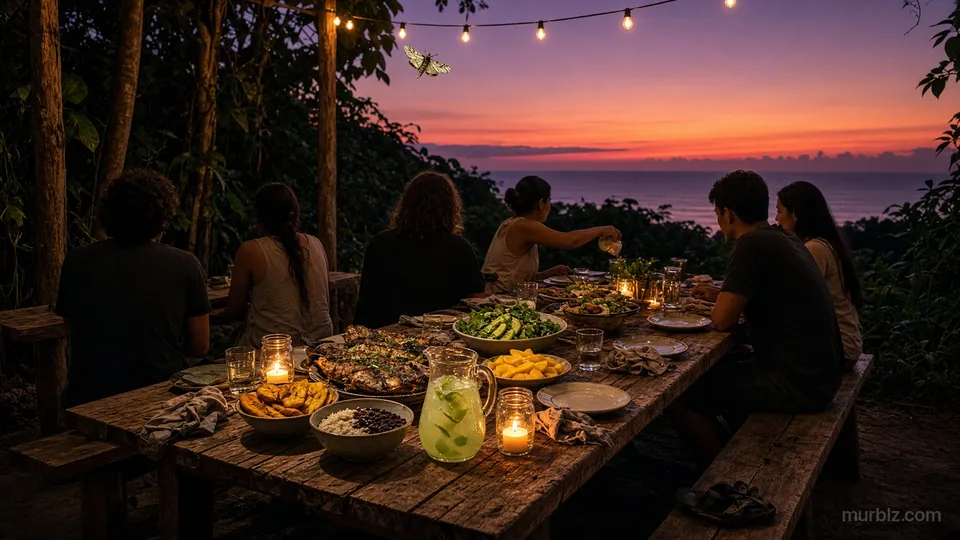
The evening we leave, the family eats on the terrace: grilled snapper bought from a fisherman that afternoon, a salad of avocado and mango, cold coconut water for Ema. Below the house the ocean turns from gold to pink to violet, and the first bats cut across the sky. Jakub raises his glass to the horizon. "We left a grey sky for this," he says. "And the funny thing is, it did not cost us more. It cost us less. We just had to decide."
FAQ
What is the weather like in Santa Teresa, Costa Rica?
How much does it cost to rent a villa in Santa Teresa?
How much does a villa with a pool cost to buy in Santa Teresa?
Can foreigners buy a house in Santa Teresa?
Which status lets a remote worker live in Santa Teresa?
Does buying a villa give residence in Costa Rica?
How long does it take to get Costa Rican citizenship?
How much does a family need per month in Santa Teresa?
How does Murblz help families move to Santa Teresa?
Services
Murblz services in Costa Rica
A passport or residence permit opens the door, but life behind it is awkward without a bank account and a roof over your head. Murblz specialists help with the account, property and company in the same country. The quote is fixed in writing before work starts.
Don’t want to figure this out alone?
We handle the whole process end to end: we check your documents, match a program to your situation and give you honest timelines and costs. Ask your question in the chat: the free consultation starts right here. Legal representation before authorities and courts is handled by Murblz specialists together with locally licensed partners.
The Murblz consultant replies straight away in the chat on this page. Describe your situation and we will work it out together.
Free consultationWhat happens next
- An expert reviews your situation and goal.
- We contact you the way you prefer and answer your questions.
- You get a work plan, honest timelines and a written quote.
How to send money to Costa Rica in 2026 →
We can help with the transfer: ask in the chat.