Netherlands residence under the Ankara Agreement: business, work and family in 2026
In 2026 a Turkish citizen gets a Dutch residence permit under the Ankara Agreement on easier terms: no points system for the self-employed, no recognised sponsor for employees, and a $96 fee instead of $474. A partner can join from age 18, and after 5 years you can apply for a Dutch passport.
In short
- The Ankara Agreement gives Turkish citizens and their families an easier route to Dutch residence through business, work or family.
- The self-employed are assessed on the business plan only, without the points system; employees can apply without a recognised sponsor.
- The residence permit fee is $96 instead of $474 for work and $285 for family.
- A partner can join from age 18 instead of 21, and after 3 years with one employer no work permit is needed.
- After 5 years of residence you can apply for Dutch citizenship.
In detail
In 2026 Turkish citizens and their families get Netherlands residence under the Ankara Agreement on easier terms: the self-employed need no points system, employees need no recognised sponsor, the permit fee is $96 instead of $474, and a partner can join from age 18. After 5 years in the country you can apply for a Dutch passport.
The Ankara Agreement is the 1963 association agreement between the European Union and Turkey. An Additional Protocol followed in 1970 and Decision No. 1/80 of the Association Council in 1980. For Turkish citizens and their families it still eases the move to the Netherlands: the conditions are softer and the fees lower than for other foreigners.
Below is what the agreement gives in 2026, what residence costs and how to go from the first card to a passport. Amounts are converted at the European Central Bank rate of 14 October 2026: 1 euro = 1.1195 dollars, rounded up. All routes for moving are on the Netherlands residence page.
Who the Ankara Agreement is for
The key condition is Turkish citizenship. A second passport is no obstacle: the Immigration and Naturalisation Service of the Netherlands states that the applicant may also hold another nationality, for example Dutch.
- Employees - work legally in the Netherlands, and the work is genuine: a salary of at least 50% of the social welfare level or at least 40% of a full working week.
- Self-employed - already work for themselves with a valid residence permit or want to start: they apply for a self-employed, start-up or orientation year permit.
- Service providers - live in Turkey, own or work for a Turkish company and temporarily provide a paid service in the Netherlands.
- Family - a spouse or registered partner, children under 21, and older children, parents and grandparents who depend on the employee.
What the agreement gives in 2026
The agreement does not create a separate type of permit; it eases the rules for the usual routes: business, work and family.
| What | Standard rules | Under the Ankara Agreement |
|---|---|---|
| Self-employed permit | Points assessment of the business, $474 fee | Business plan assessment only, $96 fee |
| Highly skilled migrant | The employer, a recognised sponsor, files the application, $474 fee | You can apply yourself, $96 fee |
| Changing employer without a work permit | After 5 years | After 3 years with one employer |
| Partner reunification | Both aged 21 or over, $285 fee | Both aged 18 or over, $96 fee |
| Return visa | $221 | $64 |
The lower fees also apply to extending the permit and replacing the card.
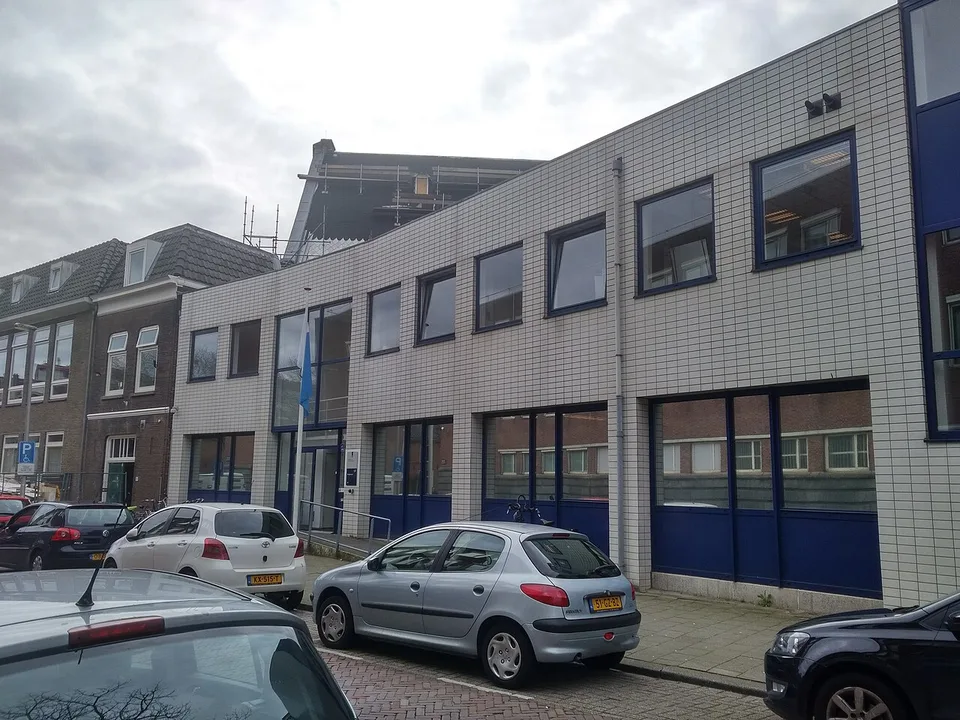
Applications under the agreement go to the same service: the applicant meets the general requirements for all foreigners and poses no risk to public order. The difference lies in the conditions of the route itself and in the price.
Self-employed residence without a points system
Normally an entrepreneur from outside the EU is assessed by the Netherlands Enterprise Agency: the business must be of essential interest to the country and score a minimum number of points. For Turkish citizens the points system does not apply - the agency looks only at the business plan.
The business plan is checked on five things:
- the company is financially healthy;
- it provides something the Netherlands needs;
- it helps the Dutch economy grow;
- it can hold its own in a free market;
- it does not disrupt the market or the labour market.
Every part of the plan is backed by a financial explanation. The self-employed permit fee under the agreement is $96 instead of $474, and an extension costs the same. Those who want to test an idea first can apply for a start-up visa or an orientation year on the same favourable terms.
Employment without a recognised sponsor
A highly skilled migrant in the Netherlands is normally sponsored only by an employer with recognised sponsor status. For Turkish citizens this is not required: you can apply yourself once you have found a job. The rule also covers researchers and any other paid employment.
The immigration service still advises applying through a recognised sponsor, as it decides such applications faster. Salary thresholds are the same for everyone: in 2026 a highly skilled migrant aged 30 or over needs at least $6,700 a month before tax, under 30 at least $4,900, and a graduate of the last 3 years at least $3,500.
After a year with one employer you can get a residence permit under the agreement, and your employer no longer needs a work permit for you. After 3 years with one employer you can change jobs without a work permit - normally this takes 5 years.
Family: partner from 18, children under 21
An employee with Turkish citizenship can bring a spouse or registered partner once both are 18, rather than 21 as for everyone else. Children under 21 count as the employee's family, and older children, parents and grandparents do so if they depend on the employee.
The fee for a family member's permit is $96 instead of $285, and for a child under 18 it is $91 with an entry visa and $50 without. After 3 years in the Netherlands on a family permit, the family member can get their own permit that no longer depends on the employee. And after 3 years of marriage and a year in the country, the spouse keeps the right to live and work in the Netherlands even after a divorce.
How much residence under the Ankara Agreement costs
Immigration service fees for 2026, at the rate of 14 October 2026:
| Application | Under the agreement | Standard fee |
|---|---|---|
| Work and business permit, first and extension | $96 | $474 |
| Family member permit | $96 | $285 |
| Child under 18, with entry visa | $91 | $96 |
| Child under 18, without entry visa | $50 | $96 |
| Return visa | $64 | $221 |
| Citizenship, one applicant | $1,280 | $1,280 |
On top of the fees come translation and legalisation of documents, insurance and preparing the business plan. A manager will work out the total for your family in chat.
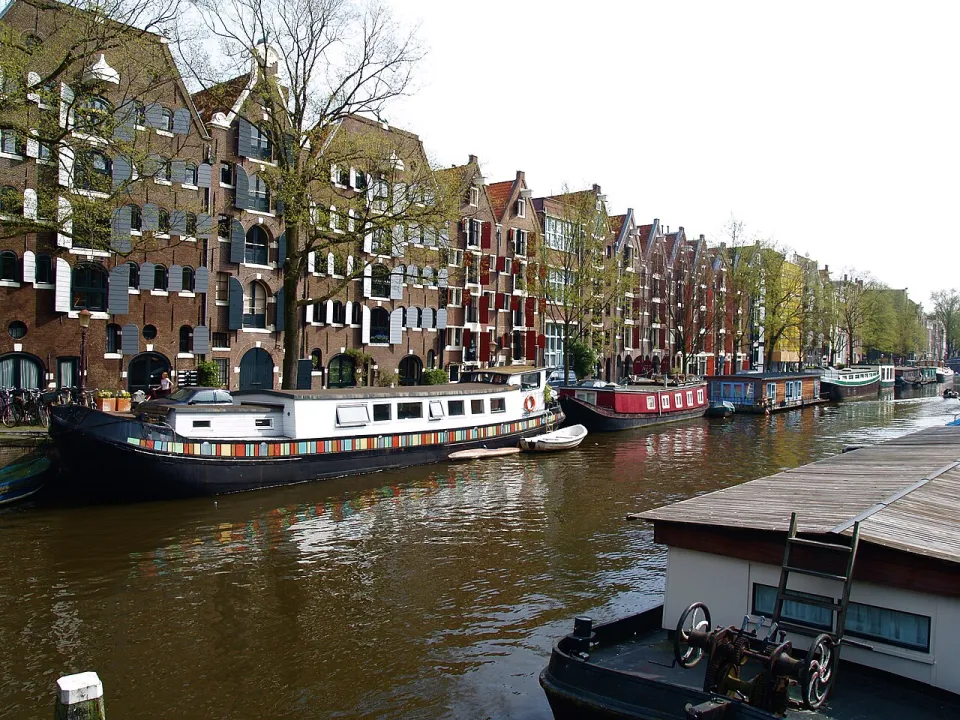
A manager will pick the city and district for your field: clients, rent and schools for the children depend on it.
From residence to permanent residence and a Dutch passport
After 5 years of uninterrupted residence with a permit you can apply for Dutch citizenship: you need the civic integration exam at language level A2 and to give up your previous nationality. You can keep it in some cases, for example when married to a Dutch citizen.
The citizenship fee is $1,280 for one applicant and $1,630 for a couple, and the service decides within 12 months. More on the Dutch citizenship page.
How to get residence under the Ankara Agreement: steps
- Choose the route. Business - a self-employed or start-up permit, work - an employee or highly skilled migrant permit, family - reunification.
- Prepare the basis. For business, a business plan with a financial explanation of every part; for work, an employment contract.
- Collect the documents with translation and legalisation.
- Submit the application on the form for Turkish citizens under the EU-Turkey agreement, or through an employer that is a recognised sponsor.
- Pay the $96 fee and, if needed, get a long-stay entry visa.
- Arrive and collect the residence card at an immigration service office.
An employer with recognised sponsor status speeds up the decision, and a strong business plan is the key document for the self-employed. Both are worth preparing from the start.
We will help you get Netherlands residence under the Ankara Agreement
What matters most here is a strong basis: a business plan the agency accepts the first time, or an employer ready to take on the application. We will pick the route for your family, prepare a business plan with financial calculations, collect and translate the documents and see the application through to the residence card.
Details and cost are with a manager in chat: it all depends on the route and the size of the family.
FAQ
What are the requirements for Netherlands residence under the Ankara Agreement?
What business can you start in the Netherlands under the Ankara Agreement?
How do you apply under the Ankara Agreement?
Is the Ankara Agreement still valid in 2026?
Can you bring your family under the Ankara Agreement?
What is the Ankara Agreement?
How much does Netherlands residence under the Ankara Agreement cost?
Does buying property in the Netherlands give residence?
Don’t want to figure this out alone?
We handle the whole process end to end: we check your documents, match a program to your situation and give you honest timelines and costs. Ask your question in the chat: the free consultation starts right here. Legal representation before authorities and courts is handled by Murblz specialists together with locally licensed partners.
The Murblz consultant replies straight away in the chat on this page. Describe your situation and we will work it out together.
Free consultationHow to send money to the Netherlands in 2026 →
We can help with the transfer: ask in the chat.
Programs